
The Forgotten Pontiac V8 That Quietly Powered GMC Trucks In 1956
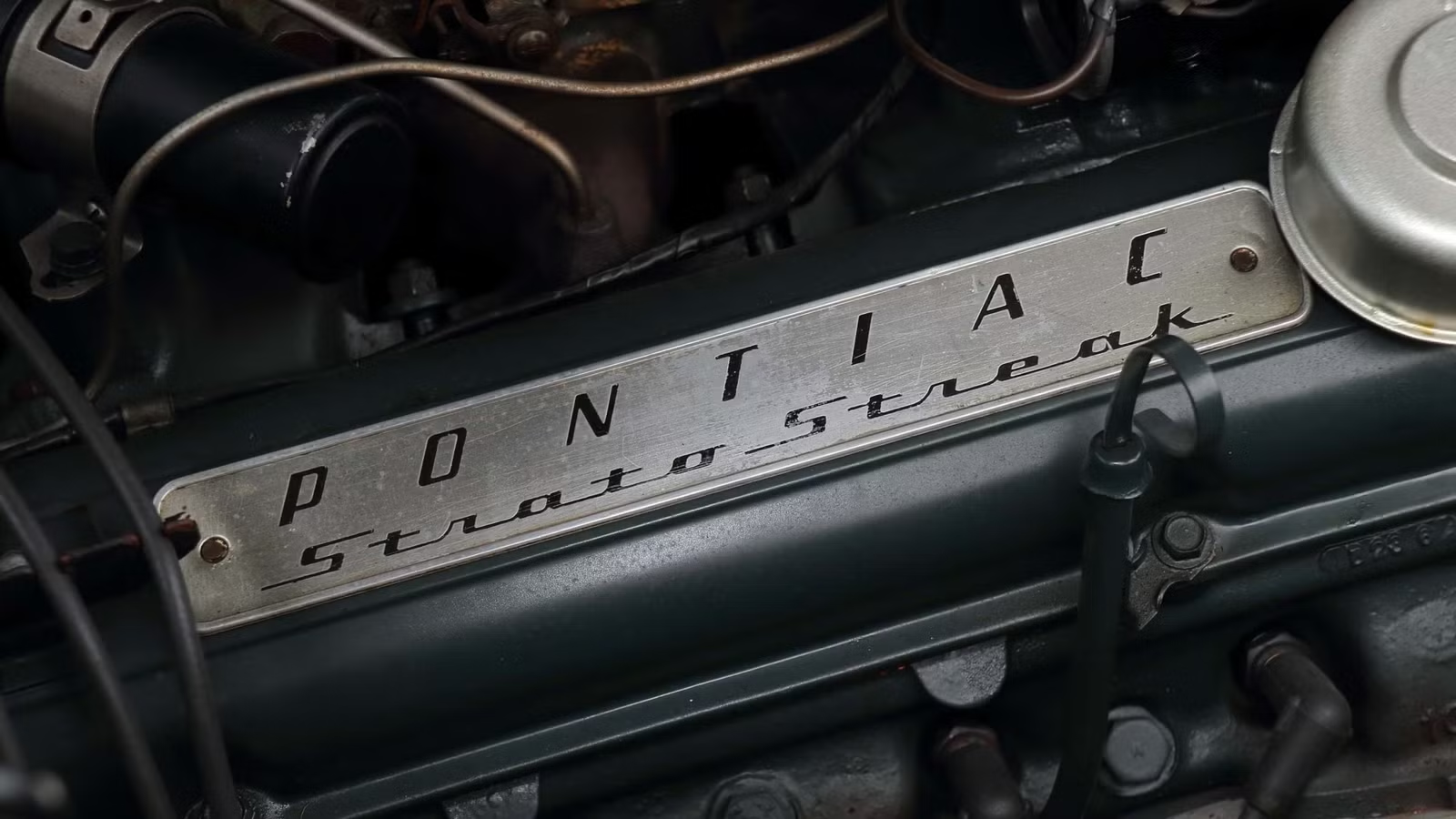
If you’re the type to say “truck yeah,” buckle up. There’s a forgotten Pontiac V8 engine that gave GMC trucks their power in the 1950s. This actually led to brands under the General Motors umbrella sharing components across divisions a bit earlier than you might think.

Some documents and historians indicate that GMC started using Chevrolet engines in the 1960s. While this is true, it unfairly skips over the Pontiac powerhouse that’s responsible for plenty of muscle car development and success. However, decades later, Pontiac is now gone as Chevrolet and GMC continue to share engines.
The story gets more complicated from there. Sharing parts across divisions got out of hand, resulting in an expensive lawsuit. One brand ended up paying the price for borrowing Chevrolet engines. It created a precedent so significant that it changed the way automakers disclose which parts they use forever.
Chevrolet Didn’t Power GMC Trucks Until Later

Under General Motors, GMC and Chevrolet trucks are essentially twins these days. Back in the 1950s, the two brands did share components and developed similar engines. A GMC truck didn’t truly use a Chevrolet engine until 1974. This is when GMC discontinued its V6 engine program and started using Chevy engines. Documents and historians note the use of the 1961 Buick 215 engine across different divisions. It’s true: the 215 V8 engine was a significant piece of hardware for the General Motors aluminum V8 engine family.
Pontiac and Oldsmobile both used modified versions of this engine in the Cutlass, Jetfire, Tempest, and Le Mans. But the engine had a short production run and was discontinued in 1963. As a result, it never made it to a GMC truck. It also glosses over the fact that a bespoke Pontiac V8 was used by GMC pickups a few years earlier. The dawn of sharing parts actually started in the 1950s, not the 60s or 70s. Furthermore, parts sharing didn’t come without a few costly mistakes.
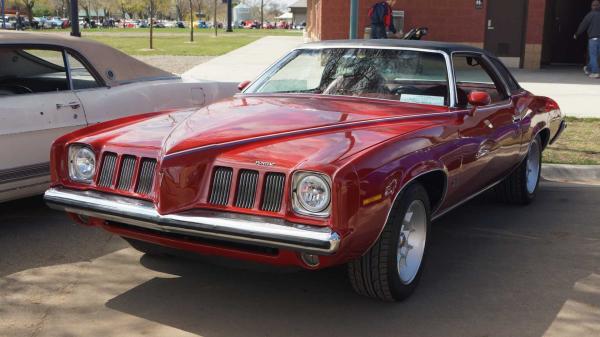
The Rarest Pontiac Muscle Car Ever Is A 455 Big Block No One Knew Existed
The performance-focused GM division built just one of these cars for testing.
GMC Trucks Borrowed From Pontiac In The 1950s

In the 1950s, Pontiac built an engine that GMC simply couldn’t refuse. In 1955, the Strato-Streak made its debut and serves as one of the earliest examples of sharing V8 engines under General Motors. It also stands out for being Pontiac’s first modern overhead valve V8 engine. GMC didn’t have its own small-block V8 engine yet, but demand for overhead-valve V8 engines was rapidly increasing.
GMC also needed to provide its trucks with more power. When placed in trucks, the engines proved to be reliable workhorses that provided endurance over outright speed. The 1955 light-duty 100 Series truck used the Pontiac 287 cubic-inch (4.7-liter) V8 engine to deliver between 155 and 180 horsepower and 264 to 278 lb-ft of torque, depending on the carburetor setup. It was called the “GMC 288” in brochures and advertisements to differentiate it from the Pontiac brand, which may have led buyers to believe they were purchasing a GMC-built engine.
|
Vehicle |
Engine |
HP |
Torque |
|
1955 GMC 100 Series |
4.7-liter V8 |
180 |
278 LB-FT |
|
1955 Pontiac Star Chief |
4.7-liter V8 |
200 |
278 LB-FT |
|
1961 Oldsmobile Cutlass |
3.5-liter V8 |
200 |
220 LB-FT |
The 1955 Strato-Streak V8 was also used by the Star Chief, Chieftain, and Strato-Star. It delivered up to 200 hp and 278 lb-ft of torque in those muscle cars. For comparison’s sake, the 1961 Buick 215 cubic-inch (3.5-liter) 90-degree V8 engine churns out up to 200 hp and 220 lb-ft of torque.
As the Strato-Streak evolved to transform sluggish Pontiac cars into legendary muscle cars in the 1960s, it also continued to power GMC trucks. The 1956 316 cubic-inch variant delivered up to 285 hp and was called the GMC 316 in pickups. This trend continued until 1960, when GMC began phasing out Pontiac V8 engines to build its own line of 60-degree V6 engines.
But Oldsmobile Paid The Price For Sharing Decades Later

Oldsmobile found itself in a difficult position in the 1970s because it needed to keep up with demand. The 1977 Oldsmobile Cutlass was a roaring success thanks to its legendary Rocket V8 engine. This popular engine was also used in the Delta 88 and the Omega. The premium 403 cubic-inch (6.6-liter) engine produced 185 hp and 320 lb-ft of torque.
But Oldsmobile couldn’t build this engine fast enough. So General Motors secretly started placing Chevrolet 350 cubic-inch engines in the cars instead. The 5.8-liter engine produced between 145 and 185 hp and 250 to 270 lb-ft of torque. This was no small matter — consumers objected to receiving less torque than advertised.
General Motors faced significant consequences from this infamous “Chevymobile” scandal. It faced a class-action lawsuit that resulted in an $8.2 million settlement. Each of the 14,000 Oldsmobile buyers who discovered they had received the Chevrolet 350 engine instead of the Rocket V8 was awarded $550.

General Motors tried to argue that the engine-switch became public knowledge on April 10, 1977. However, early litigation found that General Motors offered buyers the option to return their cars for a full refund, minus mileage, or to receive cash settlements and transferable three-year warranties.
Pontiac’s Forgotten OHC Six-Cylinder Was Decades Ahead Of Its Time
This forgotten engine bridged American muscle and European sophistication, introducing innovations still used in modern cars today.
This Changed The Way Automakers Disclose Parts

The scandal changed the way automakers disclose sharing parts across divisions. It led to changes in transparency and advertising standards regarding engine sourcing disclosures. Automakers were required to clearly state in advertising and brochures that vehicles could be equipped with engines built by sister divisions. This also led to greater platform-sharing visibility. Brands were no longer allowed to use a division’s nameplate to mask under-the-hood parts sharing without explicitly disclosing this to the buyer.
The automotive scandal also pushed the industry toward corporate platforms with standardized terminology. Automakers were transparent about which parts were unique to certain brands and which were being shared across an entire parent company. Effectively, this ended the era of covertly sharing parts across divisions. As General Motors sent out payments to affected owners and offered transferable extended warranties, it set a precedent for compensating buyers over platform-sharing fraud.
General Motors Became Transparent About Sharing Truck Engines

In 1974, GMC discontinued its V6 gas-powered engine line as General Motors ramped up its cost-effective platform-sharing strategy. General Motors found that it was expensive and inefficient to maintain separate, distinct truck lineups. Unifying the square-body truck platforms standardized production and cut development costs. Increasingly strict emission standards and the fuel crisis made independent research and engine development more expensive. Consolidating engineering, research, and development around a highly adaptable family of engines was a smart move during a rapidly changing era. So, GMC and Chevy trucks both used the Chevy straight-six and small-block V8 engines.

The divisions also started sharing chassis and other components, such as suspension parts and trim pieces including grilles, hoods, doors, and tailgates. Plus, the trucks started sharing interior components such as steering wheels, gauges, and seats. This time, the parts were used honestly rather than renamed, avoiding another massive Chevymobile-style mistake.
Today, GMC and Chevrolet trucks continue to share platforms, engines, and more. The GMC Canyon and Chevy Colorado both use the 2.7-liter TurboMax inline-four engine. But the bigger GMC Sierra and Chevy Silverado trucks share the 2.7-liter TurboMax, 5.3-liter EcoTec3 V8, 6.2-liter EcoTec V8, and Duramax 3.0-liter turbo-diesel inline-six engines.
Source: Curbside Classics, Time Magazine

Related posts


Latest Post




No Comments