Why Toyota Tundra Owners Are Quietly Winning The Full-Size Truck Money War
9 minutes reading
Friday, 19 Jun 2026 21:00 0 61 autotech
The automotive landscape loves a loud war, and the competitive pickup truck segment is no different. For decades, the “Big Three” domestic automakers have cornered the full-size truck market by screaming about maximum towing capacities, incremental horsepower bumps, and tailgates that fold into origami shapes. It is marketing designed to trigger emotional, bigger-is-better buying decisions.
But while Ford, Ram, and Chevy battle for supremacy in the showroom brochure, a completely different conflict is being fought in bank accounts across North America. It is a quiet, spreadsheet-driven “money war” centered around Total Cost of Ownership (TCO). When you filter out the marketing noise and look strictly at the hard financial data, it becomes glaringly obvious that Toyota Tundra owners are absolutely cleaning up.
A truck’s true cost isn’t the number printed on the dealership window sticker; it is the massive discrepancy between what you pay at checkout and what you get back when it is time to sell. Backed by a brand-wide premium for relentless reliability, the Toyota Tundra maintains an ironclad grip on its value, turning what most consumers treat as a rapidly depreciating asset into a masterclass in wealth preservation.
To understand why used-market buyers willingly pay a premium for a second-hand Tundra, one must look at how Toyota engineered its latest powertrains to bypass the typical pitfalls of engine downsizing. Rather than clinging to a legacy, naturally aspirated V8, the current Tundra embraces a highly advanced i-FORCE 3.5-liter twin-turbo V6, developing 389 horsepower and 479 pound-feet of torque. For buyers seeking additional grunt, Toyota offers the i-FORCE MAX hybrid powertrain, which sandwiches a single electric motor between the V6 engine and the 10-speed automatic transmission, increasing outputs to 437 horsepower and 583 pound-feet of torque.
Base Trim Engine
3.4L [NA] ICE
Base Trim Transmission
10-speed automatic
Base Trim Drivetrain
Four-Wheel Drive
Base Trim Horsepower
358 HP @5200 RPM
Base Trim Torque
406 lb.-ft. @ 2000 RPM
Base Trim Fuel Economy (city/highway/combined)
17/23/19 MPG
Base Trim Battery Type
Lead acid battery
Make
Toyota
Model
Tundra
This transition from a dependable V8 to a turbocharged V6 gas electric setup has not seemed to damage the Tundra’s reputation for reliability one bit. According to J.D. Power, the 2026 Tundra scored an 82/100 consumer score, with quality and reliability rated at 83/100. Most notably, the 2026 Tundra received 89/100 for resale.
A Brand-Wide Culture Of Reliability
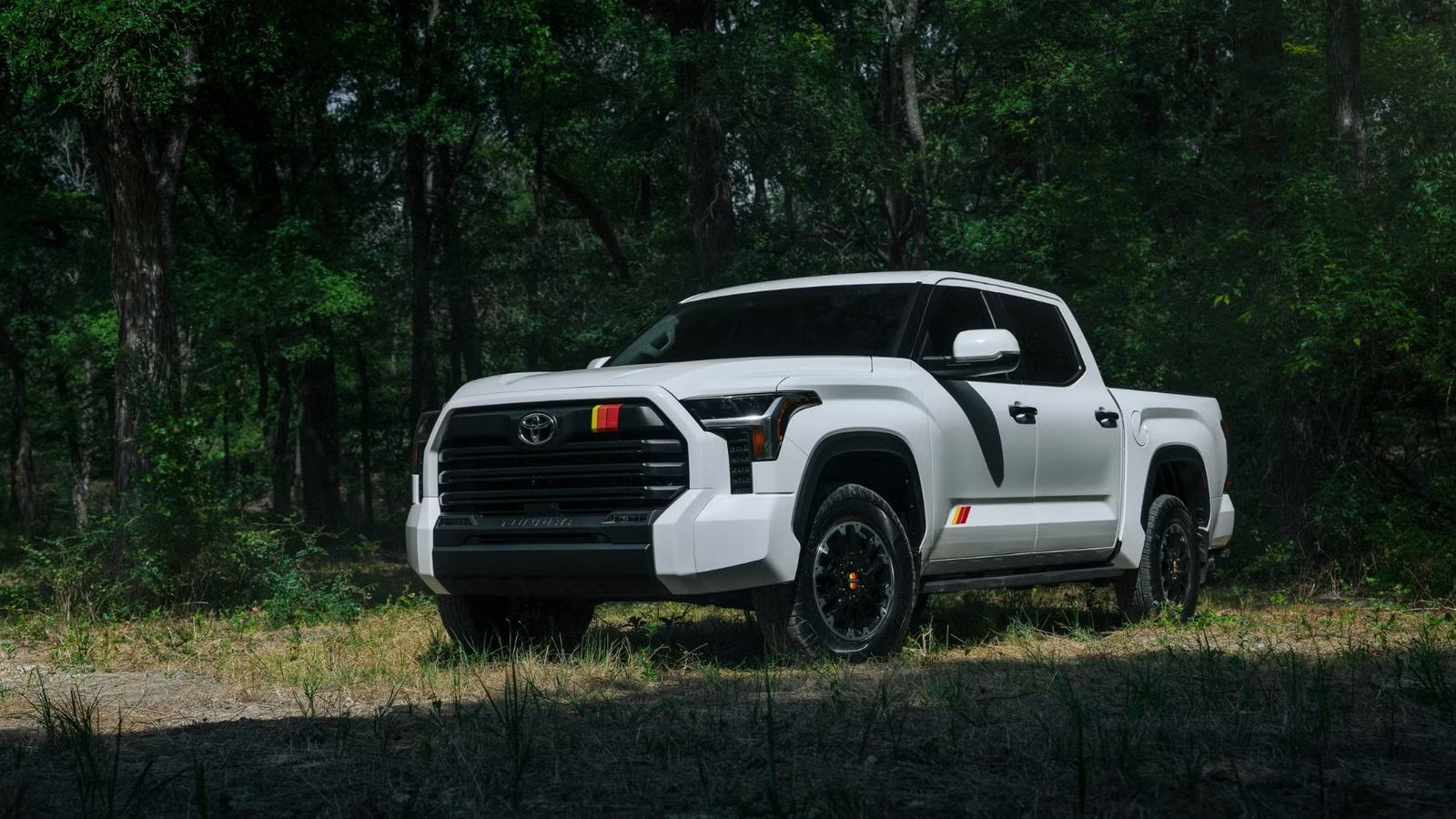
Profile 3/4 shot of 2022 Toyota Tundra parked off-roadToyota
This powertrain evolution proves that Toyota isn’t resting on its laurels, but the market’s reaction proves something even greater. For a lesser manufacturer, introducing high-output turbos and electric motors into a workhorse segment might depress resale values due to long-term wear concerns. However, backing these modern drivetrains with a reputation for bulletproof reliability honed over nearly nine decades completely rewrites the script. It sends an unmistakable signal to the secondary market: when you buy a modern Tundra, you aren’t just buying a complex machine, you are buying into a deeply entrenched culture of engineering durability that actively protects your cash from day one.
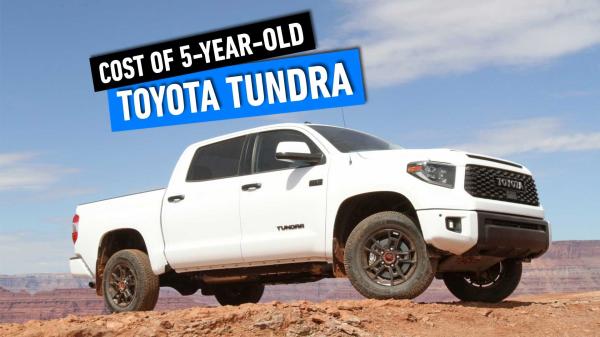
Here’s How Much A 5-Year-Old Toyota Tundra Costs
The Toyota Tundra is one of the best full-sized trucks out there, and a 5-year-old model might be the perfect buy.
Tundra’s 26 Percent Depreciation Weapon
The Physics Of The Tundra’s Five-Year Curve
2026 Toyota Tundra Platinum front 3/4 shot towingToyota
Depreciation is the single largest expense of vehicle ownership, quietly draining thousands of dollars from a buyer’s net worth long before they ever purchase a replacement set of tires or pay an insurance premium. According to comprehensive independent data from CarEdge, the Toyota Tundra features a five-year depreciation rate of just 26 percent.
Ownership Milestone
Retained Value Percentage
Dollar Valuation
Equity Lost to Depreciation
New (0 Months)
100%
$59,055
$0
Year 3 (36 Months)
94%
$56,397
$2,658
Year 5 (60 Months)
74%
$43,671
%15,384
To contextualize how extraordinary this curve is, we can look at the math behind a typically optioned model with a starting price of $59,055. Most vehicles suffer a massive cliff drop the moment their rear tires clear the dealership curb, typically surrendering 15 percent to 20 percent of their value in the first twelve months. The Tundra, by contrast, operates on an entirely different set of physics, losing a microscopic six percent ($2,658) over its first three years of service. An owner can drive a Tundra for 36 months and still hold onto 94 percent of their original purchase equity.
The Continental Echo (CBB Meets KBB)
2026 Toyota Tundra TRD rear 3/4Toyota
When a manufacturer wins an award, it usually results in a self-congratulatory graphic on a billboard that most shoppers ignore. However, the 2026 Canadian Black Book (CBB) Best Residual Value Awards represent a factual dollar receipt rather than marketing fluff. For the fourth consecutive year, Toyota captured the prestigious Overall Brand Award for SUV/Truck, with the Tundra securing the top spot in the highly competitive Full-Size Pickup category.
Lest domestic truck loyalists dismiss these figures as a regional quirk of the Canadian market, the data mirrors itself cleanly south of the border. Across the United States, Kelley Blue Book (KBB) has long tracked identical consumer behavior, naming Toyota its Best Resale Value Brand for an incredible nine out of ten years.
2026 Toyota Tundra side shot driving off-roadToyota
This cross-border validation resolves any corporate reporting discrepancies, such as CBB’s data noting wins across seven distinct vehicle categories while independent dealer groups log eight by factoring in corporate sibling Lexus. Across both nations, the data converges on a single fact: the North American used market fundamentally treats Toyota vehicles as a safer store of value than any domestic equivalent.
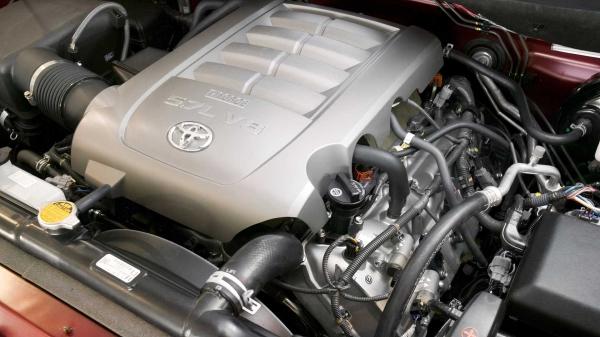
The Pickup Truck Engine Owners Trust Past 300,000 Miles
This Toyota V8 engine is known for proven durability and long-term reliability on and off the road. This is why it is so trusted.
Tundra Vs. Ford F-150 And Ram 1500
The Real-World Dollar Gap At Trade-In
To truly understand the “money war,” we have to not only look at abstract percentages and evaluate actual trade-in dollars across identical timelines, mileages, and equipment classes. While a Tundra sheds just 26 percent of its value over five years, the domestic half-ton landscape tells a much grimmer financial story. Independent depreciation indexes reveal that both the Ford F-150 and the Ram 1500 experience an average five-year depreciation rate of approximately 50 percent. When mapped against real-world transaction data, the financial chasm is stark.
Five-Year Truck Ownership Cost Comparison
3/4 shot of 2021 Toyota Tundra in black posing on country roadToyota
When a Tundra owner and a domestic truck owner pull back into a dealership lot four to five years down the road, the Tundra owner walks away with thousands of extra dollars in equity. Even if the initial purchase prices were roughly equivalent, the domestic truck owner has quietly hemorrhaged the price of a high-end used car straight into the atmosphere via depreciation.
Offsetting The “Toyota Tax” At Check-Out
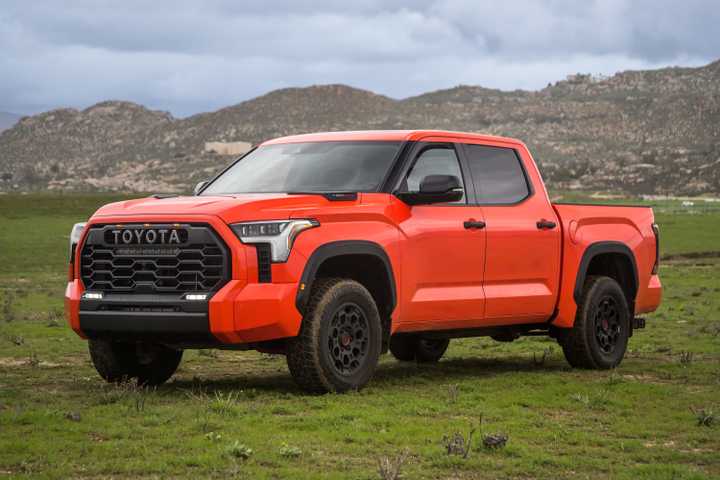
2025 Toyota Tundra TRD Pro i-Force Max front cabinCraig Cole | TopSpeed
Domestic brand enthusiasts often attempt to counter this math by pointing out the infamous “Toyota Tax” — the historical reality that Toyota vehicles rarely see the massive, thousands-of-dollars-off factory rebates or aggressive dealer invoice discounts common to Ford and Ram dealerships. A buyer might routinely secure $7,000 off a new domestic truck, whereas a Tundra buyer often pays much closer to full sticker price.
However, viewing this as a win for the domestic truck is a classic short-term perspective trap. If you save $7,000 on the front end of a domestic purchase, but your truck proceeds to drop 50 percent of its total value over the next 48 months, you haven’t actually saved any money; you have simply deferred your financial losses to the back end of the ownership cycle. The Tundra’s immense residual value advantage completely erases the upfront premium, rendering the initial “Toyota Tax” a highly profitable entry fee.
Everything You Need To Know About The 2026 Toyota Tundra Refresh
Toyota may refresh its full-size truck soon. And it could bring some changes enthusiasts are craving.
The “Refuses To Die” Premium: Why The Market Rewards Toyota
The Emotional Narrative Backed by Hard Cash
2011 Toyota Tundra engineToyota
The automotive world is full of cultural tropes, and none is more pervasive than the belief that a Toyota truck simply “refuses to die.” From viral internet videos of old Hilux models surviving building demolitions to real-world million-mile Tundras being bought back by corporate headquarters for engineering teardowns, consumers are emotionally primed to expect infinite longevity from a Toyota powertrain.
What makes this narrative fascinating is how the secondary market converts this collective emotional belief into rigid financial reality. Used vehicle buyers are inherently risk-averse; they are terrified of inheriting hidden mechanical nightmares. Because the public widely believes a Tundra is bulletproof, second- and third-hand buyers willingly bid up prices for high-mileage out-of-warranty Tundras, creating a highly stable price floor that safeguards the original owner’s equity.
The Ultimate TCO Verdict For Truck Buyers
2026 Toyota Tundra Platinum interior shotToyota
When evaluating a vehicle purchase, it is incredibly easy to get distracted by flashy features such as a high-resolution 14-inch infotainment display, massaging leather seats, class-exclusive air suspension systems, and fractional gains in maximum towing capacities. While these features can make the daily commute more luxurious, they do absolutely nothing to protect your cash reserves.
Vehicles are fundamentally financial instruments of depreciation, and the pickup truck segment is an unforgiving environment for equity retention. By prioritizing systemic build quality, long-term mechanical reliability, and predictable engineering over transient design trends, Toyota has created a vehicle platform that effectively insulates its buyers from the worst impacts of asset devaluation.
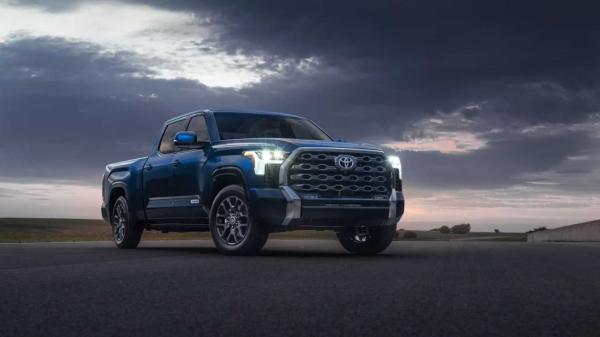
Profile shot of 2025 Toyota Tundra in blue parked on streetToyota
The domestic truck manufacturers will undoubtedly continue to win the marketing shouting match, boasting about historic heritage and flashy feature sheets. But when it comes time to log into the online banking portal, add up the true cost of monthly ownership, and look at actual cash returned at trade-in, it is the Tundra owners who are stepping away from the counter with the larger stack of bills. They aren’t shouting about it in the forums; they are just quietly winning the war.
Sources: Toyota, Canadian Black Book, Auto Remarketing, J.D. Power, Canadian Auto Dealer, Car Edge, J.D. Power
















No Comments