
The Japanese Sports Car The Collector Market Forgot To Inflate 62 /1000
JDM classics aren’t so much FOMO these days; more just MO. That’s to say that most of us are straight Missing Out, with iconic models now being priced way out of the budget of most average folk. Our dreams of living a second life as a character from Fast and the Furious will have to be confined to Need for Speed on a clapped-out PlayStation. But before we all go back to our boring lives and give up on that JDM dream, there is one car everyone is forgetting about. Legendary Japanese sports car? Check. Perfect handling balance? Check. Astronomical, overinflated price tag? Nope. This is one for everyone.
The ’80s and ’90s Were A Golden Era For Japanese Sports Cars

If the ’60s were the Golden Era for the muscle car, the ’80s and ’90s belonged to Japanese cars. Models like the Toyota Celica had picked up where big V8 coupes had left off after being sidelined by emissions regulations and an oil crisis, bringing the same style but with a frugality that gave the local gas station owner sleepless nights. Throughout the ’80s, Japanese sports cars became techier and more focused, with the R32 GT-R apparently being designed after Nissan reverse engineered a Porsche 959 it had bought.
The Acura NSX emerged at the start of the ’90s as a supercar you could go shopping in, and changed the game for exotics, forcing other manufacturers to have a major rethink. This combination of ingenuity, boldness, and financial clout meant that JDM cars had supreme confidence in the ’90s, offering buyers fast cars that could be endlessly tuned, upgraded, and visually enhanced. No wonder The Fast and the Furious was such a box office smash when it documented this culture.
JDM Classics Are Some of The Hottest Cars On The Used Market

It’s no surprise that anyone who missed out on being a real-life Brian O’Conner or Dominic Toretto the first time around is now scrambling to pick up a GT-R, RX-7, or Supra as they settle into midlife and a bit of extra cash. To say the JDM market (and we use the term JDM for Japanese car culture, not exclusively Japanese-market models) is hot right now would be the understatement of the year. It’s volcanic. Recently, a Honda NSX-R sold for just over $1.064 million. That’s Bugatti Veyron money. Toyota A80 Supra Turbos regularly go for around $200K, and that’s if you are lucky enough to find one. The list goes on. Any classic JDM car from this era is worth its weight in gold, and demand is outstripping supply. Or is it? There is one Japanese model that is one of the greatest sports cars of all time, but it’s still dirt cheap.

The Budget-Friendly Sports Car Enthusiasts Swear By
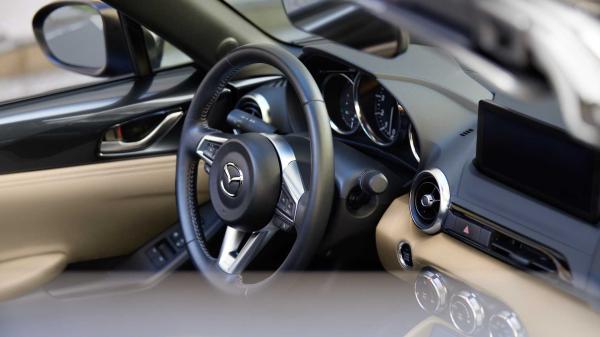
The Mazda Miata reigns supreme as the budget-friendly sports car enthusiasts swear by, offering pure driving joy for around $30,000.
The Mazda Miata Changed The Automotive World

On one chilly February day in Chicago in 1989, you could have been forgiven for thinking you had been teleported back to the ’60s. People were gathering around the Mazda stand in the McCormick Place convention center, apparently not noticing the Dodge Viper and Acura NSX concept being exhibited nearby. They were trying to catch a glimpse of a roadster that looked every inch like one of the flat cap and pipe British drop-tops of the ’60s.
The Minilite-like wheels, the Lotus Elan-style front-mouth opening, the spartan spec. Everything pointed to the fact that the MX-5 Miata was a British sports car reborn. This wasn’t a sports car to aspire to, it was a model practically anyone could own. No wonder it kicked off a whole roadster revival, with BMW rushing to bring the Z3 to market and Mercedes the SLK. Leather driving glove sales also (probably) increased exponentially.
The Miata Was A Pure Sports Car In A World Of Tech

The first-generation NA Miata, which eschewed early ideas for front-wheel drive in exchange for a front-engine/rear-drive layout, was powered by a 116-horsepower 1.6-liter four. A lack of trimmings kept the price to a smidge over $17,000, and the car miraculously appealed to everyone from boulevard posers to serious driving enthusiasts. The torque in that original car was just 100 lb-ft, but with a curb weight of just 2210 pounds, that didn’t matter at all.
1990 Mazda Miata Specs
|
Engine |
1.6-liter four |
|
Power |
116 hp |
|
Torque |
100 lb-ft |
|
0-60 mph |
9.3 seconds |
|
Weight |
2210 lbs |
|
Transmission |
5-speed manual |
The Miata could scoot to 60 mph in 9.3 seconds and buzz along at 116 mph if you had enough road. The steering was “precise and responsive,” the five-speed manual a joy to snick through the gears, and it didn’t take much to dislodge the rear 185/60HR-14 Bridgestone SF-325 tires into a heroic slide on the way to the apex. In short, everyone loved the Miata. But while other Japanese icons of the ’90s command huge sums at auction, the NA Miata remains cheap and attainable, just like when it was new. How come?
Here’s Why Miatas Are Still Cheap

When a 1990 Mazda MX-5 Miata arrived on Bring a Trailer recently with less than 17,000 miles on the clock, you could imagine the kind of JDM frenzy that was about to ensue. The car was not just straight-looking, it was bone stock, never been messed with, had a great backstory, and came factory-equipped with air conditioning and a limited-slip differential. But whereas an A80 Toyota Supra in this sort of honest condition would probably break the internet, the Miata only reached $10,000.
In fact, Hagerty Valuation Tools puts the price of a good condition 1990 Miata at just $7,800, and there are plenty of tidy-looking examples going for that kind of money. The reason NA Miatas are so cheap is that Mazda made so many of them. There were 431,506 first-gen cars built, and not only do people treasure them like an exotic, they don’t fall apart. Plenty of reports will tell you they are reliable, with no tendency to rust, and that maintenance is generally simple.
10 Legendary ’90s Japanese Cars That Still Crush Modern Sports Cars
Now bona fide classics, these Japanese cars remain faster than most modern sports cars.
Why The Miata’s Cheap Prices Are Futureproofed

The great thing about the NA Miata is that if the prices ever get out of reach, there is always a cheaper one waiting in the wings. The Miata is in its fourth generation and hasn’t lost any of the lightweight/modest power magic. Mazda even said the next one will be the lightest yet. That means it doesn’t really matter which generation you buy, they are all good.
OK, so the second Miata, the NB, lost a bit of the cheeky retro looks, but with prices less than $10,000, who cares? If the NB ever gets too expensive, you can get an NC, and so on. The Miata continues to be a huge seller, with more than 1.2 million units sold to date, so there will always be plenty to choose from. And in a world of doom and gloom and electric five-seat exotic supercars, at least there is some good news for gearheads.
Sources: Mazda, Hagerty

Related posts


Latest Post



No Comments