The American Sports Car That Refuses To Lose Its Appeal
8 minutes reading
Friday, 24 Jul 2026 17:00 0 50 autotech
Sports cars come and go. Some dazzle for a generation, then fade into obscurity or become expensive museum pieces nobody actually drives anymore. This American sports car has done neither. Since 1953, it has weathered fuel crises, safety regulations, and a parade of flashier European rivals, yet somehow remains one of the most coveted performance cars in America. With the radical mid-engine shift in its latest iteration, Chevrolet didn’t just modernize the formula—it proved that the coupe’s appeal was never about nostalgia in the first place.
Every decade produces its share of halo cars that capture the public imagination for a moment. The Dodge Viper terrified and thrilled a generation, then quietly disappeared. The Acura NSX, in both its original and revived forms, earned critical acclaim but never built lasting cultural momentum. Even storied nameplates like the Toyota Supra spent years in the wilderness before returning. Enthusiasm is easy to generate; it’s brutally hard to sustain.
The American sports car in question is the exception, and the reasons run deeper than horsepower figures or lap times. Part of it is continuity. Chevrolet has never let the nameplate disappear, even through eras when American performance cars were an afterthought. Part of it is reinvention at the right moments, rather than resting on past glory. And part of it is something harder to quantify: it has always represented an attainable version of the sports car dream, not an aspirational fantasy locked away for the ultra-wealthy.
2002 Acura NSXBring A Trailer
That distinction matters more than most enthusiasts admit. A car that only the rich can buy eventually becomes irrelevant to everyone else — admired from a distance, but never truly loved. This beloved nameplate has spent seven decades occupying a different space, one where a schoolteacher and a surgeon might realistically cross paths at the same car meet, both having saved up for the same badge. Few performance nameplates manage that trick across even a single generation, let alone eight.
Chevy Changed The Formula With The C8 Corvette, But Kept Everything Enthusiasts Loved About It
Low-angle 3/4 shot of 2023 Chevrolet Corvette Stingray C8 in red driving on desert roadChevrolet
When Chevrolet finally moved the engine behind the driver in 2020, it was the most significant change in Corvette history. For decades, purists had debated whether a front-engine Corvette was sacred or simply outdated. The C8 answered definitively: the mid-engine layout wasn’t a betrayal of the Corvette’s identity, it was the fulfillment of an idea GM engineers had floated as far back as the 1960s.
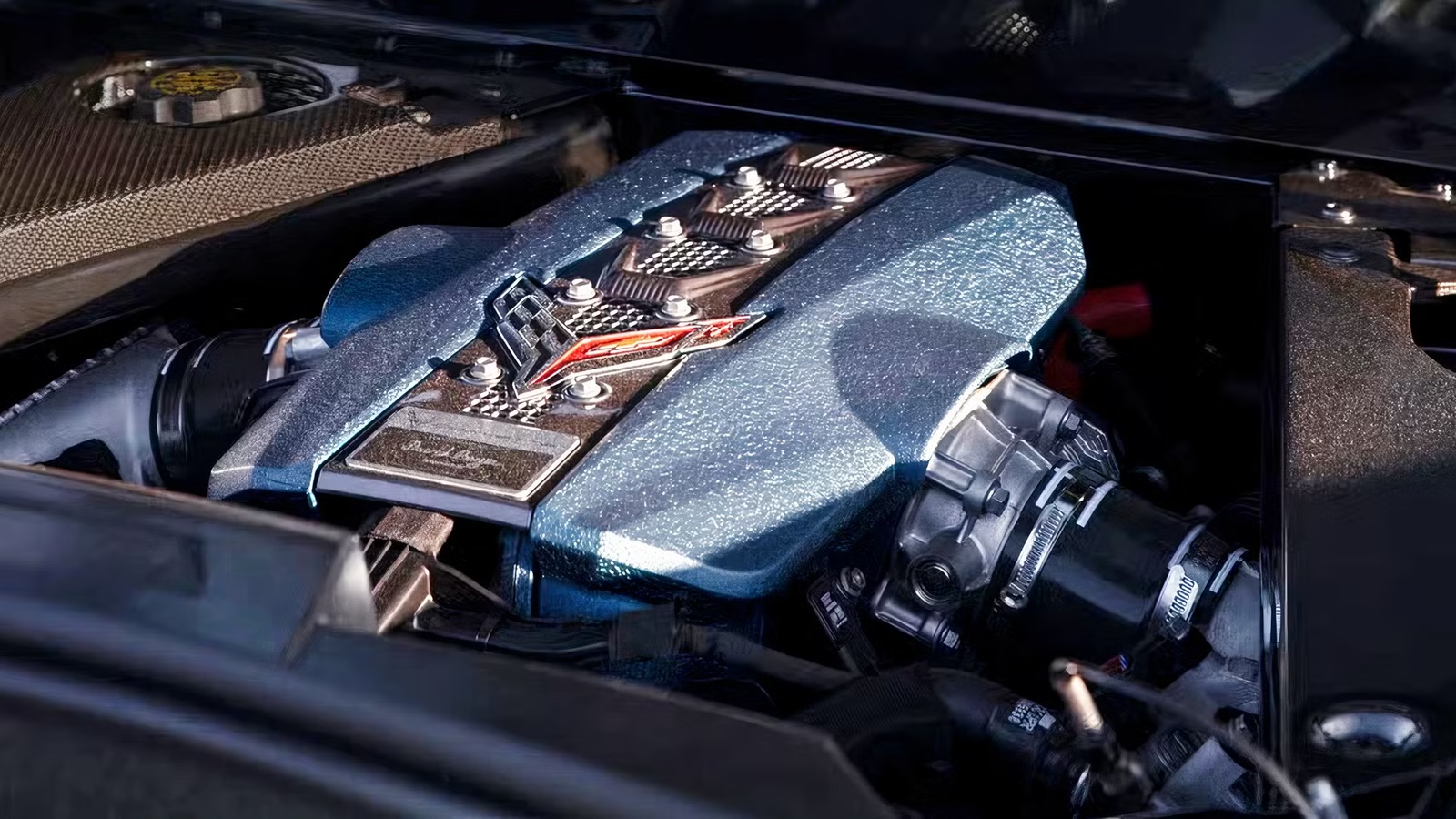
What’s remarkable is how little the C8 actually lost in translation. The naturally aspirated LT2 V8 carried over the Corvette’s signature soundtrack and linear power delivery, avoiding the turbocharged, muffled character that defines so many European rivals. The base car still started at a price that undercut virtually every other mid-engine sports car on sale. And Chevrolet resisted the temptation to make the C8 feel clinical or overly digitized, keeping enough mechanical feedback that longtime Corvette owners didn’t feel alienated by the switch.
Chevrolet Also Didn’t Stop At A Single Variant
Chevrolet Corvette C8 Stingray (2020) interiorChevrolet
The Z06 arrived with a flat-plane-crank V8 borrowed from motorsport design, pushing the Corvette into genuine supercar performance territory, while the E-Ray introduced electrified all-wheel drive without diluting the car’s core character. Rather than fragmenting the Corvette’s identity, these variants reinforced it, proving the C8 platform was flexible enough to be a daily driver, a track weapon, or an all-weather performance car—all wearing the same badge. That range is a big part of why the appeal hasn’t faded. There’s now a Corvette for nearly every kind of enthusiast, not just one archetype.
Mid-Engine Balance, Supercar Looks, And Everyday Usability Create A Rare Combination
Corvette C8 Z06 on the roadChevrolet
Weight distribution is where the C8’s redesign pays off most obviously. Moving the engine behind the cabin brought the Corvette’s balance far closer to 40/60 front-to-rear, transforming how the car rotates through corners compared to the front-engine C6 and C7. The result is a chassis that responds with the immediacy enthusiasts previously associated only with Italian exotics costing two or three times as much.
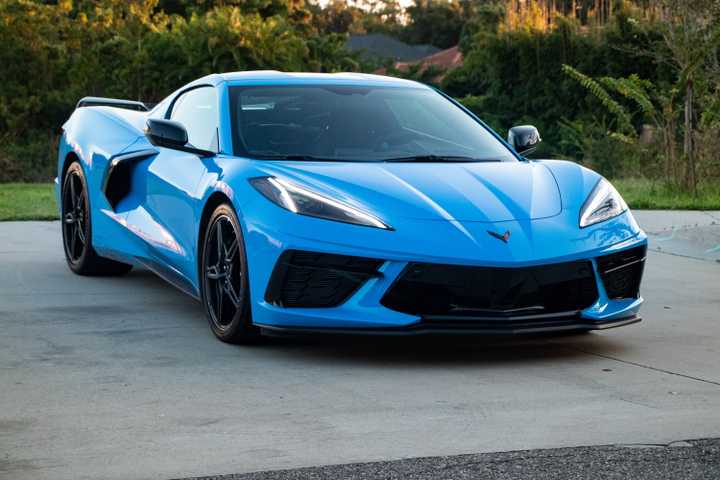
The visual transformation matters just as much as the mechanical one. The C8 doesn’t just perform like a mid-engine supercar, it looks like one, with proportions, a low cowl, and dramatic surfacing that wouldn’t look out of place parked next to a Lamborghini or McLaren. For decades, the Corvette’s biggest knock among cross-shopping buyers was that it didn’t look expensive enough to match its performance. That criticism has effectively vanished.
Chevrolet Didn’t Sacrifice Usability Chasing That Supercar Silhouette
2025 Chevrolet Corvette C8 Z06 In Sebring Orange TintcoatChevrolet
The C8 offers a proper front trunk in addition to rear cargo space, a relatively forgiving ride in Tour mode, and a cabin with enough tech and comfort to function as genuine daily transportation. Compare that to something like a McLaren Artura or Lamborghini Huracán, where storage is an afterthought and ride comfort is a constant compromise, and the Corvette’s everyday livability becomes a genuine competitive advantage rather than a footnote.
That combination, real supercar dynamics, real supercar presence, without supercar sacrifices, is vanishingly rare. Most manufacturers treat those three qualities as trade-offs against each other. The Corvette has increasingly managed to deliver all three at once.
Few Performance Cars Offer More For The Money
2025 Porsche 911 Carrera Exterior front 3/4 shotLyndon Conrad Bell | TopSpeed
This is where the Corvette’s case becomes almost unfair to the competition. A base Corvette Stingray coupe starts in the low-to-mid $70,000s, and even the Z06 comes in well south of $110,000 fully loaded. For context, a Porsche 911 Carrera, a rear-engine sports car, starts north of $115,000 before options, and can easily climb past $140,000 once a buyer adds anything meaningful.
Look further up the mid-engine ladder and the gap becomes almost absurd. A McLaren Artura starts north of $230,000. A Lamborghini Huracán Tecnica, before it was phased out, stickered well above $250,000. Even the Acura NSX, before it was discontinued, launched near $170,000 despite offering less outright performance than a Z06. None of these cars deliver dramatically more real-world capability than the Corvette; several deliver less, especially in a straight line or on a track day, where the Z06’s flat-plane V8 and 8,600-rpm redline outperform rivals costing two to three times as much.
2025 green McLaren Artura front 3/4 shot parkedTopSpeed | Garret Donahue
That value gap isn’t an accident—it’s a direct result of GM’s manufacturing scale and the Corvette’s position within Chevrolet’s lineup rather than as a boutique, low-volume specialty brand. Exotic manufacturers build a few thousand cars a year with correspondingly higher costs per unit. Chevrolet builds the Corvette on a scale that lets it spread engineering and tooling costs across a much larger production run, and passes some of that efficiency on to buyers. For enthusiasts who want genuine performance-car dynamics without a genuine performance-car mortgage, nothing else on sale comes close to matching what a Corvette delivers per dollar.
Even As Rivals Come And Go, The Corvette’s Lasting Appeal Shows No Signs Of Fading
2027 Chevrolet Corvette Grand Sport X in Pitch Gray Metallic showcases an aggressive stance.Chevrolet
Shot of 2027 Chevrolet Corvette ZR1X interior showing cockpitChevrolet
Look at the performance-car landscape over just the past fifteen years and the turnover is striking. Nameplates have been discontinued, revived, discontinued again, or quietly repositioned as luxury cruisers rather than genuine sports cars. Meanwhile, the Corvette has done the opposite: it has grown more relevant, not less, culminating in the biggest architectural shift in its history landing to near-universal acclaim rather than backlash.
Part of that staying power comes from Chevrolet’s willingness to keep evolving the formula rather than protecting it as a museum piece. The C8 generation alone has already expanded from a single model into a genuine sub-lineup, with the Z06 chasing outright performance and the E-Ray exploring electrified all-wheel-drive grip, with more hybrid and even fully electric variants reportedly still to come. That expansion suggests Chevrolet views the Corvette not as a legacy nameplate to be carefully preserved, but as a platform still capable of growth.
A group shot of the 2026 Chevrolet Corvette Z06 RHD.Chevrolet
For enthusiasts, that’s the most encouraging sign of all. Cars that stop evolving eventually stop mattering, no matter how beloved their history. The Corvette’s willingness to reinvent itself—while never losing the value proposition, the distinctive V8 character, or the accessibility that made it beloved in the first place—is exactly why it keeps winning over new generations of buyers rather than simply coasting on the loyalty of old ones. As long as Chevrolet keeps making that trade-off correctly, there’s little reason to think the Corvette’s appeal will fade anytime soon.








No Comments