
Volvo Just Fixed The EV Headache That’s Been Holding Back The EX60 And EX90
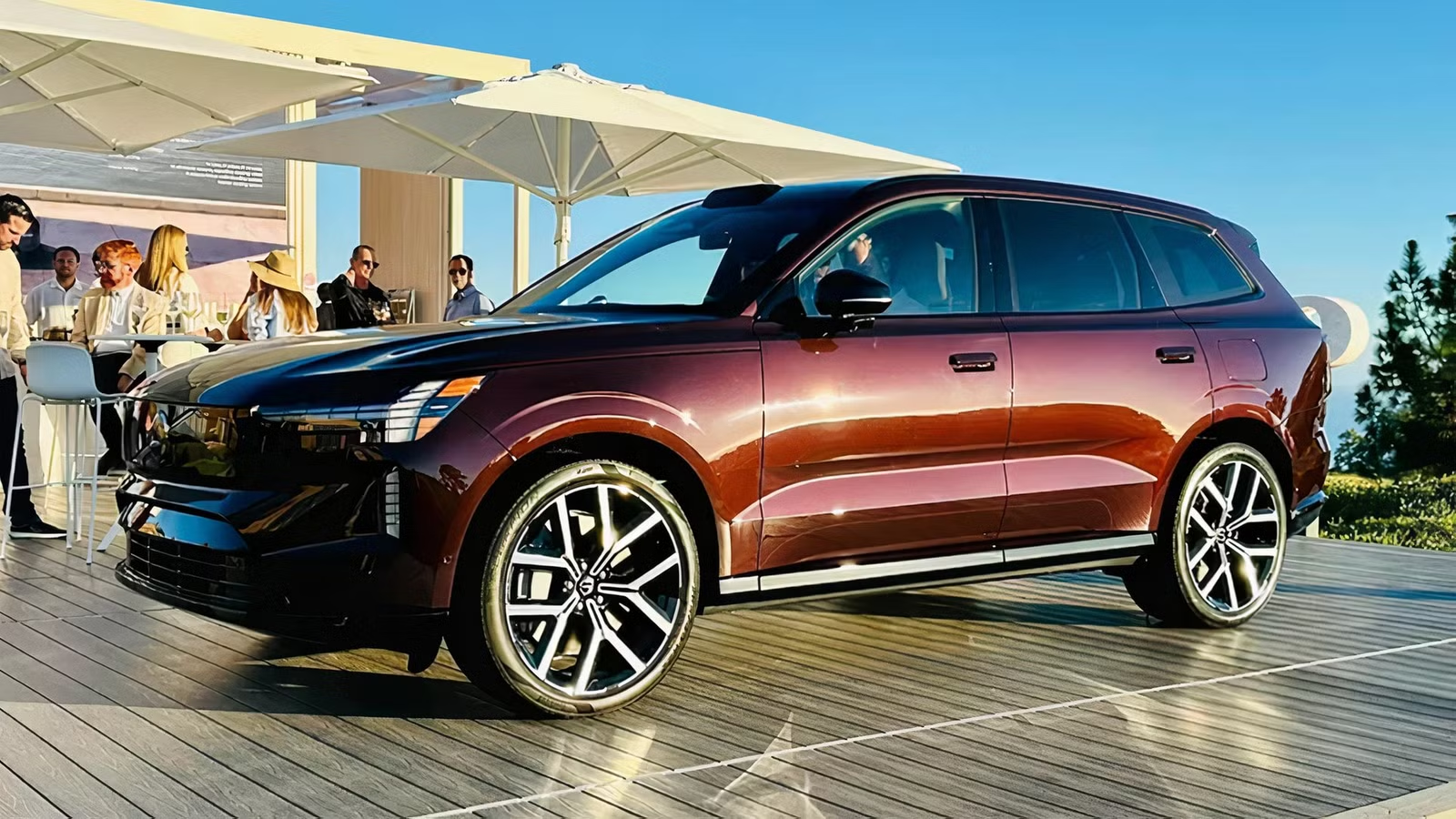
Volvo has rolled out an update for the EX60 and EX90 that addresses one of the more persistent frustrations owners have flagged since both electric SUVs launched—and for anyone who’s been sitting on the fence about Volvo’s premium EV lineup, the timing matters. The update, reported on June 19, 2026, targets a documented pain point that has come up repeatedly in owner feedback, and it signals that Volvo is actively iterating on its EV software rather than treating launch-day firmware as a finished product.

For EX90 and EX60 buyers, this is the kind of post-launch responsiveness that can shift a vehicle’s ownership experience meaningfully. Software-driven improvements are one of the clearest advantages electric vehicles hold over their combustion counterparts—the car you drive a year from now can genuinely be better than the one you drove off the lot. Whether this specific fix moves the needle enough to change a buying decision depends on how central the addressed issue was to your daily experience with the vehicle.
What The Update Addresses—And Why It Matters For Owners
The Autoblog report confirms that Volvo has eliminated what it describes as a “major EV headache” affecting both the EX60 and EX90. While the full technical breakdown of the fix—whether it targets charging behavior, thermal management, battery conditioning, or infotainment responsiveness—requires the complete source article for precise attribution, the framing is unambiguous: this is a real, documented problem that owners have experienced, and Volvo has now addressed it through a targeted update.

For context, the EX90 in particular launched as Volvo’s flagship electric SUV with a strong specification sheet — a dual-motor all-wheel-drive setup, a large battery pack, and a heavily software-integrated cabin built around a Google-powered infotainment system. Software-heavy vehicles in this class have historically been prone to early-ownership friction, whether that’s charging curve inconsistencies, slow over-the-air update rollouts, or cabin system lag. Any of those categories would qualify as a meaningful pain point for owners paying flagship prices.
What This Means For EX90 Buyers Considering The Market Right Now

The broader implication here is about Volvo’s post-sale support posture. Luxury EV buyers at the EX90’s price point are increasingly evaluating not just what a vehicle does on day one, but how the manufacturer handles the inevitable rough edges that emerge in real-world use. A prompt, targeted fix—rather than a vague promise of future improvement—is a meaningful signal.
The EX60, positioned as a more accessible entry point into Volvo’s electric lineup, benefits from the same update, which suggests Volvo is treating its EV platform holistically rather than reserving software attention for the flagship. For shoppers comparing the EX90 against rivals in the premium electric SUV segment, knowing that Volvo is actively closing gaps rather than letting them linger is a legitimate factor worth weighing alongside range figures and charging network access.
Volvo’s willingness to address owner-reported frustrations through a direct update—rather than waiting for a model-year refresh—is the right approach for any automaker serious about competing in the premium EV space long-term. If you’ve been watching the EX60 or EX90 from the sidelines, this is worth a closer look.
Sources: Autoblog

Related posts





Latest Post


No Comments