
Euro NCAP sets new safety standards for 2026
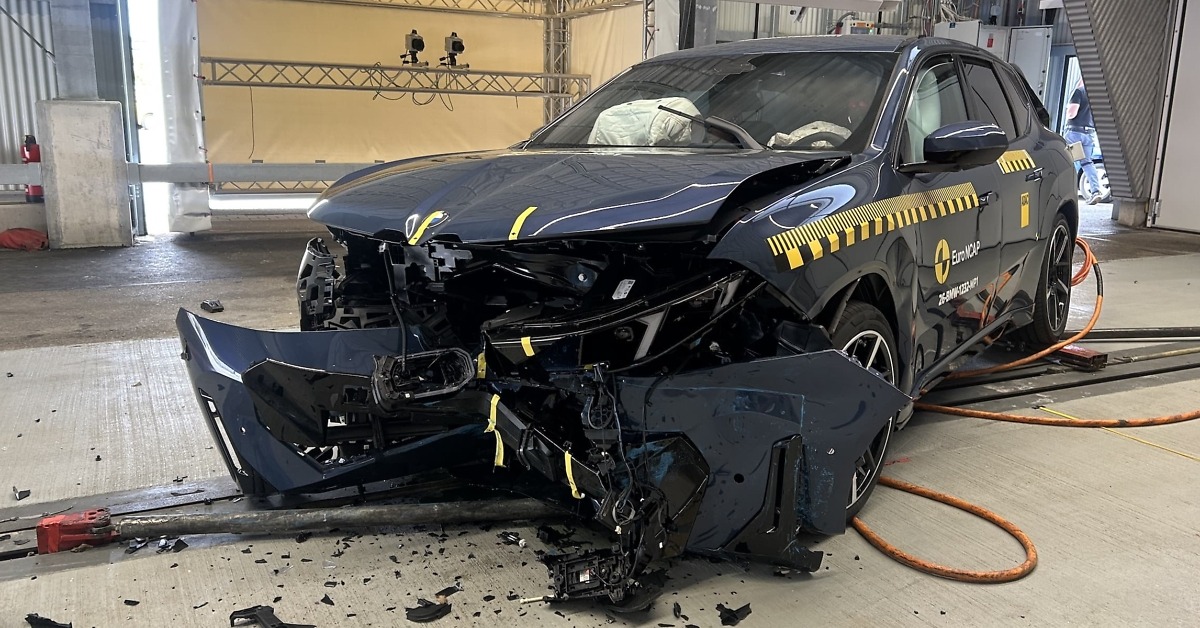
The way that cars are tested and rated for safety under the Euro NCAP scheme has been overhauled for 2026, with the biggest change to the testing programme in more than a decade.
The familiar five-star rating remains, but the tests behind it have changed. Euro NCAP now judges cars across four “stages of safety”, looking at how well they support the driver, avoid a crash, protect people in a crash and help emergency services afterwards.

The first two cars have now been tested under the new system. The BMW iX3 and Zeekr 7GT have both received five-star ratings, showing that car makers can still reach the top score under the tougher 2026 rules. Many more new cars are expected to be assessed under the updated protocols during the second half of the year.
For car buyers, the change makes Euro NCAP ratings more relevant to how modern cars are actually used. Crash protection is still central to the score, but the new tests also look more closely at driver monitoring, speed-limit recognition, lane support systems, touchscreen distraction, emergency braking, electric door handles and post-crash battery safety.
Euro NCAP is an independent European road safety organisation, which conducts tests that go beyond the minimum legal requirements for a car to be sold in the UK or EU. It began crash-testing cars in 1997, despite major opposition from the car industry, and its early results highlighted serious shortcomings in some everyday family cars.

The five-star rating system quickly became the industry standard for new-car safety, and car makers were equally quick to promote their five-star results. Over nearly 30 years, the tests have kept evolving as vehicle technology has improved. In recent years, the focus has moved beyond simply crashing cars into barriers, with more attention given to systems that help avoid accidents in the first place.
The Car Expert is one of only a few automotive sites that publishes the full Euro NCAP safety ratings – rather than just the headline star rating – as part of our Expert Rating reports for new cars.
How Euro NCAP ratings worked before 2026
From 2009 to 2025, Euro NCAP ratings were based on four main categories: Adult Occupant, Child Occupant, Vulnerable Road Users and Safety Assist.
Adult Occupant and Child Occupant scores covered crash protection for people inside the car, including frontal impacts, side impacts, whiplash protection and child seat performance. Vulnerable Road Users measured the risk to pedestrians and cyclists, while Safety Assist covered technology such as autonomous emergency braking, speed assistance, lane keeping assistance, seatbelt reminders and driver fatigue detection.
The category scores combined to form the overall star rating. To receive five stars, a car had to achieve minimum scores across all four areas, so a strong performance in one category could not completely make up for a weak result elsewhere.
Euro NCAP reviews its test protocols every few years, usually raising the standard needed to achieve each star level. A car’s safety rating normally remains valid for six or seven years after testing, reflecting the fact that safety expectations keep moving on.
What has changed for 2026?
Euro NCAP is still using four main categories and the familiar five-star rating, but the categories have been rebuilt around the sequence of a crash rather than the type of test being carried out.
The four new categories are Safe Driving, Crash Avoidance, Crash Protection and Post-Crash Safety. Together, they cover the full safety chain: helping the driver stay alert and in control, avoiding a crash where possible, protecting people if a crash happens and helping emergency services afterwards.
Many of the old tests remain, but the emphasis is broader. A modern car is no longer judged only on how well it protects occupants when it hits something. It is also judged on whether its safety systems work accurately, whether they are easy to live with, whether everyday controls are too distracting and whether the car can help rescuers after a serious collision.
Safe Driving
Safe Driving looks at the systems that help the driver stay alert, informed and in control before a dangerous situation develops.
Driver monitoring is now assessed more closely. Systems are expected to track the driver’s head and eyes, rather than relying only on steering inputs to decide whether the driver is tired or distracted. The tests also look at how a car responds if the driver is not paying attention or becomes unresponsive.
Euro NCAP is also paying more attention to how distracting a car is to use. That includes the way important functions are controlled, especially where car makers have moved basic controls into touchscreens. To reach the highest scores, cars need simple access to key functions that drivers may need while on the move.
Speed assistance is also being tested more thoroughly. Some cars are poor at reading speed-limit signs or matching them with the correct road, which can lead to wrong speed warnings. From 2026, Euro NCAP is checking speed-limit recognition during real-world driving, rather than only relying on controlled test conditions.
Crash Avoidance
Crash Avoidance covers the systems that warn the driver or intervene when a collision risk is developing.
This includes autonomous emergency braking, blind-spot monitoring, lane support and systems that can detect pedestrians, cyclists and motorcyclists. The tests also look at how smoothly and predictably these systems work, rather than simply whether they activate.
That should be useful for buyers, because over-sensitive lane keeping systems and constant warning noises are common complaints in new cars. A system that reacts too aggressively can be distracting, even if the underlying safety idea is sound.
Euro NCAP’s 2026 tests place more emphasis on how these systems behave in everyday driving. A car is not rewarded simply for having a long list of driver assistance features; those systems need to work in a way that helps rather than irritates the driver.
Crash Protection
Crash Protection is the part of Euro NCAP testing most people already understand. It covers how well a car protects occupants and other road users when a crash happens.
Euro NCAP will continue to test cars in frontal and side impacts, as well as assessing seatbelts, airbags, head restraints and vehicle structure. The 2026 update adds more detail around different occupant sizes and seating positions, supported by physical testing and computer simulation.
This should give a fuller picture of how well a car protects a wider range of people. Traditional crash testing has often been criticised for focusing too heavily on an average adult male occupant, so the new approach is designed to reflect a broader range of body types and ages.
Crash protection for pedestrians and cyclists also remains part of the assessment, including the performance of autonomous emergency braking systems and the design of the vehicle’s front-end structure.
Post-Crash Safety
Post-Crash Safety is one of the clearest new areas of the 2026 assessment. It looks at what happens after a crash, when quick rescue and clear information can make a major difference.
Automated emergency call systems have been required on new cars sold in Europe for several years. Under the new Euro NCAP tests, these systems are expected to provide useful information to emergency services, including how many people are believed to be inside the car.
The tests also look at whether doors can still be opened after a crash. This has become more relevant as more cars use electric door handles or electrically powered release systems.
Electric vehicles face extra post-crash checks. Their high-voltage battery systems must be able to be isolated safely, and the car must provide warnings if there is a risk of battery fire after a crash or during charging.
First 2026 results: BMW iX3 and Zeekr 7GT
The BMW iX3 and Zeekr 7GT are the first cars to be assessed under the 2026 protocols, and both have achieved five-star ratings.
The all-new BMW iX3 scored strongly across all four new stages of safety. Euro NCAP also praised BMW for retaining physical controls for important driving functions, rather than pushing everything into the touchscreen.
The Zeekr 7GT (due to arrive in the UK in early 2027) also achieved a five-star result, with strong scores for crash avoidance and crash protection. However, Euro NCAP noted that many of the car’s key controls depend on the central touchscreen, which cost it marks in the Safe Driving category.
The early results suggest that five-star scores are still achievable under the tougher system, but the detail behind the rating is becoming more useful. Two cars can both have five stars, while still showing different strengths and weaknesses in how they support the driver, avoid crashes and help after an accident.
Do older Euro NCAP ratings still count?
Older Euro NCAP ratings remain valid until they expire, so cars tested under the previous system have not suddenly become unsafe.
However, ratings from 2026 onwards are not directly comparable with results from 2025 or earlier. The star rating may look the same, but the tests behind it have changed significantly.
This is why it is worth looking beyond the headline star score. A five-star result from 2022 and a five-star result from 2026 both indicate a strong safety performance for their time, but the newer rating covers more areas and reflects tougher expectations.
For buyers comparing new cars, the test date now matters more than ever. A car with a recent five-star rating has been judged against newer standards, while an older rating may not cover the latest driver assistance, distraction and post-crash safety requirements.
What should buyers take from the new ratings?
The 2026 Euro NCAP overhaul should make safety ratings more useful, not more confusing.
The headline star rating still gives a quick indication of how well a car performs, but the category scores underneath now deserve more attention. A car may be very strong in crash protection but less convincing in driver assistance, or excellent at avoiding collisions but weaker in how easy its safety systems are to use.
This is especially useful for buyers who are frustrated by modern safety alerts, touchscreen menus and intrusive driver assistance systems. Euro NCAP is now looking more closely at whether those systems work accurately and sensibly, rather than simply whether they are fitted.
The next few rounds of 2026 test results will give a clearer picture of how different manufacturers are adapting to the new rules. For now, the BMW iX3 and Zeekr 7GT show that the five-star standard is still within reach, but the route to that score is now more demanding.
Read more:
This article was originally published in January 2026, and updated in July 2026 with results of the first tests conducted under the new Euro NCAP protocols. Additional reporting by Stuart Masson.

Related posts


Latest Post



No Comments