
GM Is Bringing Back Gas Cadillacs After A $10.9B EV Reality Check — Here’s What That Means For Buyers
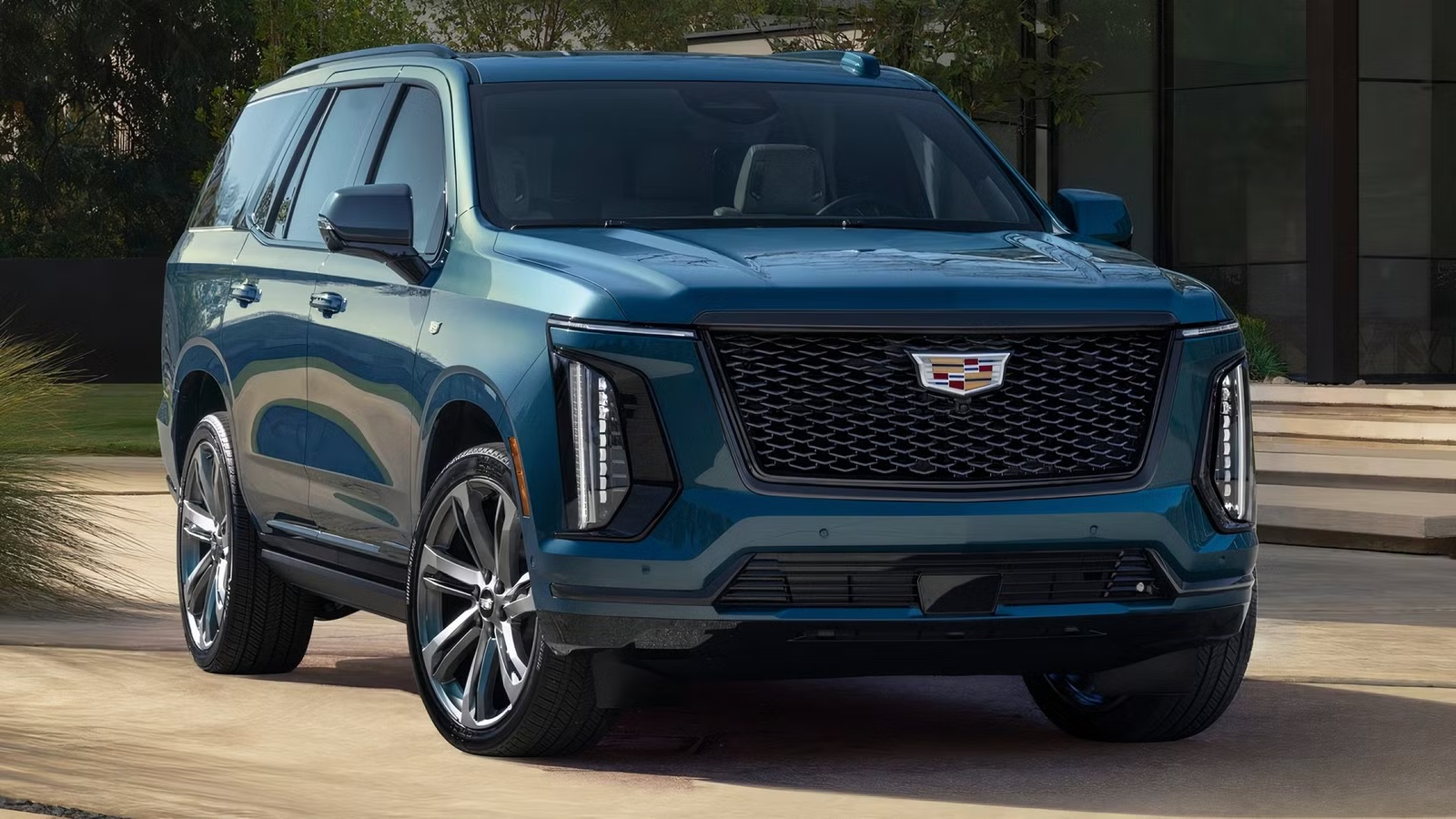
Cadillac’s all-electric future just got a significant rewrite. General Motors confirmed this week that it is reviving gasoline-powered Cadillac models, reversing a strategy that had pointed the brand exclusively toward EVs — and the first new gas-powered Cadillac is set to arrive in 2027, built at GM’s Spring Hill, Tennessee plant, where the company is investing $150 million to make it happen.

The backdrop is hard to ignore: GM absorbed a $10.9 billion EV write-down as part of a broader reset of its electrification timeline. But for luxury car shoppers, the financial drama is secondary. What matters is that Cadillac will once again offer internal-combustion options alongside its electric lineup — giving buyers real choices at a time when many weren’t ready to commit to a charging-dependent ownership experience.
Which Cadillac Models Are Coming Back, and When
The clearest signal from GM’s announcement is the 2027 timeline for new gas-powered Cadillac production. The Spring Hill facility — already home to Cadillac’s Lyric EV — is being retooled to support the returning combustion lineup, with $150 million committed to that effort. While GM has not yet published a full model-by-model breakdown of which nameplates will carry gas powertrains, the investment scale and the Spring Hill location point toward SUV-segment products, where Cadillac has its strongest sales volume.

CBT News reported that the shift represents a formal departure from Cadillac’s previously stated all-EV trajectory, with gas models confirmed for the 2027 model year. Specific trim names and powertrain configurations have not been detailed publicly yet — those announcements are expected to follow as the 2027 launch approaches. Buyers interested in a particular body style should watch for Cadillac’s official product reveals later this year.
What the Future Cadillac Lineup Actually Looks Like


The emerging picture is a hybrid lineup in the truest sense — not hybrid powertrains, but a mixed portfolio of EVs and gas-powered vehicles sold side by side. Cadillac’s electric models, including the Lyriq and Escalade IQ, remain in production. The returning gas models sit alongside them rather than replacing them.
That structure mirrors what most of Cadillac’s German competitors have been doing all along. Mercedes-Benz, BMW, and Audi never committed to an EV-only future on any fixed timeline — all three maintained robust gas and plug-in hybrid lineups while gradually expanding their electric offerings. Cadillac is now arriving at roughly the same place, just via a more turbulent route. For shoppers cross-shopping against an E-Class, a 5 Series, or a Q7, the practical result is that Cadillac will once again compete on equal footing in terms of powertrain availability.

The immediate takeaway for buyers is straightforward: if you were holding off on a Cadillac because the brand’s EV-only direction didn’t fit your lifestyle, that constraint is lifting. A 2027 gas-powered Cadillac SUV — built in Tennessee, backed by GM’s full dealer and service network — is a realistic option to put on your shopping list alongside the German alternatives.

Pricing has not been announced for the returning gas models, but Cadillac’s existing SUV lineup positions it in the $55,000–$110,000 range depending on trim and configuration. The new gas models are expected to slot into that same competitive band. On value, Cadillac has historically offered more standard content per dollar than comparable German models, and that positioning is unlikely to change.
For buyers already considering an EV, the Lyriq remains available and continues to be updated. The point is simply that the choice now exists — which is where most luxury shoppers wanted Cadillac to be in the first place.
Cadillac’s pivot is less a retreat than a recalibration toward what luxury buyers have consistently said they want: options. The brand enters 2027 with a broader lineup, a clearer value proposition against its European rivals, and a manufacturing commitment that suggests this isn’t a temporary hedge. Whether the returning gas models can recapture the momentum Cadillac ceded during its EV transition years is the real question — and the answer starts arriving next year.

Related posts
Latest Post


No Comments