The Affordable EV That Quietly Gets Everything Right
8 minutes reading
Saturday, 18 Jul 2026 16:00 0 52 autotech
Electric vehicles (EVs) have become more affordable over the years, but in general, they remain more expensive than the equivalent internal combustion engine (ICE) car. There is one EV, however, which is the closest to price parity with an ICE car. Perhaps versus a hybrid, it is already at the same price level, as you’ll see later.
Anyway, before we talk about the affordable EV that’s worth a look and will completely jive with your daily life, we have to take a look at how the EV landscape is today, both in North America and globally. That’s because, as unpopular as it is to talk about politics, this plays a huge factor in how EV adoption is so fragmented in various markets around the world. Today’s EV, however, remains affordable despite the various challenges surrounding EV affordability, which is astounding considering how new car transaction prices in general remain high.
It’s unsurprising to see that EV adoption in the United States slowed down. Everywhere else, however, EV sales continue to grow, and we’ll explore the reasons behind America’s shrinking interest in EVs.
EV sales have slumped 27 percent in the first quarter of 2026 versus the same period last year, according to Cox Automotive. Versus the previous quarter, which is the fourth quarter of 2025, the decline is more modest at 7.8 percent. This is a sign that the sales decline since the removal of the $7,500 federal tax credit for EVs is now stabilizing, since previous quarter sales were a staggering 46 percent lower versus the third quarter of 2025–right when the federal tax credit was removed.
Interestingly, however, not all brands saw sales declines for their EVs. Cadillac, Lexus, and Toyota, in particular, experienced EV sales growth. Whether you agree or not with the government removing incentives for EVs is up to you. Moving forward, EV demand and interest will now be driven organically by innovation, clever pricing, and economies of scale.
Global EV Demand Driven By Energy Crisis
BYD Han L EV side shotBYD
Elsewhere, EV sales continue to grow, though likewise at varying paces. According to the IEA, for the first quarter of 2026, EV sales grew by 30 percent in Europe, which is impressive already, but Asia-Pacific (excluding China) saw its EV sales grow by 80 percent. Following closely behind is Latin America with 75 percent growth. In March, close to 90 countries reported year-on-year sales growth, while nearly 30 countries reported record-breaking monthly EV sales. The March timing isn’t coincidental, because this is also when the world entered into an energy crisis.
Still, despite the rapid growth in these markets, worldwide EV sales dipped slightly by eight percent, primarily due to policy changes in China, the world’s largest EV market, as well as the United States. China is unsurprisingly the biggest producer of EVs, accounting for 60 percent of EVs produced worldwide. North America and Europe each accounted for 15 percent of EV production. Price parity is also undeniably where China leads, because a lot of its EVs aren’t just on par with an ICE car, but oftentimes even lower. Until Chinese EVs finally enter the United States freely, the hope for affordable EVs remains an elusive dream for some.
Turning A New Leaf
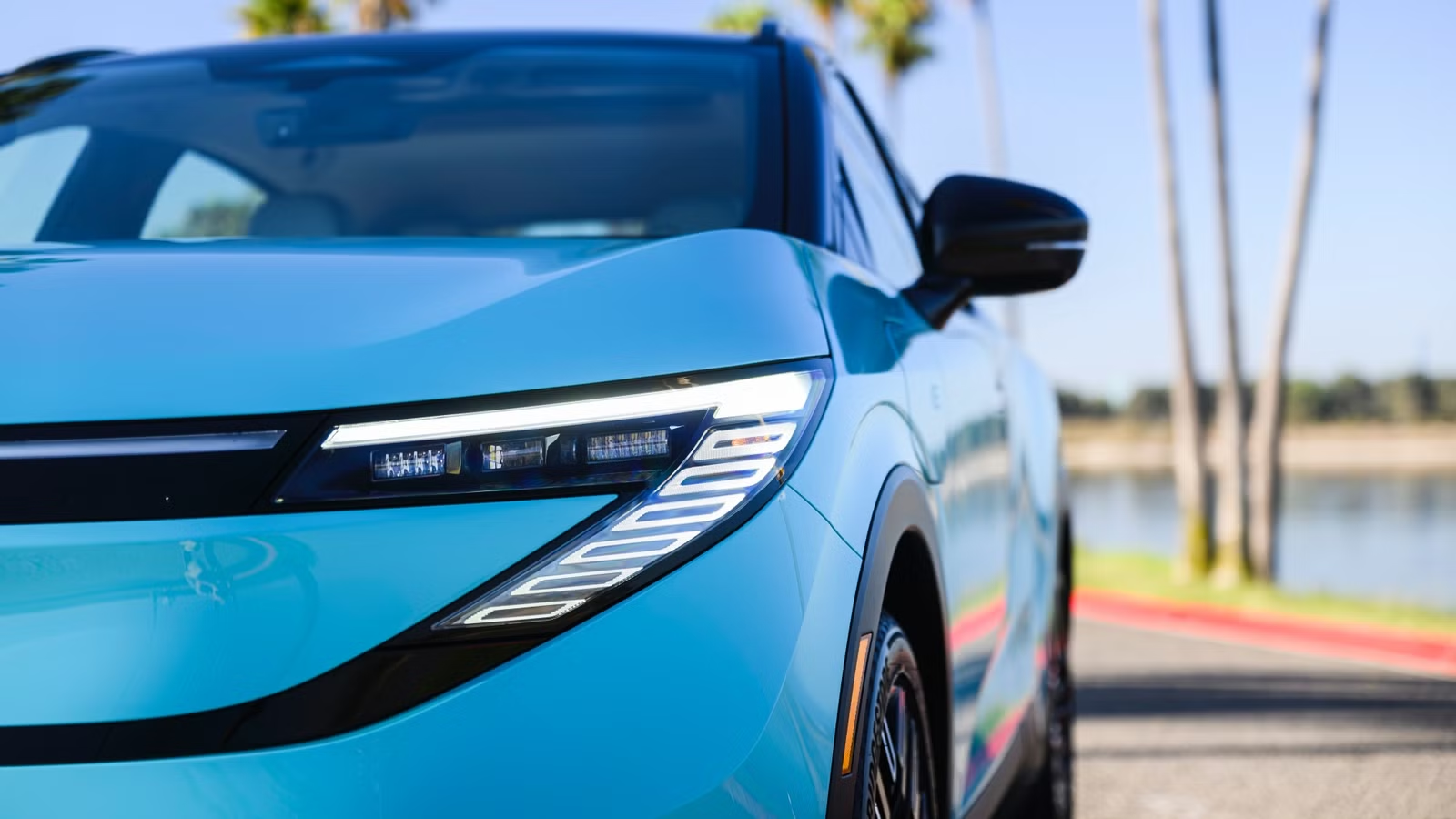
2026 Nissan Leaf front close-up of the grilleNissan
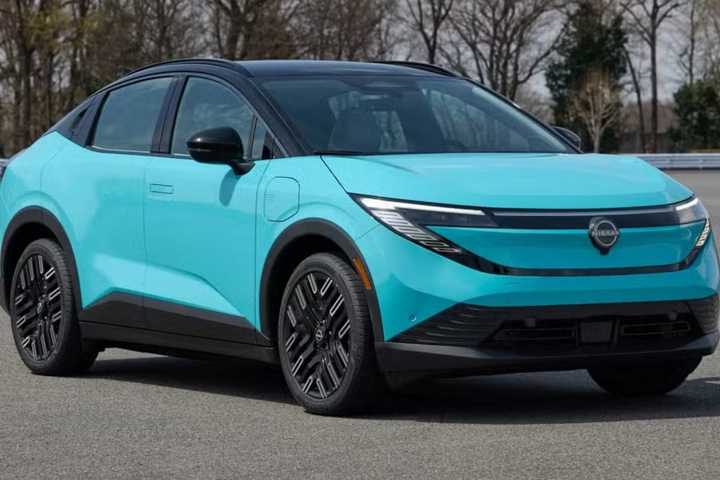
The affordable EV we’re referring to is the new 2026 Nissan Leaf. It is the pioneering affordable EV that has been reinvented to become a more versatile and stylish crossover SUV.
Starts At Just $29,990
Front 3/4 view of the 2026 Nissan Leaf S+Nissan
It’s undeniable that EVs remain more expensive than their pure gas counterparts, but did you know that the Leaf’s base price is on par with the Corolla Cross Hybrid’s? And it’s not like you’re getting poor equipment out of the Leaf, either. The base S+ has the longest range among Leaf variants as it offers an EPA-rated 303 miles when fully charged. Sure, that may not beat the Corolla Cross Hybrid, but as far as EVs go, more than 300 miles is often good enough for an EV to be an American family’s primary car.
Size-wise, the Leaf’s transformation into a crossover SUV has meant that it’s now a more versatile vehicle than before. To highlight this aspect, the new Leaf’s total passenger volume of 92.3 cubic feet slightly edges out the Corolla Cross Hybrid’s 88.4 cubic feet. There’s a sloping roofline in the Leaf, but the bespoke EV platform with a flat floor and wheels that are pushed as far out of the vehicle as possible does give the Leaf a packaging advantage. However, the sloping roofline starts to eat into the cargo space, as the Leaf offers 20 cubic feet behind the rear seats versus 21.5 cubic feet in the Corolla Cross Hybrid.
But It’s Not A Penalty Box
2026 Nissan Leaf dashTopSpeed | Michael Frank
2026 Nissan Leaf front seatsNissan
Yet despite the Leaf S+’s competitive price tag, it’s not like you’re dealing with a penalty box, either. Features-wise, Nissan has done its best to make the S+ feel special enough for $29,990. From the outside, not only does the Leaf look like a more organically styled Ferrari Luce, but it also gets more standard kit than the base Corolla Cross Hybrid S for an equivalent $29,595. Though LED headlights are standard for both cars, the Leaf gets proper LED daytime running lights, while the ones in the Corolla Cross Hybrid S are just the main projectors in a low beam state. The Leaf may be wearing 18-inch steel wheels with hubcaps, but its geometric design cleverly hides the steel wheels underneath, Tesla-style.
Sit inside the Leaf S+, and the feature advantages of this variant versus the Corolla Cross Hybrid S are even more apparent. From a modernity perspective, the two 12.3-inch screens for digital gauges and the NissanConnect infotainment pretty much eat the Corolla Cross Hybrid S’s digital features alive, which opts for a seven-inch digital gauge cluster and an eight-inch infotainment touchscreen. Even the Leaf S+ gets an acoustic laminated windshield for a quieter ride. And then in other respects, both models get a manual rear tailgate and fabric upholstery. Clearly, the Leaf S+ wins in terms of features here.
What’s The Leaf Like To Drive
2026 Nissan Leaf front 3/4 shotNissan
The 2026 Nissan Leaf has been comprehensively redesigned from the ground up, and in its transition into a compact electric crossover SUV, this vehicle has significantly improved road manners, a more compelling range, and comfort levels that will satisfy most families.
Novel Electric Performance For Under $30,000
2026 Nissan Leaf side shot driving through cityNissan
Our team was able to review the 2026 Nissan Leaf in range-topping Platinum+, but regardless of which variant you choose, all Leaf versions will drive similarly. 214 horsepower and 261 pound-feet of torque from the front electric motors may not sound like a lot by electric car standards, but versus its gas and hybrid rivals, this power output is actually good. As usual in an EV, the power delivery is responsive, so everything you do with the throttle makes the Leaf feel responsive and spritely off the line and during overtakes.
For real-world driving, the Leaf felt genuinely quick, especially where it matters, like when passing going uphill, on steep mountain grades… the Nissan likes to be tossed around corners much more than that crossover—and is far quicker, too.
The Leaf’s comprehensive redesign also involves adopting the discontinued Ariya’s platform, which is a slightly larger EV. This means it gets a fully independent suspension on all four wheels—including a multi-link setup at the rear. Together with the responsive steering and relatively modest 4,000-pound weight, not only is the Ariya-based platform well-suited to a much lighter EV, but it also offers athletic handling characteristics that truly make it a pleasure to drive. No, it’s not a sports car, but there’s reasonable fun to be had behind the wheel.
And then one of the biggest upsides of the Leaf’s multi-link rear suspension is that it rides extremely well for its price. Most subcompact SUVs at this price point still feature a torsion beam rear, and so this already puts an on-paper advantage to the Leaf. Out in the real world, the Leaf rides well, and that is coupled with excellent refinement.
Also, the new Leaf in S+ trim has the longest range among EVs under $30,000, as it offers 303 miles on a full charge. The bigger wheels of the higher trims, unsurprisingly, reduce range. Shop wisely if you prefer style over a long range. The new Chevrolet Bolt EV has 262 miles of range, which is good for a small crossover-styled hatch, but that’s a smaller offering than even the Leaf. Thanks to the balance of pricing, specs, and capability, the new Leaf in S+ trim is one of the most compelling new EVs in the market today—one that you should definitely not overlook if affordability with capability is your concern.











No Comments