The Toyota Hybrid That Makes Luxury Cars Hard To Recommend
10 minutes reading
Saturday, 18 Jul 2026 12:00 0 68 autotech
Sign a lease on a modern BMW 3 Series, and you are paying for an exceptionally polished experience. The lighting is perfect, the leather smells expensive, and the cars on display are deeply appealing pieces of modern design. Yet, for many buyers looking for a premium daily commuter, a closer look at the invoice reveals how quickly the costs escalate once you start adding the features that make a luxury car feel truly luxurious.
The physical gap in refinement between high-end mainstream cars and established luxury vehicles has mostly narrowed to a razor-thin margin. There certainly was a time when stepping up to a premium European sedan was the only way to experience a completely different level of structure, sound deadening, and high-speed composure. Today, modern architecture has democratized those exact qualities. You no longer have to spend sixty thousand dollars to find a cabin that remains quiet at highway speeds, or suspension that doesn’t jostle you around.
Side shot of 2025 Lexus RX 350 Luxury interior showing front and rear seatsLexus
Shopping for an entry-level luxury car hardly takes the edge off. While the base price on the window sticker looks highly competitive, it’s rarely the car you’re actually shopping for. By the time you configure the vehicle with the standard amenities expected in this class like ventilated leather seats or a premium sound system, the final price is pushing into a tier where the car’s compact footprint and basic chassis struggle to justify the cost.
The modern definition of luxury has also undergone a dramatic shift. Upmarket manufacturers have largely moved away from mechanical distinction, focusing instead on digital real estate, mostly in the form of touchscreens. In this push toward a digitized future, many brands have removed tactile, physical “clicky” knobs for the climate controls, burying everyday functions under multiple sub-menus. More often than not, these cars come with “sporty” suspension that doesn’t always feel great on your average road. These cars are still visually striking, but it doesn’t always translate to a more relaxing daily commute.
Meet The Contender: The Toyota Crown Platinum
White 2026 Toyota Crown Parked By A CityscapeToyota
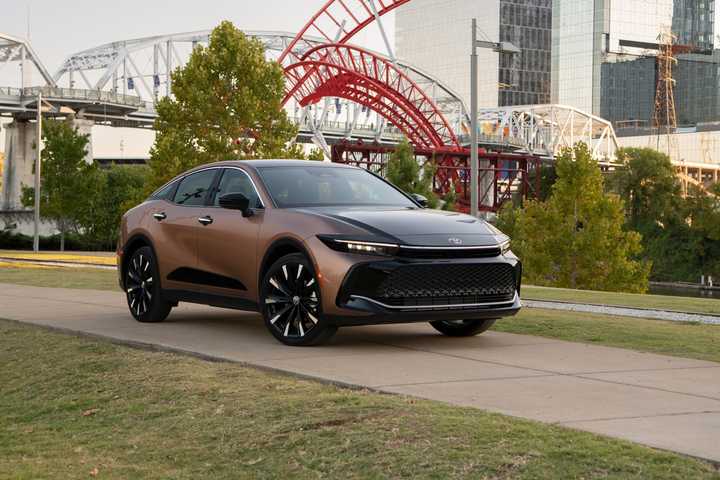
To see where the luxury value proposition begins to face serious pressure, you have to look at the flagship of the Toyota lineup. When the company retired the Avalon sedan in North America, they replaced it with the Crown. It’s a nameplate with decades of executive heritage in Japan, but the version designed for the US market is a unique, high-riding fastback that intentionally blurs the line between traditional vehicle segments. Built on the highly rigid TNGA-K platform, the Crown raises the cabin’s hip point to give the driver an upright, commanding view of the road that’s more similar to a compact crossover.
At a base price of $54,990, the top-tier Crown Platinum is not a budget car. It sits directly in the price territory of a mid-spec German sport sedan or a well-equipped Lexus ES. But once you look past its unconventional fastback silhouette and spend time behind the wheel, you realize that Toyota engineered this vehicle to deliver a deeply refined, traditional luxury experience. It simply approaches the luxury equation with a different set of priorities.
Rear 3/4 shot of 2025 Toyota Crown in white parkedToyota
Genuine luxury is defined by effortless, silent momentum. When pulling out to pass on a fast-moving highway, a premium car shouldn’t force you to wait for a small, heavily boosted engine to find its footing while the transmission hunts for the right gear. Yet, that is the default driving dynamic for many entry-level premium competitors, which rely heavily on buzzy 2.0-liter turbocharged four-cylinder engines.
The Crown Platinum bypasses this behavior with Toyota’s flagship Hybrid MAX powertrain. This system pairs a 2.4-liter turbocharged four-cylinder engine with a powerful electric motor on the front axle and an independent, water-cooled electric motor on the rear. Together, they send 340 horsepower and a robust 400 pound-feet of torque to all four wheels. Because the electric motors provide instantaneous torque from a standstill, the Crown surges forward with a smooth, linear wave of power that feels remarkably like a classic, naturally aspirated luxury V-6. Rather than using the rubbery, high-revving continuously variable transmission (CVT) found in standard hybrids, the Platinum trim uses a direct-shifting six-speed automatic. Edmunds testers noted that this gearbox provides clean, positive gear changes that keep the powertrain working in its sweet spot,launching the sedan to sixty miles per hour in a highly respectable 5.7 seconds.
Standard Opulence vs. The Line-Item Extortion
2026 Toyota Crown Signia Limited interiorLyndon Conrad Bell | TopSpeed
When you try to configure a traditional luxury sedan to match the standard equipment list of the Crown Platinum, the pricing difference becomes stark. Luxury brands have long treated comfort features as high-dollar add-ons, turning what should be baseline conveniences into premium upgrades.
In the Crown Platinum, the standard equipment sheet reads like a luxury car’s options list after a buyer has ticked every single package. Acoustic noise-reducing glass is standard on the windshield and front side windows, insulating the cabin from wind and tire hum. The seats are wrapped in genuine leather, offering multi-level heating and ventilation up front, while the rear outer seats are heated as well. A fixed panoramic glass roof fills the cabin with natural light, and an 11-speaker JBL premium audio system handles the entertainment. Furthermore, Toyota Safety Sense 3.0 is standard, bringing full-speed adaptive cruise control and lane-centering assists that take the tension out of heavy highway traffic. Try to spec those exact features on a European competitor, and the option sheets will quickly push the final invoice past sixty-five thousand dollars.
The Financial Reality Of The Five-Year Ownership Loop
2026 Toyota Crown front 3/4 shotToyota
The true test of a luxury vehicle rarely happens during the initial lease period. Any brand-new car feels impressively tight, quiet, and reliable during a brief test drive. The real measure of a premium machine is how it behaves during year five or six, as the original factory bumper-to-bumper warranty expires and the mechanical components face the reality of high mileage.
The Post-Warranty Time Bomb
2024 Toyota Crown Limited hood badgeLyndon Conrad Bell | TopSpeed
Long-term reliability indices consistently highlight a sobering reality: several legacy premium brands struggle with long-term dependability once they leave the showroom floor. Modern luxury cars are incredibly complex machines packed with delicate electronic systems, proprietary software modules, and intricate suspension components that do not always tolerate years of harsh weather and rough roads. When a proprietary control module fails out of warranty, the owner is often looking at high parts markup and specialized labor that standard independent garages cannot easily perform.
The Crown, by contrast, sits on a high-volume mechanical platform that Toyota has spent years refining across its global lineup. The hybrid transaxle is mechanically straightforward, with far fewer moving parts to wear out compared to a highly strung, multi-clutch automatic transmission. Toyota backs the hybrid system components with an eight-year or 100,000-mile warranty, and the hybrid battery itself gets a ten-year or 150,000-mile safety net. If a window motor or a suspension bushing eventually wears out after years of daily driving, you do not need to take the car to a specialized boutique dealership. Any competent local mechanic can source the parts and perform the work quickly, keeping the long-term ownership experience completely grounded in reality.
Premium Fuel And The Efficiency Tax
Rear Shot of 2025 Toyota Crown NightshadeToyota
Daily operating costs are another practical factor that premium sales staff rarely emphasize. Nearly every turbocharged engine in the luxury segment requires premium 91-octane gasoline to deliver its advertised horsepower and fuel economy. Running regular fuel in those engines causes the knock sensors to retard ignition timing, which hurts fuel economy and makes the engine feel sluggish.
The Crown Platinum’s turbocharged Hybrid MAX system is engineered to run happily on standard 87-octane regular unleaded. Even with 340 horsepower and 400 pound-feet of torque on tap, the EPA estimates the Crown Platinum will return 30 combined MPG (29 city/32 highway). While standard economy hybrids can easily clear forty miles per gallon, the Crown manages to deliver genuine performance while sipping regular fuel at a rate that puts traditional luxury cruisers to shame. Over five years of daily commuting, that fuel differential represents thousands of dollars kept in your wallet.
Addressing The Skepticism: Where The Toyota Stays A Toyota
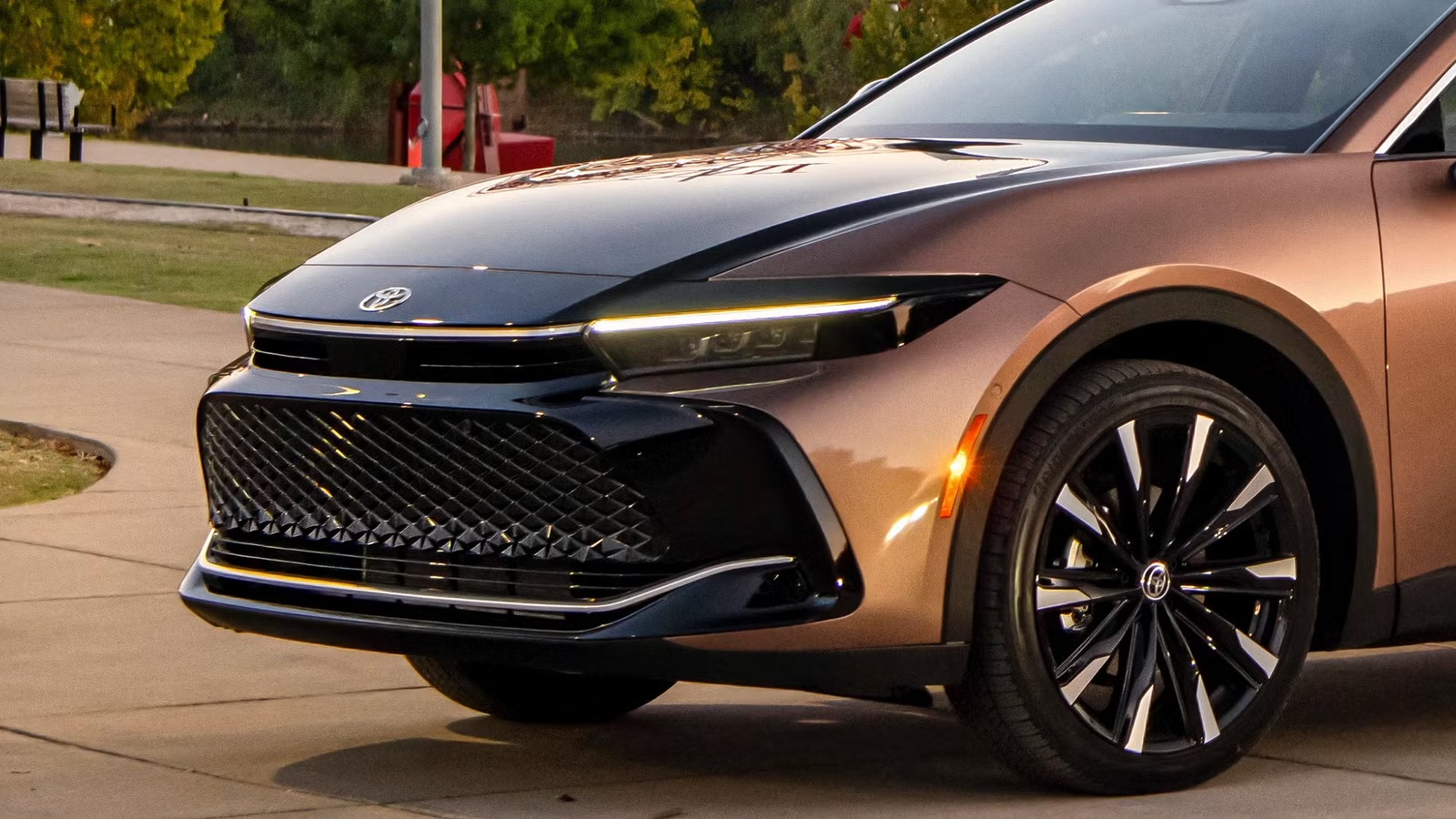
2026 Toyota Crown Wheel close-upToyota
To write a completely honest assessment of the Crown, we have to look at its shortcomings. If you try to argue that this vehicle matches a Mercedes-Benz S-Class or an upper-tier Lexus in every single tactile detail, you will lose all credibility. Toyota is a mass-market manufacturer, and when you examine the Crown’s cabin with a critical eye, you can see exactly where the accountants stepped in to keep the price from ballooning.
Cabin Materials And The “Identity Crisis” Styling
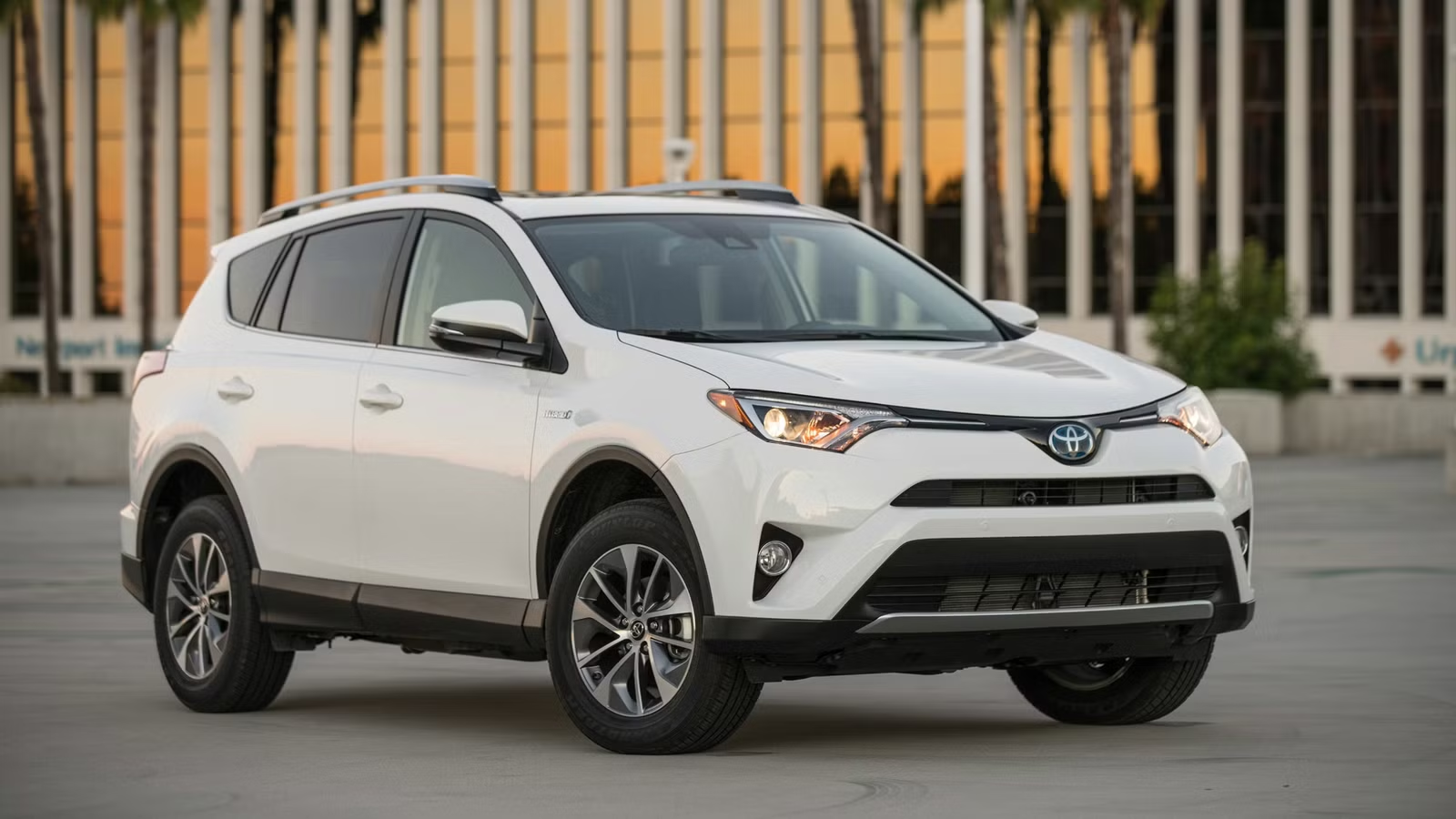
While the upper surfaces of the dashboard and door panels are wrapped in soft-touch materials, the lower half of the Crown’s interior is a reminder of its family-car roots. The lower door pockets, the sides of the center console, and the lower dash panels are made of hard, grained plastic. It is highly durable and easy to wipe down after a muddy winter, but it is the same utility-grade polymer you find in a base-model RAV4.
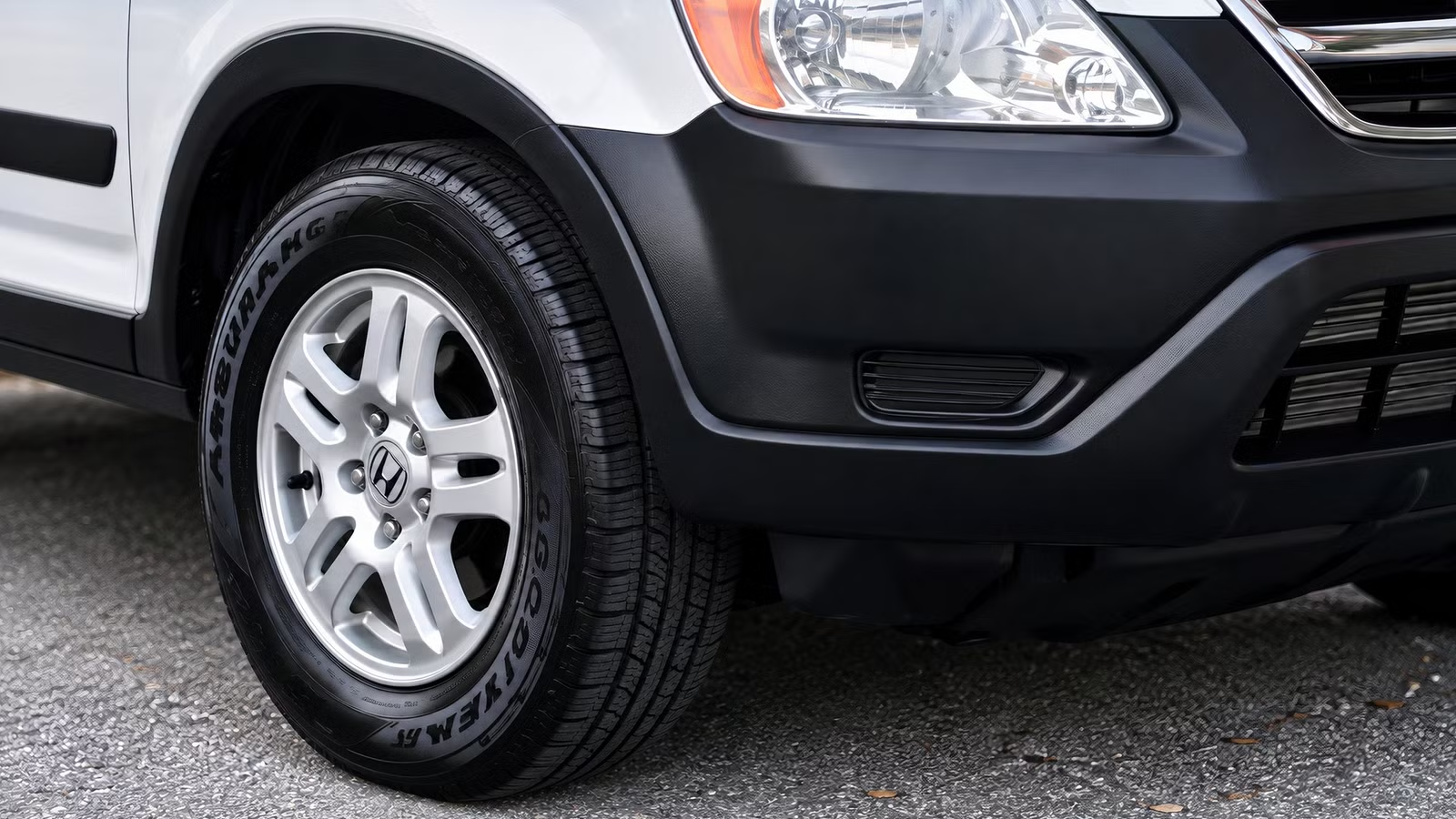
Then there is the exterior design. The elevated ride height makes sliding into the driver’s seat incredibly easy on older knees, but the tall body profile can make the standard 21-inch wheels look slightly disproportionate from certain angles. The sloping fastback roofline mimics a grand touring sedan, but it cuts into rear headroom. Passengers over six feet tall will find their heads uncomfortably close to the headliner, and the trunk opening is a traditional sedan lid rather than a full utility hatchback, which limits your ability to load bulky cargo. It is a highly unconventional shape, and for buyers who prefer the classic, clean proportions of a traditional three-box sedan, the Crown’s styling will be a difficult sell.
The Ultimate Verdict: An Intellectual Flex Vs. A Social Flex
Rear 3/4 action shot of 2026 Toyota CrownToyota
Ultimately, the choice between an entry-level luxury badge and a top-trim Toyota Crown comes down to what you want your car to say about you. Buying a traditional premium car is often a social decision. It is an investment in a recognized symbol of success, trading on public perception and the undeniable pleasure of owning a prestigious brand name. There is real value in that experience for many drivers, and the luxury brands have spent decades perfecting it.
Choosing the Crown Platinum is a different kind of decision. It is a calculated choice made by a driver who looks past the marketing campaigns and analyzes the car purely as a mechanical tool. It is for the buyer who wants the quiet glass, the ventilated leather, the immediate electric torque, and the secure all-wheel-drive traction, but prefers to skip the ongoing premium associated with a luxury badge. If you are willing to look past the badge on the steering wheel, this high-riding hybrid delivers the physical substance of a premium car with mass-market peace of mind, making traditional luxury cars exceptionally hard to recommend.












No Comments