
The Fastest Car Up Goodwood Hill Was An Electric Ford—And It Beat Formula E’s Latest Gen4 Machine
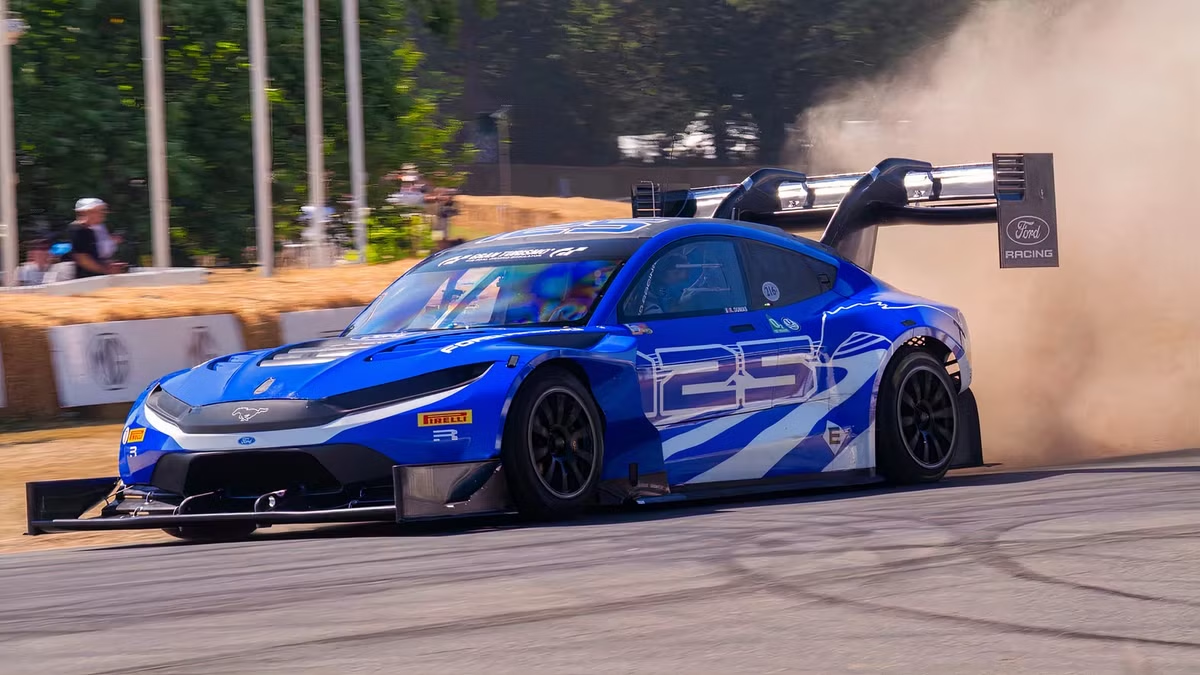
At the 2026 Goodwood Festival of Speed, the car that set the fastest time up the famous 1.16-mile hill wasn’t a hypercar, a Le Mans prototype, or a purpose-built hillclimb special. It was a Mustang Mach-E—a heavily modified, Pikes Peak-built electric Ford piloted by Romain Dumas—and it beat Formula E’s newest Gen4 single-seater in the process.

The result landed on July 13, mid-festival, and it carries weight beyond the scoreboard. Goodwood’s hill is one of motorsport’s most-watched informal proving grounds, drawing the fastest machinery from every corner of the performance world. When an EV built around an American pony car nameplate outruns a dedicated open-wheel racing platform on that stage, it’s a genuine engineering statement.
What Ford Brought To Goodwood—And What It’s Already Won
The car in question is the Super Mustang Mach-E, a purpose-built electric racing demonstrator developed by Ford’s performance engineering team. It isn’t a production vehicle or a lightly modified showroom EV—this machine was constructed specifically to attack Pikes Peak, the 12.42-mile, 156-turn Colorado mountain course that has become the de facto benchmark for EV performance credibility.

Dumas drove the same car to an 8:18.202 finish at Pikes Peak 2026 in June, winning the overall title outright. That result alone validated the platform. Goodwood, just weeks later, extended the proof to a very different kind of stage—shorter, narrower, watched live by tens of thousands and streamed globally. The Super Mach-E posted the fastest time up the hill across the entire festival field, clearing the Formula E Gen4 car in the process.
Why Beating A Formula E Gen4 Car Actually Means Something

Formula E’s Gen4 machine is not a novelty. It is a purpose-designed open-wheel racing car built to FIA specification, producing around 350 kW (approximately 470 hp) in qualifying trim, with aerodynamic and powertrain development cycles that mirror top-tier single-seater racing. These cars race wheel-to-wheel on street circuits around the world; they are not slow, and they are not simple.
The Goodwood hill favors raw acceleration and mechanical grip over sustained top speed, which does play to the Mach-E’s strengths—but that framing cuts both ways. The Gen4 car is also optimized for exactly this kind of short, punchy acceleration burst. The Super Mach-E beating it isn’t a quirk of the format; it reflects a genuine performance advantage on the day. Exact run times and the margin between the two cars were reported by Carscoops from the festival results, confirming the Ford’s top-of-timing-sheet finish.
It’s also worth noting the symbolic dimension. Formula E exists to demonstrate that electric powertrains can compete at the highest level of motorsport. A Mustang-badged EV outrunning the series’ flagship hardware at one of the sport’s most-photographed events is the kind of result that travels.
The Pikes Peak Build Behind The Result
The Super Mustang Mach-E was engineered from the ground up for mountain racing. Ford’s performance demonstrator program—which has run EVs at Goodwood, Pikes Peak, and other major events for several years—developed the car with a focus on power density, weight reduction, and aerodynamic downforce suited to high-altitude, low-grip conditions.
The Pikes Peak configuration demands a powertrain that delivers consistent torque from the start line to 14,115 feet above sea level, where internal combustion engines lose significant power due to thin air. Electric motors don’t share that limitation—they produce full torque regardless of altitude. That inherent advantage, combined with a purpose-built chassis and aero package, is what made the Super Mach-E competitive enough to win Pikes Peak outright. Goodwood’s hill, at sea level, removes the altitude factor entirely—which makes the result there arguably the harder test of raw performance.
Why Goodwood Matters As A Proving Ground

The Goodwood Festival of Speed is not a sanctioned race. No championship points are awarded, and the runs are timed individually rather than head-to-head. But that informality is precisely what makes the hill’s results resonate. Manufacturers bring their fastest and most significant machinery specifically to be seen and timed here, alongside genuine racing legends from every era. A fastest-of-festival time at Goodwood carries the kind of cultural currency that a controlled test-track result simply doesn’t.
For Ford’s EV program, the timing is deliberate. The Super Mach-E’s Pikes Peak win in June established the performance credentials; Goodwood in July puts those credentials in front of a global audience that includes plenty of enthusiasts who remain skeptical of electric performance claims. Beating a Formula E car on that stage, in that context, is the kind of real-world validation that’s difficult to argue with.
Ford’s demonstrator program has been building toward exactly this kind of moment. The Super Mustang Mach-E isn’t a production car you can order, but what it proves about EV engineering—that a Mustang-badged electric machine can out-accelerate dedicated racing hardware on one of motorsport’s most visible stages—is a result that will be hard to ignore.

Related posts
Latest Post


No Comments