
Pontiac Once Made A Muscle Car That Nobody Remembers
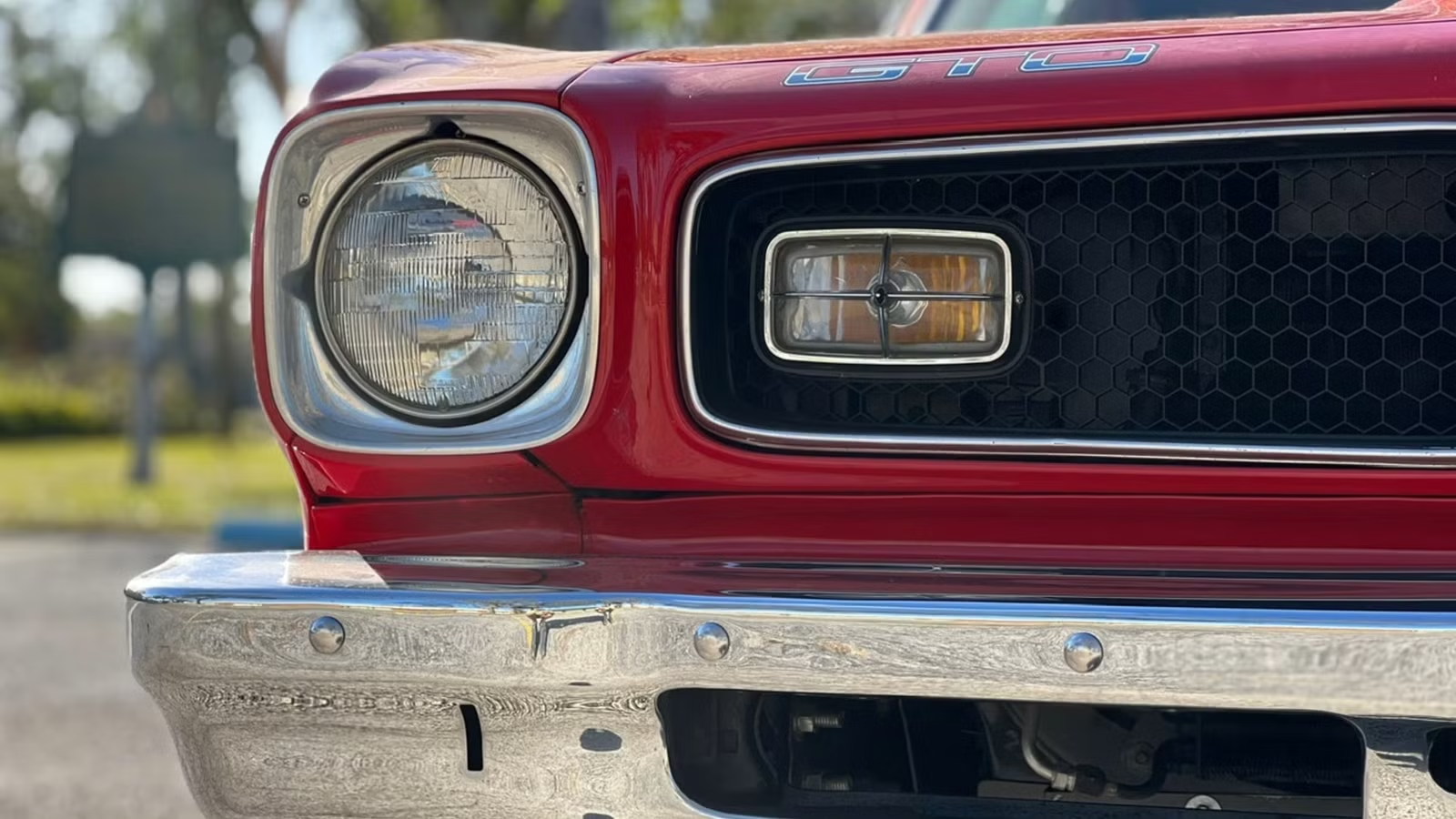
By the mid-1970s, Pontiac knew the muscle car formula that made the GTO famous was starting to collapse. Insurance prices were climbing, emissions rules were tightening, and giant V8 coupes suddenly looked like relics from a different era. That’s when Pontiac did something weird. Instead of doubling down on bigger engines and louder styling, it took one of its smallest and most overlooked cars and quietly turned it into a compact V8 muscle car.

Most people ignored it then, and most people still ignore it now. But looking back today, the Pontiac almost feels like an early preview of the kind of lighter, more usable performance cars enthusiasts ended up loving decades later.
Pontiac’s Muscle Car Legacy Was Already Starting To Slip By The Early 70s
At this point, Detroit was having to turn a page on the golden age of American muscle cars, with rising insurance premiums, tightening emissions regulations, and growing concerns over fuel economy, all working against the very formula that had defined the previous decade. The fun was over, and brands like Pontiac had little choice but to rethink the performance car if it was to survive the changing landscape. But, while everyone was throwing in the towel, Pontiac got to work.

Pontiac Started Rethinking Muscle Cars Entirely

To comply with the new rules, Pontiac began exploring a different direction that would see it depart from what it had become known for, building smaller, lighter models instead, but still retaining a V8 power-plant up front. This meant the philosophy behind the GTO and Firebird needed to change, where performance was no longer defined by outright scale but by how effectively a car could make use of what it had. The result? A compact Pontiac that didn’t resemble a traditional American muscle car but still carried the mechanical DNA of the brand’s performance identity, but this time in a far more restrained package.
Pontiac’s Forgotten OHC Six-Cylinder Was Decades Ahead Of Its Time
This forgotten engine bridged American muscle and European sophistication, introducing innovations still used in modern cars today.
The Ventura Quietly Became Pontiac’s Most Interesting Performance Car

The Pontiac Ventura never looked like a car that deserved a GTO badge. It was smaller, cleaner, and far less aggressive than the loud muscle cars Pontiac built its reputation on. But underneath, the formula still looked surprisingly familiar: rear-wheel drive, available V8 power, lightweight proportions, and a chassis shared with the Chevy Nova, one of the most moddable compact platforms GM ever built.
Because of the Ventura’s cross-compatibility with the Nova platform, Pontiac was able to offer a wide range of drivetrains, including several V8 options and multiple transmission configurations. The most significant of these, however, was Pontiac’s own 350-cubic-inch V8, as it gave the compact Ventura genuine links to the brand’s established muscle car recipe. That combination quietly made the Ventura one of the most interesting Pontiacs of the entire decade.

Additionally, since this platform had already proven itself as a lightweight V8 performer in earlier applications, Pontiac naturally leaned into that strength. V8-powered X-body models equipped with the 350 typically produced between 175–200 horsepower in early-1970s tune, although exact figures varied depending on emissions calibration and carburetion setup. While modest on paper compared to earlier muscle cars, the combination of torque and reduced mass still meant genuine real-world performance.
The more performance-focused Ventura Sprint package, meanwhile, turned things up a few notches. Rather than just being a cosmetic exercise, it featured revised suspension tuning for improved body control, upgraded tires for increased grip, and subtle but purposeful styling cues. These included stripes, trim, and GT badging to help visually separate it from standard Ventura models.
Pontiac Tempest Generations (All Years): Engines, Trims, Specs, & Value
The Pontiac Tempest might live in the shadow of the GTO, but it’s the platform that made it all possible. Here’s everything you need to know.
Pontiac Put The GTO Badge On Something Completely Different

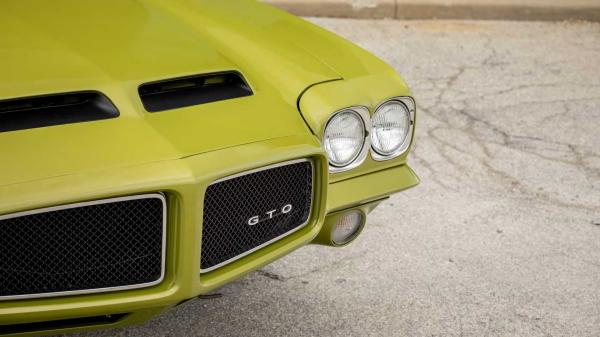
Its significance, however, was truly cemented in 1974, when Pontiac briefly offered a Ventura-based GTO package. While this may have appeared merely as a marketing exercise at the time, it instead reflected a broad industry reality. With tightening regulations, manufacturers like Pontiac were forced to reinterpret their flagship nameplates, and as such, by placing the GTO badge on the Ventura, Pontiac was effectively acknowledging its compact performer as a legitimate carrier for its performance identity.

Under the hood was a 350-cubic-inch V8 making 200 hp and 295 lb-ft of torque in GTO specification. Making less power, these engines were far removed from the high-compression outputs of earlier GTOs, but still delivered strong torque in that lighter, X-body chassis. With upgraded suspension tuning, along with upgraded tires and Rally II wheels, the focus of the GTO version wasn’t just straight-line speed, but improved control and drivability too.
This variant also featured a series of functional upgrades, showing that Pontiac was still treating the nameplate seriously as a performance benchmark, even while working within a stricter and more stringent environment. These included a shaker hood scoop, dual exhausts, and GTO-specific mechanical tuning. With the GTO package, the Ventura grew teeth.
Looking back now, the Ventura feels less like the death of the muscle car era and more like an early version of modern muscle thinking. Smaller footprint, usable power, lighter weight, better balance, and enough V8 character to still feel fun without relying entirely on massive horsepower numbers.
The Ventura GTO Was One Of The Last Pontiac Muscle Cars To Offer A Manual Transmission

One detail that often gets overlooked today is that the Ventura-based GTO could still be ordered with a four-speed manual transmission at a time when manual gearboxes were rapidly disappearing from American performance cars. By the mid-1970s, tightening emissions standards and changing buyer priorities were pushing manufacturers toward softer, automatic-equipped cruisers instead. That makes the Ventura GTO feel like one of the final links between the raw muscle car era of the late 1960s and the more restrained performance cars that followed later in the decade.
Pontiac’s Forgotten Sports Coupe No One Bought
Beneath the sharp styling lay a reality that couldn’t match the hype, leading to one of Pontiac’s most forgettable flops.
The Ventura Accidentally Became Easier To Own Than Most Muscle Cars

Ironically, one of the reasons the Ventura makes more sense today than it did in the 1970s is because of the exact thing enthusiasts criticized back then: its platform sharing. Since it rode on GM’s X-body architecture alongside the Chevy Nova, the Ventura ended up becoming dramatically easier and cheaper to restore, modify, and actually drive than many higher-profile muscle cars from the same era.
Unlike many low-production muscle cars that are notoriously expensive to restore, the Ventura benefits from a massive aftermarket ecosystem. Suspension parts, brake components, driveline pieces, and even many body and trim items remain far easier to source than parts for more exotic Pontiacs of the era. That dramatically lowers the barrier to entry for enthusiasts who want an old-school V8 experience without dealing with the financial black hole often associated with classic muscle ownership.
It also means the Ventura occupies an unusual position in today’s collector market. Cars like the Pontiac GTO Judge, Firebird Trans Am SD-455, and Chevrolet Chevelle SS have become high-dollar collector assets that many owners are afraid to heavily modify or even drive regularly. The Ventura, meanwhile, still feels approachable. Buyers are far more willing to build them into street cars, pro-touring projects, or weekend cruisers because the platform remains relatively affordable and mechanically straightforward.
That usability arguably fits the Ventura’s original philosophy perfectly. Pontiac created the car during an era when the traditional muscle car formula was collapsing under regulation, fuel concerns, and rising insurance costs. Instead of chasing massive displacement and headline horsepower figures, the Ventura quietly leaned toward a lighter, more usable performance formula that feels strangely modern in hindsight.
This Is Why The Ventura Feels Weirdly Modern Today

Part of what makes the Ventura so compelling in hindsight is that it felt far more usable than many of the larger muscle cars that came to define the era before it. With the Ventura, Pontiac managed to strike a sweet spot between classic, old-school V8 character, and a far more manageable footprint.
Ventura Sprint vs Ventura-Based GTO Package (Performance Specs)
|
Spec |
Ventura Sprint |
Ventura GTO Package |
|
Engine |
Inline-6 / optional V8 |
350 cu in (5.7L) V8 |
|
Transmission |
3-speed manual / auto |
4-speed manual / auto |
|
Horsepower |
110–175 hp |
200 hp |
|
Torque |
190–250 lb-ft |
295 lb-ft |
|
0–60 mph |
12–14 sec (V8 models) |
7.9 sec |
|
Quarter-mile |
18–19 sec |
16–17 sec |
Thanks to those smaller X-body proportions, the Pontiac Ventura was noticeably lighter than many of Pontiac’s better-known muscle cars, typically coming in at around 3,350-3,500 pounds. Those figures gave the Ventura a noticeable edge over larger Pontiacs like the GTO, which by the early 1970s had started gaining weight fast under the pressure of added safety equipment and tightening regulations. While the GTO was beginning to feel bigger and heavier with each passing year, the Ventura was a lighter, more agile alternative, and it was largely this that made it feel very different on the road.

The days of Pontiac relying purely on displacement and straight-line pace were now behind it, which meant it designed a muscle car that was arguably better suited to the changing realities of the decade than the traditional muscle cars that preceded it. And it’s this balance that Pontiac was able to achieve that gives the Ventura a different kind of appeal today. Not as an icon like the Pontiac GTO or Pontiac Firebird, but as an underdog from a transitional moment in American automotive history. From the perspective of a contemporary car collector today, that may be an appealing proposition indeed.

The market for one is still relatively small, with only three examples exchanging hands over the past 12 months on Classic.com. During this period, the average sale price for the Ventura GTO version currently stands at $35,200 at the time of writing, and while only a handful of examples have appeared publicly, the market remains niche. Still, they represent a forgotten muscle-era Pontiac that won’t break the bank either. Asking prices today generally range from the mid-$20,000 mark up to around $40,000, but as with any car, originality, condition, and modifications dictate value.
Is Pontiac Gearing Up For A Comeback? GM Moves Spark Hope
GM has renewed the Pontiac trademark, fueling rumors of a bold comeback with two performance models possibly on the way. Could Pontiac rise again?
The Ventura Arrived Before People Were Ready For It

The Ventura’s biggest problem wasn’t that it was bad. It was that it showed up at exactly the wrong moment. By the mid-1970s, most enthusiasts still wanted the loud, oversized muscle cars from a few years earlier, while the industry was rapidly moving toward smaller and more efficiency-focused vehicles. The Ventura landed awkwardly between those two worlds.
Unfortunately, though, its success was undermined, arriving at a time when the muscle car was beginning to lose its appeal. By the mid-’70s, priorities shifted dramatically for American motorists, which left little room for cars that sat awkwardly between traditional muscle and the smaller, more efficiency-focused future the industry was now focusing on.

Despite being so experimental, the Ventura GT also remained stuck in the shadow of Pontiac legends like the GTO and Firebird, which, at this point, had already cemented themselves as icons during the peak years of Detroit’s most iconic and memorable creations. No matter how capable it actually was, it still wasn’t enough to shake the perception that the downsized performance cars the Ventura represented were a compromise rather than progress.
Back then, many enthusiasts saw the Ventura-based GTO as a smaller replacement for the muscle cars they actually wanted. Looking back now, it feels more like Pontiac accidentally predicted where performance cars were heading anyway. Lightweight platforms, usable V8 power, simpler proportions, and balanced driving dynamics eventually became far more important than giant engines alone. The Ventura just arrived before most people were ready to appreciate that formula.
Sources: Hemmings, Mecum, Classic.com

Related posts





Latest Post


No Comments