
Porsche’s Latest 911 Is An Open-Top, Manual-Only GT3 That’s A Direct Shot At Your Soul
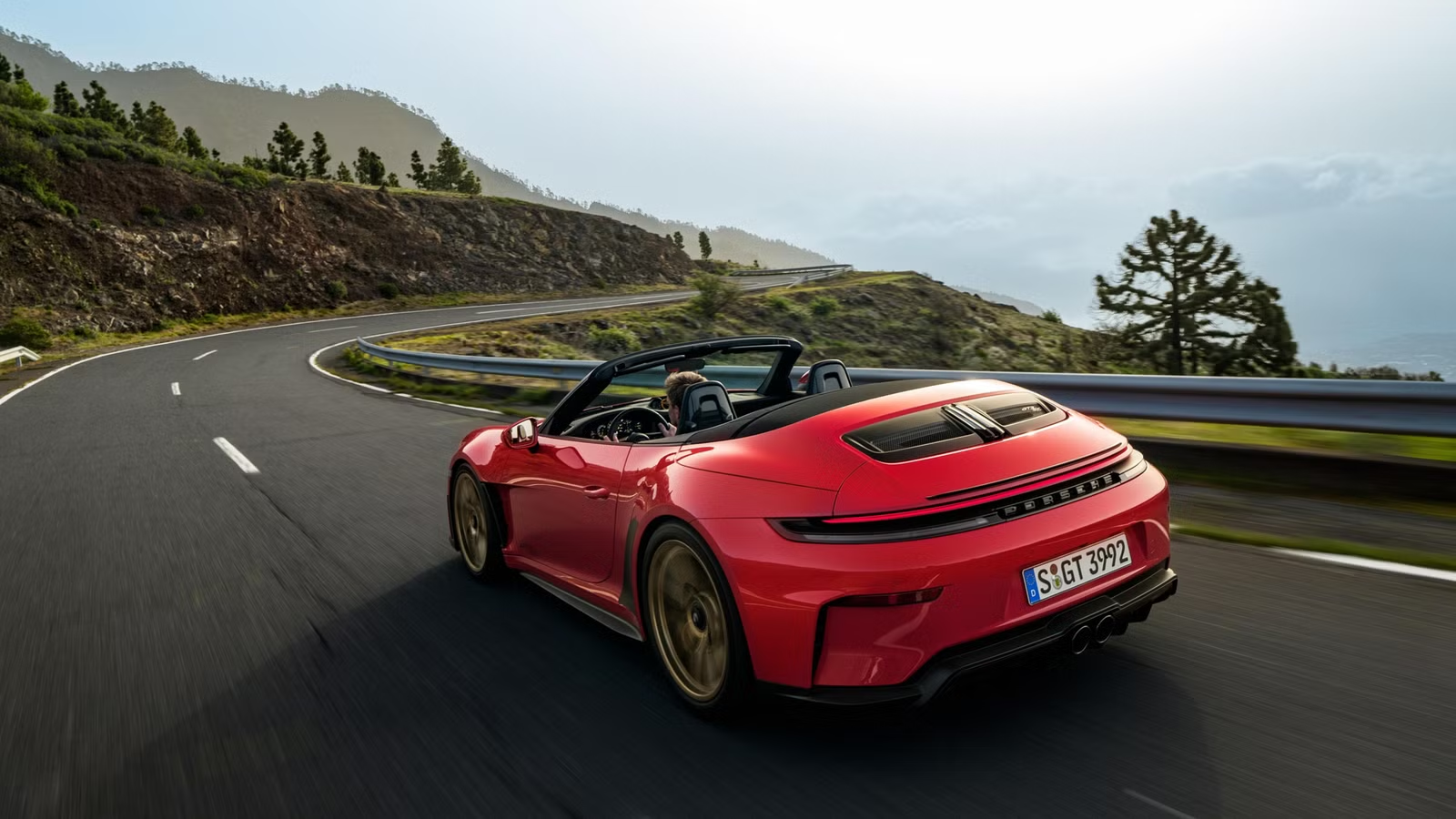
Porsche premiered the 2027 911 GT3 S/C recently, and it is exactly what the name implies: a full GT3, with the roof removed and a manual gearbox as the only transmission on offer. No PDK option. No compromise. Just a naturally aspirated flat-six spinning to 9,000 rpm, a six-speed manual, and open sky above your head.

At a moment when manual transmissions are disappearing from performance cars and convertible versions of track-focused models are nearly nonexistent, Porsche has built both into a single package. The GT3 S/C—the “S/C” standing for Sport Cabriolet—is a factory statement as much as it is a car. It tells you exactly where Porsche stands on the question of whether driving still matters.
What Porsche Has Confirmed About The GT3 S/C
The GT3 S/C is built around the same 4.0-liter naturally aspirated flat-six found in the standard GT3, revving to a 9,000-rpm redline. The manual gearbox is the only option—Porsche has made no provision for the PDK dual-clutch that most buyers of the coupe actually choose. That decision is deliberate. The S/C is not a softer GT3; it is a GT3 filtered through a specific philosophy about what makes a sports car worth driving.
The power-operated soft top adds weight relative to the coupe, as any convertible body does, and Porsche’s engineers worked to offset the rigidity loss that comes with removing a fixed roof. Specific chassis reinforcements and structural bracing are part of the S/C package, keeping the car’s handling behavior close to the coupe’s without artificially stiffening the ride to compensate. Road & Track noted after driving it that a GT3 convertible makes more sense than it might sound on paper—the open-air element amplifies the flat-six’s intake howl and exhaust note in ways that a closed cabin simply cannot replicate.
5 Porsche Models That Hold Their Value Exceptionally Well
These five Porsche models defy typical depreciation patterns through their combination of performance, desirability, and enduring enthusiast appeal.
The Manual-Only Decision And What It Means For Dynamics

Pairing a manual transmission with a convertible body in a GT3-spec car is not the obvious choice from a performance-numbers standpoint. The PDK is faster. The coupe is stiffer. By every objective metric, the GT3 S/C is not the quickest 911 in the range.
That is entirely the point. Car & Driver described the experience as having “the restorative powers of a folding top” alongside a 9,000-rpm engine—a combination that rewards engagement rather than lap times. The manual gearbox requires the driver to be present in every gear change. The open-top means the engine’s character is not filtered through glass and sound deadening. Together, they create a sensory experience that the GT3 RS, for all its downforce and track capability, cannot replicate. The Drive called it “the ultimate 911, actually”—a claim that would have seemed absurd before the drive, and apparently feels obvious after it.
Where It Sits Against Open-Top Performance Rivals

The GT3 S/C occupies a narrow space in the market. True convertible performance cars with manual transmissions and genuine track credentials are rare enough that direct comparisons are difficult. The Mercedes-AMG GT Roadster offers open-air performance but pairs it with an automatic. Ferrari’s open-top offerings are similarly paddle-shift only. Lamborghini’s Revuelto Roadster is a hybrid with no manual option at all.
In that context, the GT3 S/C has no direct competitor. It is the only car from a major manufacturer that combines a high-revving naturally aspirated engine, a manual gearbox, and a convertible body in a package with genuine GT3 pedigree. The closest precedent in Porsche’s own history is the 911 Carrera RS 2.7 Targa and various Speedster editions—cars that are now considered among the most desirable 911s ever built precisely because they prioritized the experience over the specification sheet.
Availability And The Challenge Of Actually Getting One

The central problem for anyone who wants a GT3 S/C: getting one will be the hard part. Porsche has not confirmed a specific production cap in the sources available at launch, but the combination of GT3 allocation constraints and the added complexity of the convertible body means supply will be limited. Porsche’s GT cars routinely sell out before they reach showrooms, and a manual-only convertible variant is likely to be even more tightly controlled.

Pricing starts at $273,000. What is clear is that the GT3 S/C sits above the standard GT3 in the lineup—the convertible body, structural reinforcement, and the fact that it is effectively a low-volume specialty build all point toward a meaningful premium. For buyers who qualify, the more pressing question may be allocation rather than sticker price.
The GT3 S/C will not be the fastest 911 you can buy, and Porsche knows that. It is built for drivers who understand that the fastest car and the most rewarding car are rarely the same thing—and who have been waiting for a manufacturer to act on that belief at the GT3 level. Porsche just did.

Related posts

Latest Post


No Comments