
The Used Muscle Car With Corvette Power And Lexus Reliability
A paradox of choices dictates the modern performance world. The balance between speed, luxury, and reliability is rarely achieved; it is rare for an enthusiast to have all three in one package. But in the modern automotive space, achieving two of these traits always requires sacrificing the third. A modern sports sedan, wrapped in leather seats, with highway-shredding performance is often a ticket to a mechanical disaster.

The prospect of impending component failures has replaced the peace of mind that comes with a used luxury performance vehicle. So the question remains: is it truly impossible to own a driver-quality performance sedan without taking out a second loan just to keep the car running?
Well, fortunately, the used market has an aggressive, tire-smoking yet reliable secret hiding in the shadows. All thanks to a brief period in the American automotive industry when manufacturers ignored the corporate playbook, resulting in a vehicle with the raw power of a legendary supercar and the reliability of an executive cruiser.
Horsepower vs. Heartache: The Fragile Reality of Today’s Sports Sedans

The decline of the modern muscle car did not happen overnight; it was a slow crawl driven by rising global emissions standards paired with the industry’s obsession with making everything digital and electronically assisted in the pursuit of efficiency. In this pursuit, manufacturers abandoned simple mechanical engineering in favor of hyper-complex, highly stressed powertrains.
Today’s performance cars are heavily reliant on sensitive electronic networks and fragile, high-strung turbocharged engines. At the same time, these engineering choices deliver impressive performance figures on paper; they also strip the fun and soul of driving a truly mechanical-feeling machine. As soon as a modern performance car crosses 60,000 miles, it becomes an absolute liability. Plastic trim starts to fall apart, expensive multi-clutch transmissions demand multi-thousand-dollar repairs, and the direct injection shoots carbon all over the intake valves.
This Glorious Supercharged Cadillac Muscle Sedan Is Now An Absolute Bargain
Discover the overlooked mid-2000s used Cadillac that’s now an incredible bargain, offering luxury, and a powerful supercharged V8 muscle car.
The Forgotten Detroit Blueprint That Refused to Compromise

Things weren’t always this fragile; Detroit in the late 2000s was working from a different blueprint. A group of engineers overbuilt a mechanical platform using pure heavy-duty architecture rather than relying on software and electronics to keep the feel alive. And the brief was simple: build a rigid, rear-wheel-drive car capable of handling extreme forces while delivering a luxury-cruiser experience.
General Motors wanted to prove a point that they could build something that could beat the Europeans’ claim that Americans could never match them on the track or in luxury. GM used a powerplant directly from racing programs. An engine built from the factory to withstand continuous high-rpm punishment. And deliberately made a vehicle that did not feature complex overhead camshaft gears, fragile air suspension, or any intrusive, in-your-face touchscreens.
10 Ridiculously Fast American Sedans On The Used Market
Who says four-doors are boring? These sedans prove that going fast doesn’t mean compromising on space.
Meet the V2 Cadillac CTS-V: The Ultimate Corvette-Powered Luxury Sleeper

For the 2009 model year, GM unveiled the second-generation (V2) Cadillac CTS-V, the ultimate sleeper, offered in three body styles: coupe, sedan, and wagon. The CTS-V was designed to hunt European sports sedans on the streets and on the Nürburgring. At the heart of the CTS-V was the 6.2-liter supercharged LSA V8.
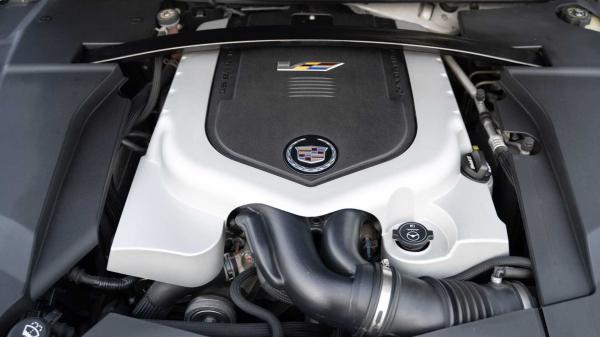
The 6.2-liter V8 produced 556 hp at 6,100 rpm and 551 lb-ft of torque at a low 3,800 rpm, which meant the CTS-V could go from 0 to 60 mph in under 4.5 seconds. And a top speed of 191 MPH. The engine in the CTS-V was not a regular commuter V8; it shared its lineage with the Corvette LS9 V8 found in the C6 ZR1, and was the same engine used in the Camaro ZL1.
By utilizing a 1.9-liter Eaton twin-vortex supercharger, Cadillac didn’t have to rely on high-rpm or super-boosted small-displacement engines to make power. The LSA V8 delivered massive torque across the entire rev band. It transformed a comfortable leather-lined Cadillac into a lethal sleeper capable of running an 11-second quarter mile right out of the box, all while flying completely under the radar.
America’s Fastest Sedan With A Corvette ZR1 Engine You Can Buy For $25,000
Fancy hitting almost 200 mph in a ZR1-powered saloon? We have the car for you.
Cadillac CTS-V Reliability: The Bulletproof Secrets of the LSA V8

To understand why the CTS-V possesses the mechanical raw power and reliability of a Lexus, you have to look past the spec sheet and the horsepower numbers and dive deep into the underlying architecture. The LSA V8 is built on GM’s legendary Gen-IV small-block pushrod layout. Its European contemporaries, such as BMW M and Mercedes-AMG, relied on dual overhead cams, high compression ratios, and highly complex, failure-prone variable valve timing systems.
The LSA uses a single camshaft nestled safely inside the engine block. No delicate timing chains are running up massive cylinder heads, no complex variable cam phasers that wear out, and no intricate valvetrain components waiting to explode if an electronic sensor fails. It features high-strength hypereutectic aluminum pistons, forged connecting rods, and a heavy-duty cast iron crankshaft supported by six-bolt main bearing caps. It is an engine designed from day one to handle massive thermal and mechanical loads.
This heavy-duty philosophy also extends to the drivetrain. The manual versions feature the legendary Tremec TR-6060 six-speed transmission. The automatic variants utilize the GM 6L90 six-speed automatic, a transmission used in GM’s heavy-duty commercial range. The contemporary European dual-clutch can cost upwards of tens of thousands of dollars to replace when the internals fail. GM transmissions can easily handle the immense torque of the LSA engine and can be repaired and rebuilt at a fraction of the cost.
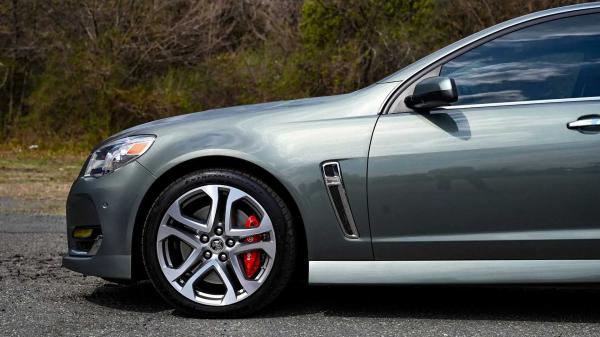
The Forgotten American Sleeper That Was Basically A Four-Door Corvette
It was only sold in America for a few short years, and it’s starting to become a great used buy!
Why The V2 CTS-V Is The Ultimate Modern Classic Collectible

The second-generation CTS-V represents a high-water mark in American automotive history; it arrived at exactly the moment when cars had maximum mechanical input and minimal electronic complexity. It offered real technological upgrades, such as the third-gen Magnetic Ride Control, to adjust to road conditions, making the whole driving experience incredible.
As the modern automotive world moves toward downsized hybrid solutions, the CTS-V remains a compelling example of a simpler, analog era that delivered what enthusiasts wanted from a car: reliable performance that won’t break the bank, yet lets you cruise the highway in style.
When you buy the CTS-V, you aren’t just buying a fast, used performance sedan; you are buying a piece of American history. It is proof that you can enjoy supercar acceleration every day without sacrificing your peace of mind.
Source: Cadillac

Related posts



Latest Post


No Comments