
The Touring Bike Built For America’s Greatest Roads
Touring motorcycles used to be simple, in the sense that “simple” can describe something that weighs nine hundred pounds. You picked a big V-twin, bolted on some saddlebags, and pointed it toward the horizon. That’s not really how it works anymore. Today’s flagship tourers come loaded with touchscreens, ride modes, radar sensors, and price tags that rival a compact car. Somewhere in that arms race, it’s worth asking whether the bikes are actually getting better for the people riding them, or just more complicated.
The Touring Segment Is About More Than Luxury
When Comfort Meets Capability

Walk into any dealership selling premium touring bikes, and you’ll hear a lot about creature comforts: heated seats, premium audio, adjustable everything. None of that is bad, but riders who actually rack up miles — the ones doing two thousand on a long weekend, not two hundred — tend to ask different questions. How does it handle a crosswind at highway speed? Does the engine still feel alive after the fourth hour in the saddle? Can the suspension keep up when the road turns rough without warning?
There’s a real gap in this segment for a bike that treats luxury as a layer on top of fundamentals, rather than a replacement for them. Riders surely want something plush, but they also want a machine that still feels like a motorcycle underneath all that comfort, with a genuine road feel and an engine that does more than hum politely.
What Touring Really Means In 2026

Touring isn’t a checklist of gadgets. It’s endurance. It’s whether your wrists, knees, and lower back are still on speaking terms with you after day three of a cross-country run. It’s confidence in a passing maneuver on a two-lane highway with a loaded bike and a passenger on the back. That said, riders in 2026 aren’t going in blind either. ABS and lean-sensitive traction control are baseline expectations now, not luxury extras. What separates a good touring bike from a great one isn’t whether it has electronics — it’s whether those electronics work in the background instead of constantly demanding attention.

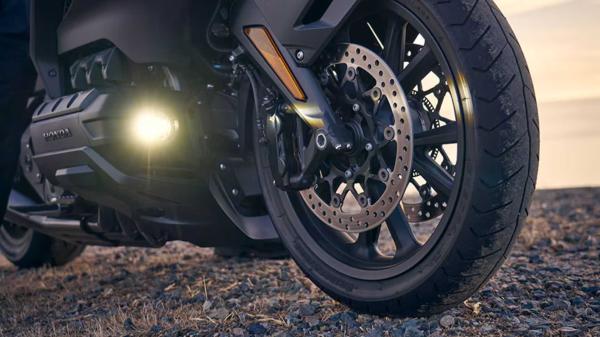
The Japanese Tourer That Quietly Beats Luxury Cars On Road Trips
This legendary Japanese touring bike proves luxury travel doesn’t need four wheels, giant touchscreens, or six figures.
The Indian Pursuit 112 Is Built For America’s Greatest Roads
Base Price: $35,499

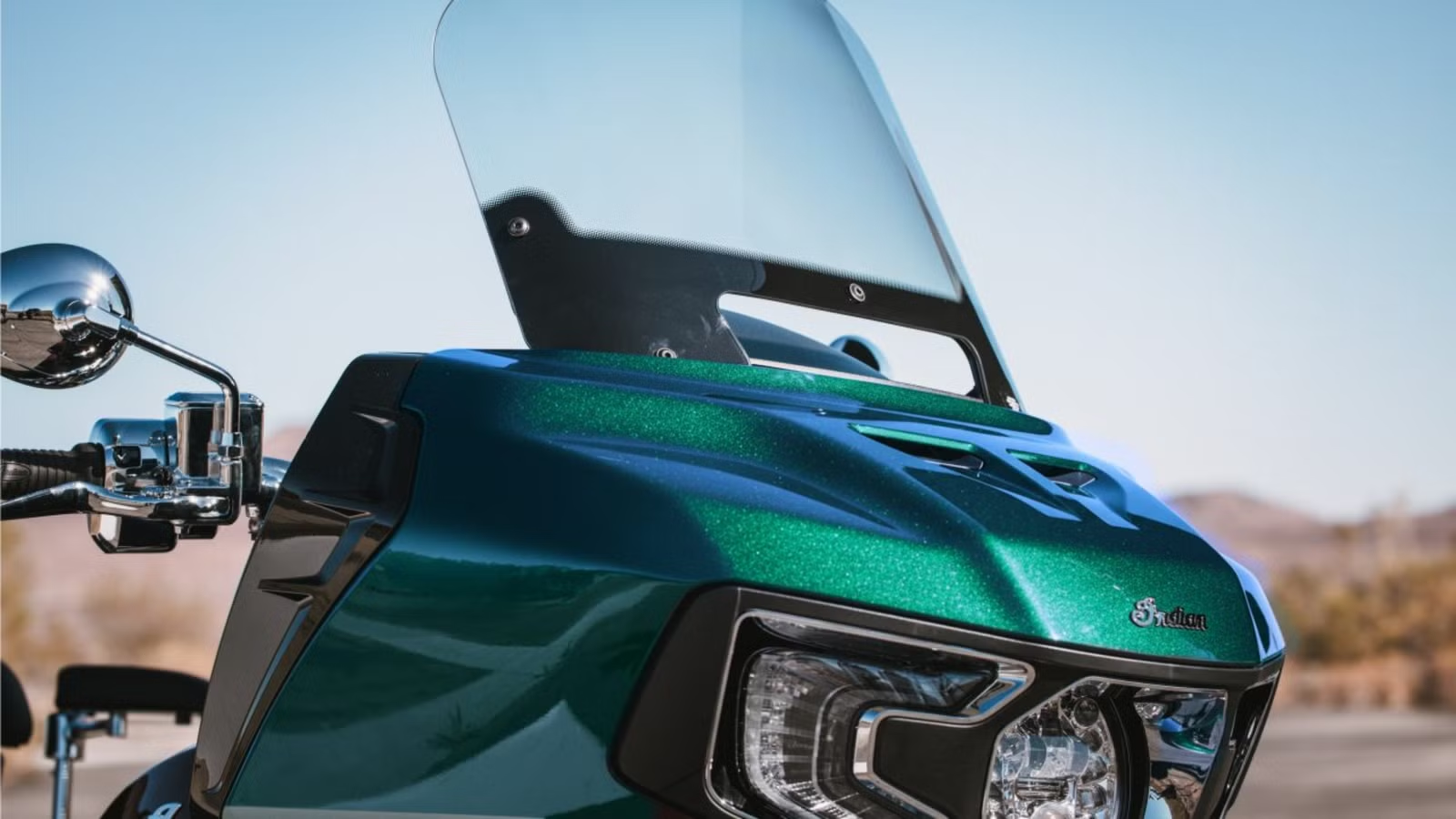
The Indian Pursuit Limited with the 112 cubic-inch engine starts at $35,499, positioning it as Indian’s flagship touring offering and a direct rival to the Harley-Davidson Road Glide Limited. It’s not a budget bike, and it’s not trying to be — this is the top of Indian’s touring lineup, built for riders who’ve already decided comfort and capability matter more than chasing a lower number on the price tag.
Although Indian Motorcycle traces its roots back to 1901, making it America’s oldest motorcycle manufacturer, every Pursuit continues to be assembled in Spirit Lake, Iowa. That blend of heritage and modern manufacturing is evident throughout the bike. The Pursuit wasn’t built for weekend coffee runs. Everything about it points toward long-distance travel. The generous luggage capacity, weather protection, and high-speed stability all suggest a motorcycle that is happiest when the GPS estimates arrival time in days rather than hours.
American Design Meets Modern Engineering

One of the more functional decisions on the Pursuit is its frame-mounted fairing, as opposed to a fork-mounted design. The fairing stays steady relative to the chassis instead of turning with the front wheel, which keeps the bike’s weight distribution more balanced through corners and reduces the odd, top-heavy feeling some fork-mounted fairings introduce at speed.
The Limited trim comes standard with remote-locking hard saddlebags and over 36 gallons of total storage, which is a genuinely useful number when you’re packing for more than an overnight. The windshield adjusts electronically, so riders can dial in wind protection on the fly rather than pulling over to fuss with a manual setting. None of this leans on retro styling cues to make its case. The Pursuit reads as unmistakably American without resorting to chrome-for-chrome’s-sake, and it’s a modern machine built for the long haul.
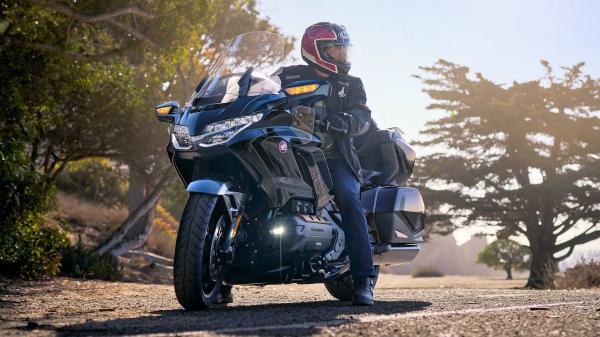
The Time Japan Made A Better Touring Motorcycle Than The Rest Of The World
Here’s the touring bike that has always set the pace for other tourers to follow.
The PowerPlus 112 V-Twin Engine Defines The Entire Riding Experience
Liquid-Cooled Muscle: 126 Horsepower And 133 Pound-Feet Of Torque

The engine is where the Pursuit really separates itself from a lot of the touring competition, and it’s not a coincidence. The PowerPlus 112 has a proven competition pedigree, with the platform winning the 2024 MotoAmerica King of the Baggers Championship — a series that’s essentially full-size touring bagger frames racing wheel to wheel on actual road courses. That’s not the kind of credential a manufacturer gets by accident.
The production version of that engine is a 1,834cc, liquid-cooled V-twin putting out 126 horsepower, with 133 pound-feet of torque arriving early at 3,600 RPM. That early torque peak is the number that actually matters in day-to-day riding. It means the bike doesn’t need to be wound out to feel strong, which is exactly what a fully-loaded touring bike needs the most. The engine comes with a cylinder deactivation feature that shuts off the rear cylinder when the bike is at a standstill in slow-moving traffic.
Built For Passing, Not Just Cruising

What makes the PowerPlus different from the traditional air-cooled American V-twin formula is the architecture underneath. It runs overhead camshafts and four valves per cylinder, technology borrowed more from sportbike design than classic cruiser thinking. That setup allows for better breathing at higher RPM, which translates to a throttle response that stays consistent whether you’re rolling away from a stoplight or already doing seventy on the interstate and need another twenty in a hurry.
The six-speed transmission pairs well with that power delivery. Shifts are clean without feeling notchy, and the gearing is tall enough on top that highway cruising doesn’t feel like the engine is working overtime — important on a bike that’s going to spend a lot of its life at sustained speed rather than darting through city traffic.
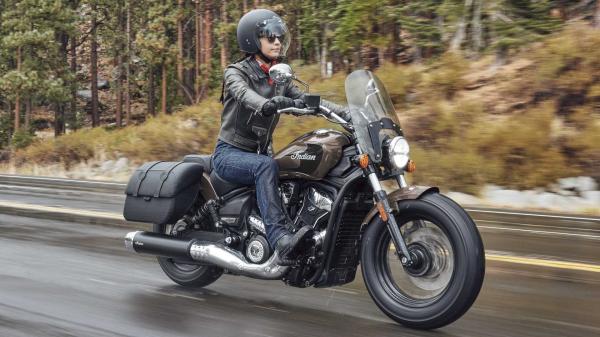
The Cruiser That Delivers Big-Bike Comfort Without Big-Bike Stress
With a 1,250 cc liquid-cooled V-twin engine and a traditional chassis, the Super Scout balances style, comfort, and everyday rideability.
Long-Distance Comfort Is Where The Pursuit 112 Excels
Rider Ergonomics Designed For Full-Day Adventures

An engine this strong only matters if the rider can stay on the bike long enough to use it. The Pursuit’s riding position is upright and relaxed, with a wide seat and a rider triangle that doesn’t crowd the knees or stretch the arms. The floorboards are generously sized, giving riders room to shift foot positions periodically, which sounds minor until you’re four hours into a ride and that small adjustment is the difference between comfortable and miserable.
The handlebar placement keeps wrists in a neutral position rather than forcing a forward lean, which matters enormously for fatigue management. None of these are flashy features. They’re the unglamorous stuff that actually determines whether a rider arrives at the next stop refreshed or wrecked.
Suspension That Adapts To Changing Roads

The Pursuit runs a 43mm inverted front fork, which adds rigidity and helps the front end track predictably under braking — useful when you’re hauling nine hundred pounds of motorcycle, rider, and gear down to a stop. Out back, the suspension offers an electronically adjustable preload mono-shock, letting riders dial in the rear end to match passenger weight or a fully loaded set of saddlebags without needing tools.
That adjustability is the real story here. A suspension tuned for a solo rider on smooth pavement is going to behave very differently with a passenger and luggage aboard on a rougher stretch of two-lane. Being able to adjust for that load, rather than just absorbing whatever the road throws at a fixed setup, keeps the ride composed across a much wider range of conditions.
Passenger Comfort Wasn’t An Afterthought

Touring bikes live or die on two-up comfort, and this is an area where the Pursuit clearly wasn’t designed around the rider alone. The passenger seat is wide and well-padded, backed by a trunk that doubles as a backrest. Passenger floorboards are positioned to avoid cramping, and the overall seating arrangement gives a passenger genuine room rather than a perch tacked onto the back of the bike. It’s the kind of detail that doesn’t show up on a spec sheet comparison but matters enormously to anyone who tours with a partner.
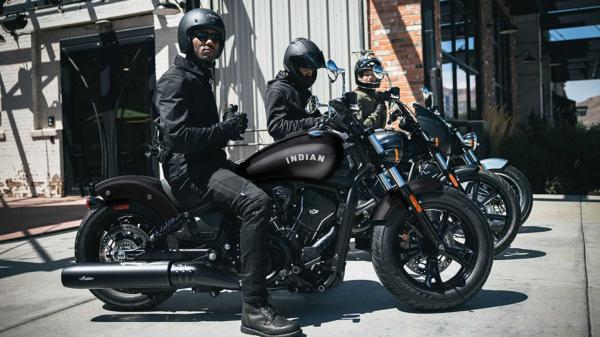
The Mid-Size Indian Cruiser Quietly Replacing Baggers On Cross-Country Trips
This mid-size cruiser is proving that cross-country comfort doesn’t require a massive bagger or luxury tourer.
Technology That Makes Every Mile Easier
Ride Command Keeps Everything Connected

The Pursuit’s infotainment runs through a seven-inch display factory-installed with GPS navigation, Apple CarPlay, Bluetooth connectivity, configurable gauges, and ride stats. For riders who’ve grown used to that kind of integration in their cars, having it available on the bike removes a real friction point — no more fumbling with a phone mount or squinting at a tiny screen for directions.
The system also pulls in real-time weather and traffic updates, helping riders avoid congested roads or bad conditions before they become a problem, and routes planned ahead of time on a computer can sync directly to the bike’s display. For long, multi-day trips where conditions change by the hour, that kind of connectivity stops being a convenience and starts being genuinely practical.
Rider Aids Built For Real Roads

Underneath the screen, the Pursuit carries a meaningful electronics package. SmartLean Technology uses a six-axis Bosch IMU to provide lean-sensitive traction control and ABS, along with drag torque control. Indian’s Rider Assist Package adds blind spot warning, rear collision warning lights, bike hold control, electronically linked brakes, and tailgate warning—features that, notably, give the Pursuit’s PowerPlus 112 platform a clear edge in standard safety tech compared to much of the touring competition.
What makes this electronics suite work is restraint. These systems are there to catch the rare bad moment — a sudden lean angle that exceeds grip, a vehicle in a blind spot during a lane change — rather than constantly intervening in how the bike rides. On a machine built to swallow thousands of miles of unpredictable American road, that distinction is everything.
Source: Indian Motorcycle

Related posts
Latest Post


No Comments