
The Yamaha Cruiser That Costs Less To Own Than Any Harley
Cruiser motorcycles are often judged by purchase price, but long-term ownership costs can make an even bigger difference to riders who plan to keep a motorcycle for years. Fuel consumption, maintenance schedules, replacement parts, insurance premiums, and overall reliability all affect how much a bike truly costs after it leaves the dealership. That’s why some motorcycles that seem affordable initially end up becoming expensive commitments, while others quietly save their owners thousands over time.
Buying A Cruiser Is Only The Beginning Of The Cost Equation

A lot of buyers focus heavily on MSRP because it’s the easiest number to compare. The reality is that ownership costs continue long after the purchase is complete. Tires wear out, fluids need changing, batteries eventually fail, and mechanical repairs can become significant expenses as motorcycles age. Riders who keep their bikes for years often discover that the least expensive motorcycle to buy isn’t always the least expensive motorcycle to own.
Maintenance, Insurance, And Reliability Matter More Than MSRP

Large-displacement cruisers can be especially costly because their operating expenses often scale with size and complexity. Bigger engines consume more fuel, insurance premiums can rise, and specialized parts may command premium prices. Even routine service visits add up over time. That’s why experienced riders frequently look beyond showroom pricing and place greater value on durability, easy maintenance, and a proven mechanical reputation.
The motorcycles that tend to age best are usually those that avoid unnecessary complexity while still delivering the experience buyers want. A dependable engine, an accessible parts network, and a strong reliability history often prove more valuable than extra technology or a larger displacement figure. Those qualities may not attract attention on a spec sheet, but they can make a major difference after several years of ownership.

Many Riders Assume Affordable Cruisers Require Compromise

For decades, affordable cruisers carried a reputation for being entry-level alternatives to more prestigious machines. Buyers often assumed lower prices meant lower quality, reduced performance, or stripped-down equipment. While that may have been true in some cases, modern motorcycles have largely changed that equation. Many riders now prioritize usability over status, focusing on what they actually need during daily ownership.
The Features Modern Riders Actually Need Every Day

Most cruiser owners aren’t chasing superbike performance or cutting-edge electronics. They want comfortable ergonomics, enough torque for highway riding, predictable handling, and a motorcycle that starts every morning without drama. Simplicity can actually become an advantage because it reduces maintenance requirements and minimizes potential points of failure.
That practical approach has helped several middleweight cruisers build loyal followings. Riders who spend years with the same motorcycle often discover that dependability matters far more than flashy specifications. The motorcycles that remain in garages for a decade or longer are rarely the most complicated. Instead, they’re usually the ones that consistently deliver an enjoyable riding experience with minimal ownership headaches.
The Yamaha Bolt R-Spec Costs Less To Own Than Any Harley

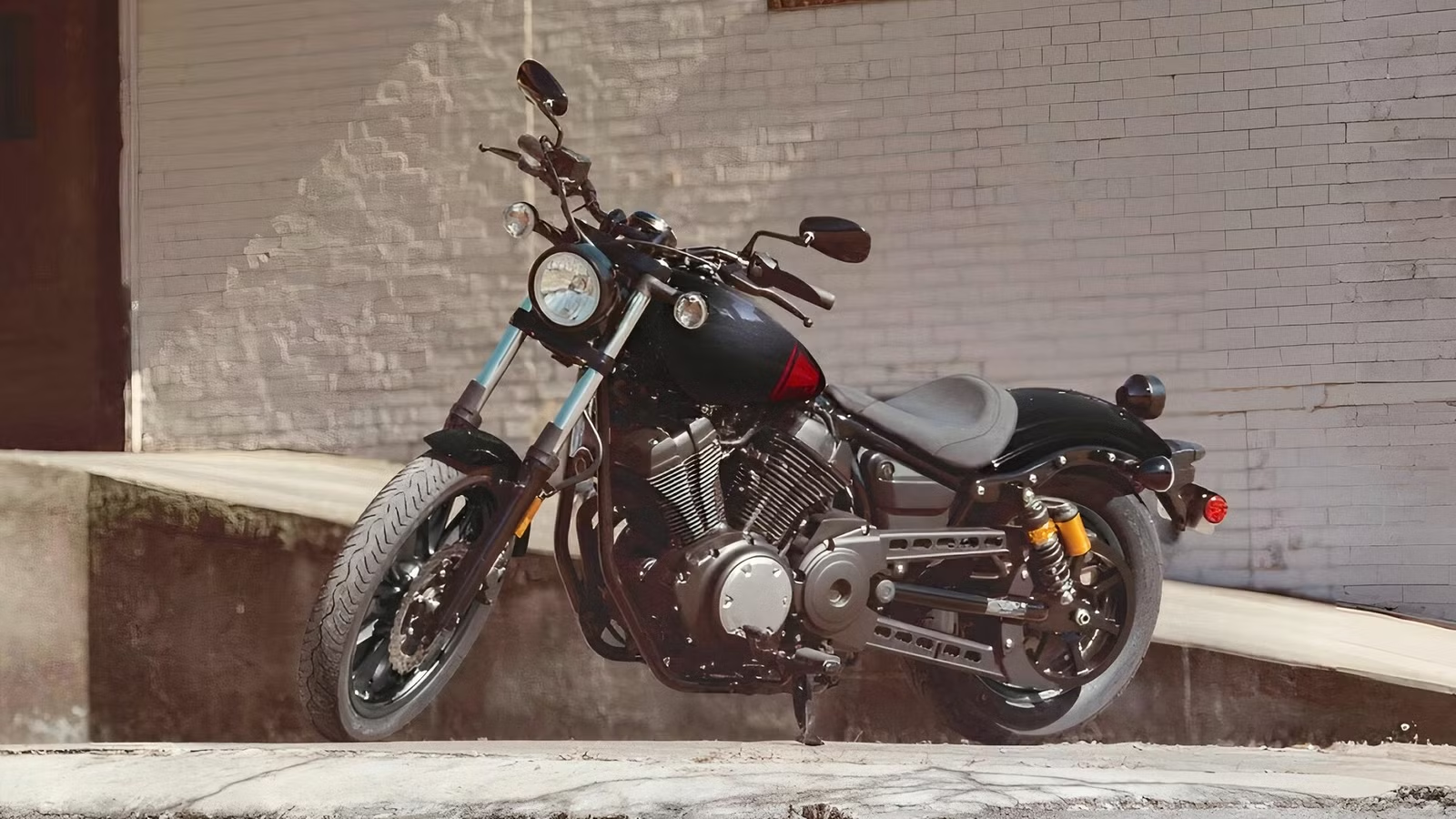
Among modern cruisers, the Yamaha Bolt R-Spec has become one of the strongest examples of affordable long-term ownership. With an MSRP of $8,999, it undercuts every new Harley-Davidson currently sold in the United States while still offering the character and styling cruiser buyers expect. Rather than chasing bigger numbers or additional complexity, Yamaha focused on creating a straightforward motorcycle that delivers exactly what most riders need.
The Bolt R-Spec is powered by a 942cc air-cooled SOHC V-twin producing approximately 47 horsepower and 59 pound-feet of torque. Power is sent to the rear wheel through a five-speed transmission and a belt final drive. Yamaha pairs the engine with a double-cradle steel frame, a 41 mm telescopic fork, dual rear shocks with piggyback reservoirs, and a low 27.2-inch seat height that makes the motorcycle approachable for a wide range of riders.
|
Engine |
942cc air-cooled SOHC 60-degree V-twin |
|
Output |
Approximately 47 horsepower, 59 pound-feet of torque |
|
Transmission |
5-speed manual with belt final drive |
|
0 to 60 mph |
Approximately 4.8 seconds |

Current-model specifications include a 298 mm front disc brake, 298 mm rear disc brake, cast aluminum wheels wrapped in a 100/90-19 front tire and 150/80-16 rear tire, a 3.4-gallon fuel tank, and a wet weight of 542 pounds. The motorcycle also features ABS, wave-style brake rotors, a compact digital instrument display, and distinctive R-Spec styling touches that separate it from the standard Bolt.
|
Frame |
Double-cradle steel frame |
|
Suspension |
41 mm telescopic fork (front); dual piggyback shocks with preload adjustment (rear) |
|
Brakes |
298 mm front disc with ABS; 298 mm rear disc with ABS |
|
Wheels and Tires |
Front: 19-inch wheel, 100/90-19 tire; Rear: 16-inch wheel, 150/80-16 tire |
|
Wet Weight |
542 pounds |
What Makes The Yamaha Bolt R-Spec So Inexpensive To Live With

The Bolt’s affordability extends far beyond its sticker price. Yamaha has spent decades building a reputation for reliable motorcycles, and the Bolt benefits directly from that experience. Yamaha built the motorcycle around a formula that prioritizes simplicity, durability, and ease of maintenance rather than chasing cutting-edge technology or headline-grabbing specifications. That approach pays dividends for riders who intend to rack up miles and keep the bike for years without constantly emptying their wallets.
A Proven Air-Cooled V-Twin With Minimal Ownership Surprises

Air cooling eliminates many of the components found in liquid-cooled motorcycles, reducing both complexity and potential repair costs. The belt final drive requires less routine attention than a chain while avoiding many of the maintenance demands associated with traditional driveline systems. Combined with Yamaha’s strong reliability record, these characteristics help keep ownership costs remarkably predictable. Yamaha’s maintenance schedule is equally manageable, with an initial service at 600 miles followed by routine maintenance every 4,000 miles. Oil changes are simple enough for many owners to perform themselves, often costing between $50 and $80 in parts, while dealer-performed services generally remain affordable by cruiser standards.
Replacement parts are also easy to source thanks to Yamaha’s extensive dealer network and the Bolt’s long production run, not to mention the availability of parts online. Consumables such as brake pads, filters, batteries, and tires are readily available, while the motorcycle’s relatively simple construction helps keep labor costs under control when service is required. Owner communities routinely report examples with tens of thousands of miles on the odometer that continue to require little more than routine maintenance, reinforcing the model’s reputation for long-term reliability.
The Bolt R-Spec Proves That Cruiser Ownership Doesn’t Have To Be Expensive

The Yamaha Bolt R-Spec succeeds because it understands what many cruiser riders actually want. It offers authentic V-twin character, classic styling, comfortable ergonomics, and enough performance for real-world riding without burdening owners with excessive operating costs. Instead of trying to compete through size or prestige, it wins through practicality.
At $8,999, the Bolt R-Spec remains one of the best values in the cruiser segment. More importantly, it continues to deliver that value long after the purchase is complete. For riders seeking a motorcycle that combines traditional cruiser appeal with low ownership costs, few options make a stronger case than Yamaha’s durable and refreshingly uncomplicated middleweight V-twin.
Source: Yamaha

Related posts

Latest Post


No Comments