
The Performance Car That Quietly Nails The Formula
We live in a strange paradox in today’s performance car age. Pull up a spreadsheet of any sports car today; the numbers are better than they ever have been before. Family sedans can now clear the quarter-mile in times that would embarrass supercars just a couple of decades ago. Hot hatches pack 400 horsepower straight from the factory. Everything is perfectly calibrated, with precise all-wheel drive and complex torque-vectoring systems to deliver the highest numbers on paper.

On the flip side, the enthusiasts who drove cars in the 2000s may say that the car’s feel has been lost in the transition. As modern cars have become easier to drive, manufacturers have had to add various driving aids, resulting in a numb, isolated driving experience. Power steering racks and dual-clutch transmissions that shift in milliseconds deliver precision but leave enthusiasts with a very clinical and sterile experience.
The modern performance car has become a weapon of mathematical precision. In the pursuit of achieving record-breaking numbers, the soul has been lost somewhere, maybe at the last stoplight. In this cynical chaos, one car manufacturer has kept the old spirit alive by choosing not to chase sky-high performance figures but pure driving feel.

The Over-Engineered Crisis Of Modern Performance

To understand how the modern performance machine has reached this crisis, we have to look at what the automotive world has sacrificed to achieve modern performance numbers. The sports car, once a pure expression of driving essence, has now been turbocharged while gaining weight, and to mask these distinct additions, tons of digital assistance have been added to make it feel more natural.
As global emissions have forced manufacturers to downsize engines, the answer to more power has been turbocharging. Sports cars like the BMW M2 and the Toyota Supra yield massive power with their turbocharged engines but ultimately lack the top-end pull of a free-revving naturally aspirated engine. The low-end torque is great for straight-line acceleration but lacks the character and drama that should carry through to the redline.
The worst offender of them all is the increase in size and weight. Mid-engine American icons like the C8 have become wide and heavy. To keep such a heavy car flat through corners, the engineers had to stiffen the suspension, add a complex suspension system, and fit massive tires. Such is the trend of modern solutions: they mask an existing problem and end up creating new challenges of their own. Add to that the computer systems that filter out every effort required to pilot such powerful machines. You end up with a car that drives itself for you. The stakes are lower than they have ever been before.
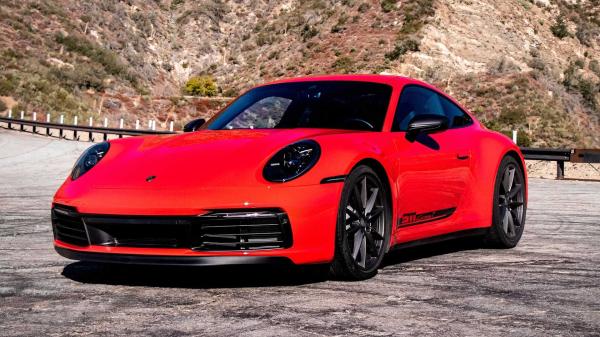
9 Most Reliable Porsche 911 Models On The Used Market, Ranked
Are Porsche sports cars reliable? You know they are fast and stylish, but can you depend on them as daily drivers? Here are nine reliable Porsches.
The Failed Correction Towards Pure Mechanical Drama

The automotive manufacturers realized their mistake and tried to come up with a solution to fix this emotional void, but it wasn’t a full-blown rethink of the situation as one would think. It was a quick band-aid fix rather than an overhaul. If the engine didn’t sound good, they pumped synthetic sound through the speakers. If the steering lacked feedback, the manufacturers programmed artificial weight into the steering rack.
And yes, the enthusiasts saw right through these fixes. The enthusiasts didn’t want a car that simulated engagement but one that demanded it. A machine where a sloppy downshift could upset the balance of the chassis and poor throttle control would cause the rear tires to break traction. A car that makes enthusiasts feel alive through mechanical harmony between the car and the driver.
A few manufacturers tried to steer the ship right by launching hardcore, track-oriented special cars. But these cars posed a challenge of their own as they were created with the track in mind; they obviously didn’t fit the characteristics of street driving as they were too brutal, too stiffly sprung, and scraped on every driveway. It looked like the automakers had forgotten how to make a pure and simple sports machine. But one German manufacturer still remembered the original formula: Porsche, arguably the maker of the best sports cars, gave enthusiasts the answer they were desperately looking for.
The Porsche 718 Cayman GTS 4.0: A Naturally Aspirated Precision Instrument

The 718 Cayman GTS was the quiet stroke of genius from Stuttgart, tucked away from the shadow of its iconic elder sibling, the 911, and free from the uncompromising track-focused version, the GT4. At first glance, the GTS didn’t shout for attention, unlike modern cars with big wings and front splitters. The GTS had none of that, which in today’s age is a feature in itself; nor did the GTS have any loud graphics on the side. It was elegantly compact and deceptively understated. But the most important thing it did was quietly nail the formula for the best sports-car experience.
The magic of the GTS began exactly where its turbocharged rivals gave up: a naturally aspirated 4.0-liter flat-six sat directly behind the driver, placed in the middle of the chassis. This meant the Cayman GTS was perfectly balanced. And thanks to natural aspiration, it revved all the way up to its glorious 7,800 rpm redline. The engine produced 394 horsepower at 7,000 rpm, so to access all that power, you had to wring its neck each time.
This wasn’t an engine built to win drag races against heavy torque-assisted hybrids or twin-turbo supercars. This engine was built for the enthusiast who wants absolute mechanical theater each time they bury their foot to the floor, with instantaneous response from the high-revving engine. But this isn’t everything the Cayman GTS had to offer. It had a special tool in its arsenal, one long forgotten by its rivals.
11 Best Manual Transmission Sports Cars Of The Last Decade For Every Budget
Proper manual-transmission sports cars are a dying breed, and these modern options are currently your best bet for the most engaging drives.
Beyond The Mechanical Brilliance Of The GTS

As you step behind the wheel of the GTS, the sudden realization hits that the car is more than its spec sheet suggests. As the engine is mounted dead center in the car, the rotation is right beneath your hips. Thanks to the limited-slip differential, you have supreme control over the car’s handling, since there is no heavy iron hanging at the rear. The car changes direction with agility, without any help from rear-wheel steering or anti-roll bars; it relies on pure, fundamental geometric balance.
The GTS comes equipped with a six-speed manual transmission that, alone, coupled with the light weight of the car, around 3,175 lbs, and a naturally aspirated engine, makes it one of the most unique sports cars on the market. The short-throw gearbox has a communicative clutch, and the shifter clicks into its gate with extreme precision.
Unlike a modern turbo engine that gives you everything at 2,500 rpm, the flat-six builds up like a crescendo below 4,000 rpm; it is quiet and docile, smooth enough to navigate city roads, but once you hit the winding canyon roads and heel-toe into a lower gear, the needle jumps past 5,000 rpm. The resonance changes into a sharp mechanical wail that fills the cabin. And by the time you cross 7,000 rpm, it sounds like a ’90s race engine going all the way to its 7,800 rpm redline. The GTS demands concentration and pure driver input to be driven to its limits, and the result? Every downshift feels like a mechanical orchestra, and each acceleration out of a corner makes you feel in pure control of this precision instrument.
2026 Porsche 911 Carrera T: Getting Overly Enthusiastic About The Enthusiast’s Choice
The Porsche 911 Carrera T is fast, fun, and delightfully balanced. It might just be the perfect Porsche?
The Last Great Symphony For The Enthusiast

As we look at the automotive landscape today, the Cayman GTS stands for something far greater than being a brilliant sports car; it represents a philosophy that is rapidly vanishing. We are at an inevitable crossroads as enthusiasts, where hybrid solutions will replace pure combustion power to deliver even more ridiculous performance and efficiency numbers.
The GTS is a true example that performance is not what is written on a spec sheet, but how a car makes you feel; it’s about the raw, unfiltered feeling you get when you floor a well-engineered sports car. The GTS is the perfect size, exquisitely balanced, and powered by an engine that rewards skill rather than hiding the driver’s mistakes. A last of its kind, a final attempt at analog driving and rewarding enthusiasts for their driving skills instead of masking their mistakes: a true old-school driving experience wrapped in a modern performance body.
Source: Porsche, Cars&Bids

Related posts


Latest Post


No Comments