
6 Pontiac Performance Coupes Detroit Wishes It Could Rebuild
The automotive industry hasn’t felt the same since General Motors officially discontinued Pontiac 16 years ago in 2010. General Motors is probably kicking itself for dropping the brand famous for taking massive muscle car risks, even though some high-performance coupes paid off more than others.

There are six rare models in particular that delivered a significant impact against their rivals from Mopar and Ford, putting the pedal to the metal during the peak muscle car era in the 1960s and ’70s. Detroit probably wishes that the cars could be rebuilt to get our motors pumping again. These Pontiac muscle cars changed the entire racing game.
They arrived straight from the factory, ready to race, even in sleeper form. There seemed to be a special model for every type of enthusiast, and they still stand out today with distinct heritage and styles. But to get behind the wheel, all we can do is hope to find one abandoned in a barn or outbid each other at auction.
6
Tempest LeMans Sprint
Value: $25,000-$50,000+

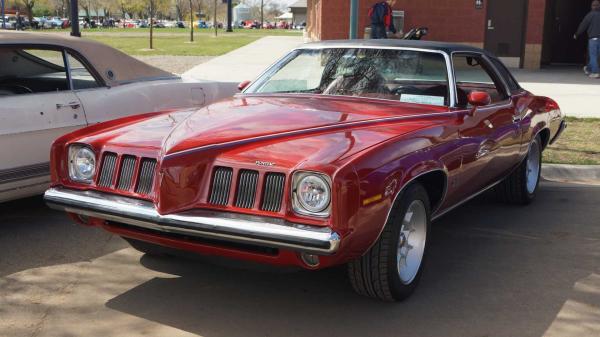
Unfortunately, Pontiac didn’t keep very good records about the production of the Tempest LeMans Sprint. But its historic impact as an extremely rare muscle car will never be forgotten. It stands out from the crowd thanks to John Z. DeLorean’s overhead-cam (OHC) inline-six engine with 215 hp and 240 lb-ft of torque.
This light engine provides a V8-like performance with the ability to accelerate from 0 to 60 mph in about 8.8 seconds. It features a handling package with a heavy-duty suspension, stiffer springs, and a floor-mounted Hurst 3-speed manual transmission to provide agile performance. Heavy rivals were designed to accelerate in a straight line.
Plus, as it outperformed rivals, it did so in style. The Sprint package pops with attractive side striping, louvered chrome air cleaners, dual-split exhaust manifolds, and OHC Sprint badges. This is on top of the muscular Coke-bottle body style. Plus, the interior includes premium bucket seats, a deluxe steering wheel, and wood-grain appliqués. Today, an excellent condition model can be picked up for $13,300, says Hagerty, making it a
The Rarest Pontiac Muscle Car Ever Is A 455 Big Block No One Knew Existed
The performance-focused GM division built just one of these cars for testing.
5
Catalina 2+2 421 HO
Value: $35,000-$60,000+

Who said full-size luxury cars had to be slow? The massive Pontiac Catalina 2+2 421 HO is no slouch. It has a gigantic 421 cubic-inch (6.9-liter) V8 that churns out 376 hp and 466 lb-ft of torque. This premium car can accelerate from 0 to 60 mph in about 7.2 seconds and easily keeps up with muscular rivals.
No one expected this large, comfortable cruiser that weighs in at about 4,000 pounds to deliver a high-performance experience. The 2+2 package added wider front and rear tracks, an upgraded heavy-duty suspension, and a heavy-duty front sway bar to enhance control and handling. Plus, it looks good doing it, with chrome bodyside gills and Pontiac’s famous eight-lug aluminum drum brakes and wheels.
The interior is well-appointed with vinyl bucket seats, a full-length center console, a wood-grained or custom sport steering wheel, and upgraded door panels. It was available with power steering, power windows, and power-assisted heavy-duty drum brakes for premium comfort and convenience.
4
Grand Prix SJ 428
Value: $30,000-$70,000+

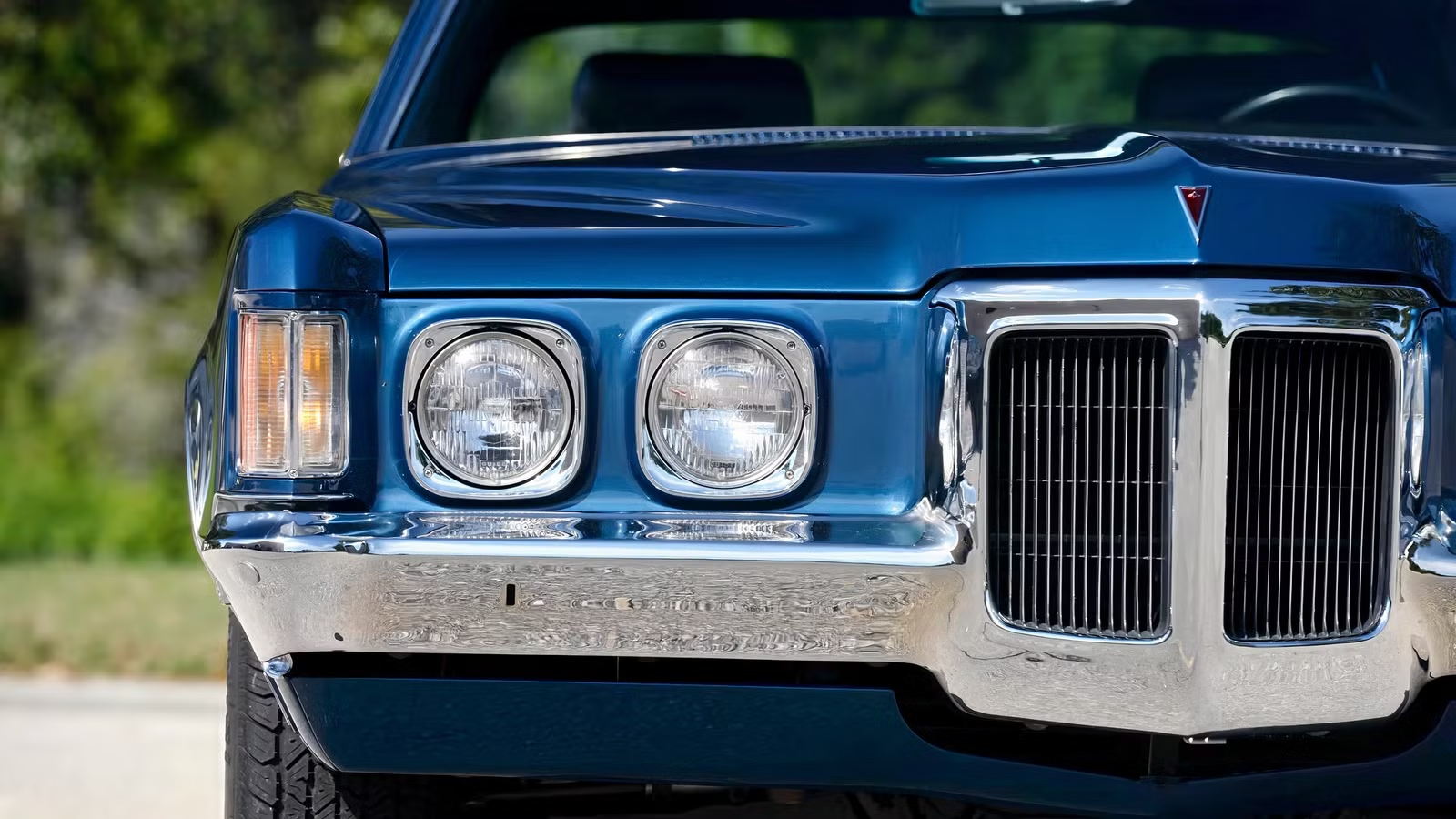
The Pontiac Grand Prix SJ 428 is a sleeper coupe that’s too luxurious to ignore, with its secret muscle car power hidden under the hood. It’s referred to as the banker’s hot rod, as the 428 V8 delivers 390 hp and 472 lb-ft of torque with the HO tune. It can accelerate from 0 to 60 mph in about 6.9 seconds, making it surprisingly fast for its size.
It’s pretty unique with a heavy-duty differential, power disc brakes in the front, and an automatic leveling rear suspension. The massive hood features a pointed grille, paired with a long 118-inch wheelbase and a short rear deck. Exterior badges say Grand Prix and Model SJ instead of Pontiac on the wheel center caps.
The interior was inspired by the luxurious Duesenberg SJ from the 1930s. Its design is driver-focused with a wraparound dash that’s angled toward the driver and aircraft-style gauges. John DeLorean designed the interior, which includes Strato bucket seats with headrests and a center console.
3
Firebird Formula 400
Value: $25,000-$90,000+

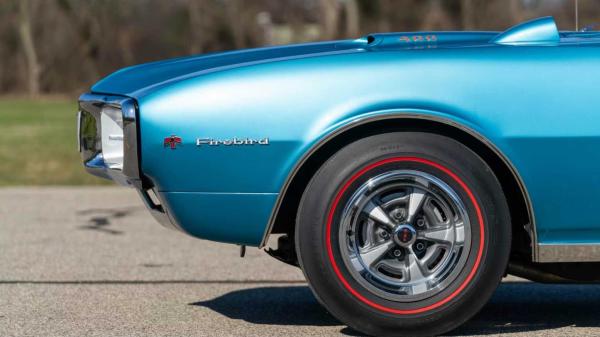
The Pontiac Firebird Formula 400 is another sleeper coupe to get excited about. It’s famous for providing Trans Am power in a more affordable package. The 400 cubic-inch (6.5-liter) V8 engine produces 330 hp and 430 lb-ft of torque. It can accelerate from 0 to 60 mph in about 6.4 seconds.
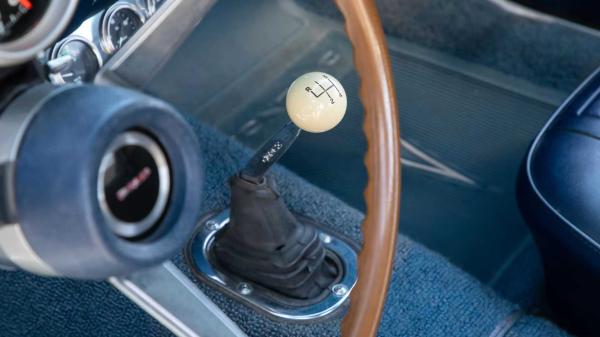
This unassuming model was built to race, with 1-⅛-inch front and 5.8-inch rear sway bars, higher-rate springs, and rare axle windup controls. There are disc brakes in the front and rear drum brakes that are paired with wheel rims that are seven inches wide. The four-speed manual transmission made a true difference as well.
Because it had a subtle style without the spoilers and fender vents you can find on the Trans Am, it was able to avoid expensive insurance premiums. However, it still looks great with a fiberglass hood, open ram-air scoops, and concealed wipers. Standard interior features include vinyl bucket seats, deep-pile carpeting, and wood-grain panel appliqués.
10 Pontiac Muscle Car Options (Almost) No One Ticked
Pontiac muscle cars were ridiculously popular back in the day, but for some reason, almost no one picked these exact trims and options.
2
Trans Am Super Duty 455
Value: $50,000-$150,000+

The Pontiac Trans Am Super Duty 455 is widely considered the last true American muscle car to deliver supercar-like performance, as emission regulations were choking out power. With the 455 cubic-inch (7.5-liter) Super Duty V8 engine, you get 290 hp and 390 lb-ft of torque. This car can accelerate from 0 to 60 mph in about 5.4 seconds.
This hand-built engine was designed with NASCAR racing in mind, so it features heavy-duty components such as a reinforced block with four-bolt main bearings and heavy-duty connecting rods. Plus, the cylinder heads were designed to eliminate extra casting material, resulting in smooth, contoured, high-flowing intake and exhaust ports.
Because the engine was grandfathered in via existing passenger cars, Pontiac was able to bypass long-term EPA testing requirements to allow this beast to reach showroom floors. It also features a competition-tuned suspension package designed by Herb Adams. The package features front and rear anti-roll bars, A-arms with unequal lengths, and a 3.23 axle ratio.
Pontiac’s Forgotten OHC Six-Cylinder Was Decades Ahead Of Its Time
This forgotten engine bridged American muscle and European sophistication, introducing innovations still used in modern cars today.
1
GTO Judge Ram Air IV
Value: $150,000-$500,000+

The Pontiac GTO Judge Ram Air IV was introduced to battle the Plymouth Road Runner. It has a race-tuned Ram Air IV 400 cubic-inch (6.6-liter) V8 engine with 370 hp and 445 lb-ft of torque. This classic powerhouse can accelerate from 0 to 60 mph in about 4.9 seconds. It was ready to dominate the drag strip as it arrived straight from the factory.
The engine has round-port 722 cylinder heads, an aggressive high-lift ‘041’ camshaft, 1.65:1 ratio rocker arms, and an aluminum intake manifold. It was most commonly paired with a Muncie close-ratio four-speed manual transmission. Plus, the functional dual-scoop hood is controlled by a pull-knob that’s mounted under the dash.
It’s hard to ignore the Judge package, as it was designed for plenty of attention-grabbing flair. The original vibrant paint color is Carousel Red, but Orbit Orange and Pepper Green are also highly sought-after colors. The paint pairs well with tri-color body stripes, a full-width rear spoiler, and blacked-out grilles.
Source: Hemmings, Hagerty, Old Cars Weekly, Bring A Trailer, Car Buzz

Related posts



Latest Post


No Comments