
The Underrated Motorcycle That Gives Riders More Than They Pay For
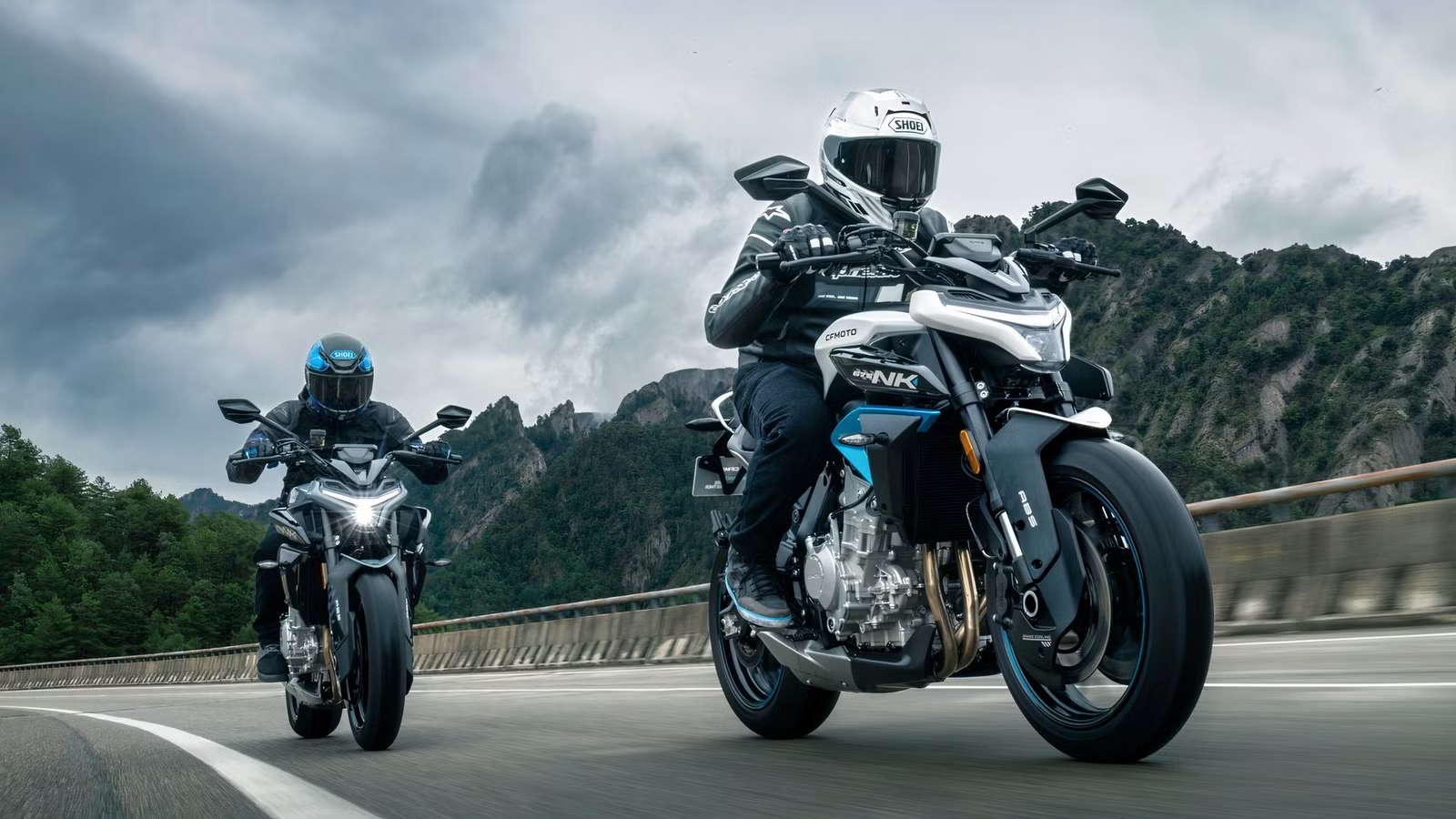
Middleweight naked bikes used to be the motorcycles you bought when the genuinely fast stuff became too expensive, too serious, or simply too much for everyday roads. That distinction isn’t nearly as clear anymore. Prices have climbed, electronics have become expected rather than novel, and even supposedly sensible roadsters can creep toward five figures once you start looking for decent suspension, useful rider aids, and enough power to keep things interesting for more than a couple of seasons.
Modern Naked Bikes Aren’t The Bargains They Used To Be

That isn’t necessarily a bad thing. Today’s middleweight naked bikes are substantially better motorcycles than the bargain-basement roadsters of a decade ago. They make more power, brake harder, offer better displays, and increasingly come with traction control, selectable riding modes, connectivity, and quickshifters. The problem is that all of this sophistication has steadily moved the category away from the cheap-and-cheerful simplicity that once made it so appealing in the first place.
Middleweight Machines Are Getting More Expensive Each Year

Look at the current US market and the trend becomes pretty obvious. The 2026 Yamaha MT-07 starts at $8,599, while Suzuki asks $9,249 for the 2026 GSX-8S. Honda’s 2026 CB750 Hornet E-Clutch starts at $7,999, and Triumph’s Trident 660 sits in the mid-$8,000 range depending on version. These are all compelling motorcycles, but we’re well past the era when a mainstream middleweight automatically meant spending somewhere comfortably south of eight grand.
That makes undercutting the established players increasingly difficult. A cheaper motorcycle still has to deliver enough performance and equipment to justify choosing it over brands riders already know and trust. Save too much money on the suspension, electronics, brakes, or engine and the low MSRP becomes less impressive. Suddenly, the bargain isn’t really a bargain anymore. It’s just a motorcycle that costs less because you’re getting noticeably less motorcycle.

Getting More Motorcycle Usually Means Spending More Money

This is where the value equation gets messy. Entry-level suspension is fine until you start riding harder. Basic brakes are perfectly adequate until you discover how much better a quality radial setup can be. A stripped-down electronics package sounds wonderfully pure until you realize competitors are offering conveniences you might actually use. You can upgrade most of these things later, of course, but every new shock, brake component, tire, and accessory chips away at the money you supposedly saved.
There’s another problem. The middleweight class has become increasingly dominated by parallel twins, and for good reason. They’re compact, relatively inexpensive to manufacture, easy to package, and capable of producing plenty of usable torque. But when so many motorcycles arrive at the same basic engineering solution, mechanical character becomes another luxury. So what happens when a cheaper bike doesn’t just offer more equipment, but also brings an engine configuration you normally associate with pricier machinery?
The $7,499 CFMoto 675NK Packs Good Power And Credible Underpinnings

That’s where the CFMoto 675NK enters the picture. Its MSRP is just $7,499, yet sitting inside its steel chassis is a 675cc liquid-cooled inline-three producing a claimed 95 horsepower at 11,000 rpm and 51.6 pound-feet at 8,250 rpm. Power goes through a six-speed transmission with a slipper clutch, and an up-only quickshifter comes standard rather than appearing halfway down an accessories catalog.
Those numbers immediately make the 675NK difficult to dismiss as simply another cheap naked bike. More importantly, the triple gives it something distinctive in a segment packed with twins. CFMoto developed the three-cylinder engine for its 675 platform, and the architecture gives the NK a different proposition from the usual budget formula. You’re getting the flexibility expected from a street-focused middleweight, but with the revvier personality and soundtrack that have traditionally helped triples stand out.

The pricing puts that performance into perspective. The 675NK costs $1,100 less than the MT-07 despite claiming considerably more peak horsepower, and it’s $1,750 below the GSX-8S. Honda’s CB750 Hornet E-Clutch comes closest on price at $7,999, but even that carries a $500 premium. None of that automatically makes the CFMoto a better motorcycle, because spec sheets don’t tell you everything. They do, however, make its value proposition very difficult to ignore.
The Rest Of The Hardware Doesn’t Look Budget Either

CFMoto didn’t stop at giving the 675NK a headline-friendly engine. Up front is a 41-millimeter inverted KYB fork with preload and rebound adjustment, while the KYB rear shock also offers preload and rebound adjustment. Braking comes from radial-mount four-piston J.Juan calipers biting twin 300-millimeter front discs. The bike rolls on 17-inch aluminum wheels wearing 120/70 front and 180/55 rear CST S3 tires.
The dimensions are equally sensible for everyday use. Seat height is 31.9 inches, fuel capacity is four gallons, wheelbase measures 55.1 inches, and claimed wet weight is 417 pounds. That puts it in familiar middleweight territory rather than turning the extra cylinder and equipment into a porky package. CFMoto also backs the bike with a 24-month warranty in the U.S., another detail that matters when you’re asking buyers to take a chance on a comparatively newer street-bike name.

There’s plenty of technology packed in as well. The 675NK gets a five-inch TFT display, smartphone connectivity through CFMoto’s RideSync ecosystem, Bluetooth functionality, tire-pressure monitoring, adjustable traction control, dual-channel ABS, full LED lighting, and a USB-C charging port. Add that standard quickshifter and the equipment list starts sounding less like a cut-price middleweight and more like something CFMOTO deliberately overstuffed to make the sticker price difficult to argue with.
Its Biggest Problem Might Be The Name On The Tank
And that’s where the catch comes in, because buying a motorcycle isn’t the same as comparing laptop specifications. Yamaha, Honda, Suzuki, Kawasaki, and Triumph have spent decades building reputations in the US market. Buyers know their dealer networks, understand how their bikes tend to age, and have a pretty good idea what resale values and parts availability might look like several years down the road. CFMoto is improving rapidly, but it doesn’t yet have that same institutional familiarity.
$7,499 is still real money, though. A rider might happily spend another thousand dollars on an MT-07 or GSX-8S simply because the ownership equation feels more predictable. CFMoto has expanded its American presence substantially, but long-term resale strength, dealer accessibility in some regions, and brand confidence remain reasonable considerations. None of those concerns show up in a horsepower figure, but they’re part of the value equation all the same.

There are hardware compromises, too. The electronics package isn’t IMU-based, so you’re not getting the kind of cornering-sensitive rider aids found on more sophisticated machinery. The quickshifter only handles upshifts rather than working in both directions, and the CST tires are unlikely to be the component enthusiastic riders brag about first. These aren’t deal-breakers at this price, but they’re useful reminders that CFMoto hasn’t somehow discovered a loophole allowing it to manufacture premium motorcycles for free.
It’s Hard To Argue With Its Value Proposition

That may actually be why the 675NK deserves more attention. Its appeal isn’t simply that it’s cheaper than the usual suspects. Cheap motorcycles are easy to make when you delete enough good stuff. What’s interesting here is how little seems to have been deleted. For $7,499, you’re getting a 95-horsepower triple, adjustable KYB suspension, radial four-piston front brakes, modern electronics, useful connectivity, and everyday dimensions that don’t demand much sacrifice.
Established rivals can still make stronger arguments around refinement, resale value, dealer support, or sheer brand confidence. But if the question is simply how much motorcycle a rider can get for the money, the 675NK makes the conversation uncomfortable for some very familiar names. CFMoto isn’t asking buyers to overlook a bare-bones machine because it’s cheap. It’s asking why a motorcycle this well-equipped needs to cost more in the first place.
Source: CFMoto

Related posts





Latest Post


No Comments