
The Obscure 426 That Turned A Nine-Passenger Dodge Wagon Into A Sleeper
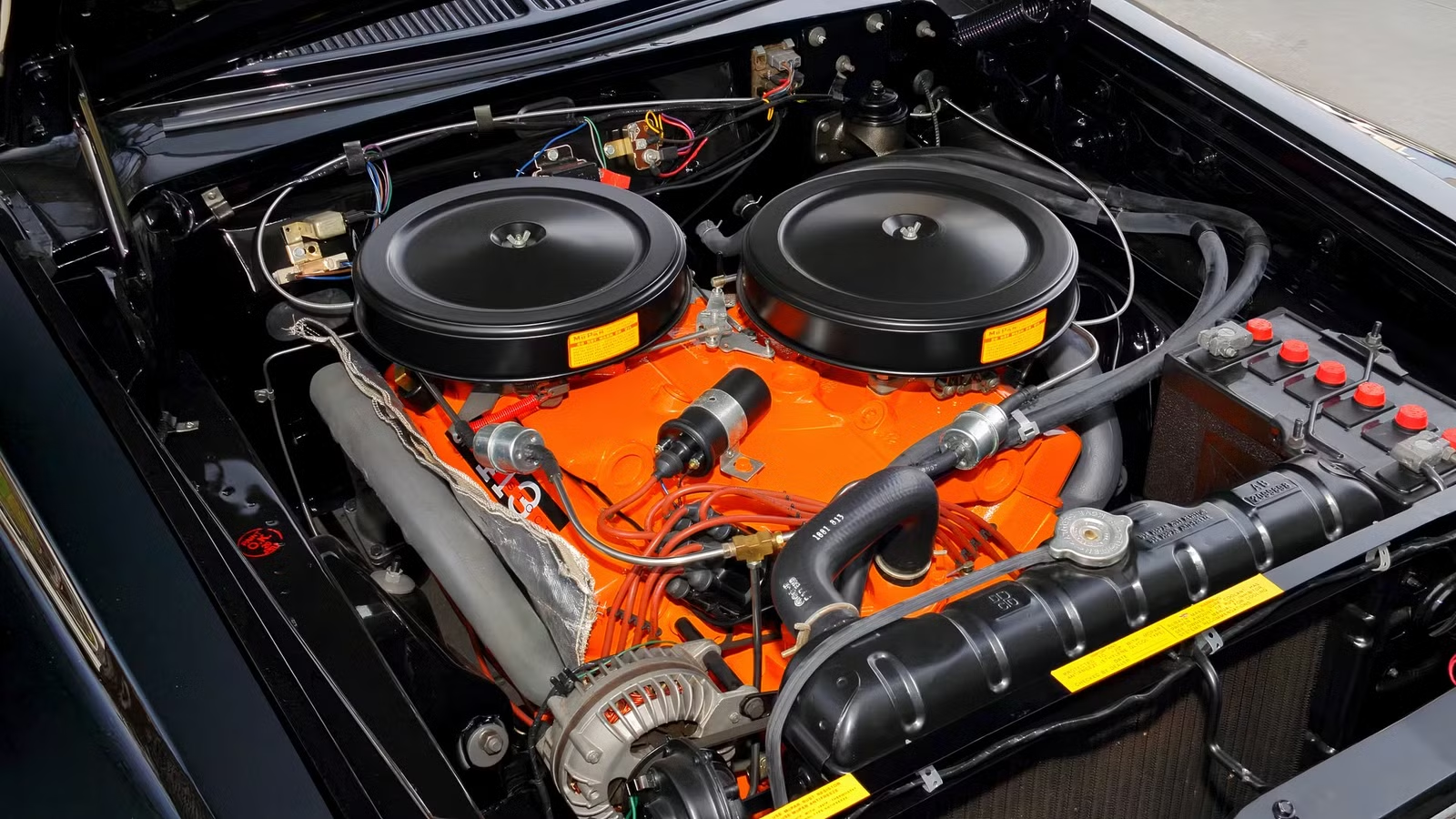
We gearheads always have love for a proper, big-block V8 engine. When it comes to some things, there really is no replacement for displacement. Even the best of the more modern muscle car engines can’t match the character of a true, old-school big-block. The old-school big-block engine we’re going to talk about isn’t one that gets talked about often. But it’s a cornerstone of how these engines developed into the true performance beasts they became.
Big-Block Power Monsters Existed Before The True Golden Age Of American Muscle

When people think of big-block V8s, they’re typically thinking of the engines that were made for golden age muscle cars. Those, after all, were the real performance monster big-blocks. The groundwork for those big-block monster engines, though, was laid down in the years before the real start of that golden age. Power monsters with big displacements were already around by the mid-1960s at least, and quite a few of them were posting numbers that were close to what the golden era engines ended up producing at the peak of their power.
One of those powerful mid-’60s big-block engines was, in some ways, a direct precursor to one of the most legendary American big-block V8s of all time. It’s the same size as that legendary American big-block, and was even developed with much of the same philosophy.
The Street Wedge Was Mopar’s Ultimate Street-Legal Performance Engine Before The Street Hemi

When people think of a 426-cubic-inch big-block V8, they typically think of the original Chrysler Hemi engine. This was, after all, the engine that made Mopar dominant in the horsepower wars of the muscle car’s golden era. But the Hemi wasn’t the first 426 that Mopar had success with. Before the street-legal version of the Hemi existed, Mopar produced a street version of the Max Wedge engine. This is known as the Street Wedge. While it is significantly detuned compared to the 400+ horsepower race-bred Max Wedge, it’s still a formidable performance engine. The Street Wedge produces 365 horsepower and up to 470 lb-ft of torque in its factory tune. Those were real performance-monster numbers in its day. They’re also not too far off from the kind of numbers later big-block engines were putting out.
The 1965-1968 Dodge Polara Is An Unassuming Mopar C-Body That Could Be Ordered With Monstrous Engines – Including The Street Wedge

When people talk about full-sized Mopar offerings from the mid-to-late 1960s, the Dodge Polara is often overlooked. But it shouldn’t be, and there are some good reasons why. One of those is the engine options available in this otherwise unassuming family car (or premium 2-door, if you opted for the coupe or convertible variants). As the Polara was once again a C-Body car during this era, the engine options included some serious muscle. The 440-cubic-inch Magnum engine was the biggest one in terms of displacement, and that’s the one that would draw the most headlines. But it wasn’t the most powerful engine you could have in the Polara back in the mid-’60s. That was the Street Wedge that we’ve already talked about. While the 440 Magnum does have more torque (480 lb-ft) than the 426 Street Wedge, the Magnum’s 350 horsepower (in 1966) clearly loses out to the Street Wedge’s 365 horsepower.
The Polara Wagon From This Era Could Be Ordered With The Street Wedge

If anyone knows about the Dodge Polara variants with serious muscle, they’ll mostly know of the ones in sedan, coupe, or convertible bodies. They’ll especially picture the coupe variants. What they may not realize is that the 426 Street Wedge engine was available in all the Polara’s body styles during that 1965-1968 period. That includes the wagon. Yes, that’s right—you could get a proper muscle car engine in a full-sized station wagon that had up to 9 seats.
A 426-equipped Polara Station Wagon really is the ultimate sleeper car you could think of back in the 1960s. This is a car that wouldn’t look out of place in any Kmart parking lot in America. Yet, under the skin, it has an engine with the ability to keep up with (or even beat) proper sports cars. What could be more appealing than that to an enthusiast who needs a practical car but doesn’t want to sacrifice fun?
Barely Any Polara Wagons Were Produced From The Factory With The Street Wedge Installed

It’s probably not that surprising to learn that very few Polara Wagons are estimated to have left the factory with the Street Wedge engine. Exact numbers are legitimately impossible to come by. We do know that around 29,300 Polara Station Wagons were sold in 1966 alone. Out of that number, it’s fairly possible that at least a handful were ordered with the Street Wedge engine from the factory.
The main interesting thing we do know about sales of 426-equipped Polara Wagons from this era is that the 426 was an available option on fleet orders. This included for orders related to law enforcement. This makes sense, as 1960s and 1970s Polara Sedans were used by the California Highway Patrol during that period. Perhaps the extra practicality of the station wagon body style would have made sense for police use? It’s hard to make a proper judgment, as there don’t seem to be any 426-equipped police-spec Polara Wagons that have survived.
It’s Possible To Engine Swap The Street Wedge Into A Polara That Didn’t Originally Have It

As we’ve already covered, factory 426-engined Polara Wagons are incredibly rare and nearly impossible to find. But that doesn’t mean you couldn’t create your own from any Polara Wagon available on the market. Because the car was designed from day one to fit big-block V8s like the Street Wedge into its engine bay, you can easily swap one in. There are examples out there already that prove that it’s possible, like this 1963 Polara 500 Hardtop that went up for sale a couple of years ago.
While that may be a B-Body instead of a C-Body Polara, the same principle still applies. This car was designed from the outset to accept big-block engines. If you want a 1965-68 Polara Wagon with a Street Wedge, you can get around the problem of almost none of them seeming to exist and make your own.
Sources: Bring A Trailer, Dodge

Related posts

Latest Post


No Comments