
The Motorcycle That Feels Fast Without Wearing You Out
Speed is usually sold with a warning label. The faster and sharper a motorcycle becomes, the more it tends to demand through cramped ergonomics, stiff suspension, constant concentration, or an engine that only comes alive once the road and speed limit stop cooperating. That tradeoff can make superbike performance spectacular in short bursts but exhausting everywhere else, leaving riders to choose between serious excitement and a motorcycle they’ll still want to be aboard several hours later.
Being Fast And Feeling Fast Aren’t The Same Thing

Performance figures are useful, but they can’t explain how involved a motorcycle makes its rider feel. A machine can produce a huge dyno number yet seem distant because of tall gearing, excessive mass, muted responses, or a chassis that needs high speed before it starts working. Another can make every straight and corner memorable through immediate throttle response, eager steering, hard braking, and an engine note that turns an ordinary overtake into an occasion.
Comfort Can Make A Motorcycle Faster In The Real World

Comfort isn’t the enemy of performance when it lets the rider stay relaxed, alert, and precise. An upright riding position removes pressure from the wrists, a roomy seat reduces fatigue, and useful wind protection keeps highway speeds from becoming a neck workout. Semi-active suspension can also provide support under braking and acceleration while softening its response when the surface turns rough, giving the chassis a broader operating window than a permanently stiff setup.
That extra endurance has a direct effect on pace. A rider who isn’t distracted by aching knees or a punishing seat can concentrate on braking points, corner entries, and traffic conditions for longer. The bike becomes easier to trust because the person controlling it hasn’t been physically worn down. Instead of delivering its best for one intense hour, the whole package can remain enjoyable across an entire day.

Sport-Tourers Have Become The New Roadgoing Superbikes

Sport-touring and crossover motorcycles have gradually absorbed technology once reserved for dedicated superbikes. Seventeen-inch wheels, sticky road tires, powerful multi-cylinder engines, stiff frames, and premium radial brakes now sit beneath tall handlebars and protective bodywork. Long-travel suspension remains part of the formula, but it’s increasingly calibrated for pavement rather than loose terrain, giving riders compliance without making the motorcycle vague when ridden aggressively.
Electronics No Longer Exist Just To Rein In The Engine

Modern electronics do more than prevent a powerful motorcycle from throwing its rider into the scenery. Riding modes can reshape throttle response, power delivery, engine braking, traction control, wheelie control, and ABS intervention around different roads or weather conditions. A bidirectional quickshifter keeps acceleration flowing, while cornering ABS allows the braking system to account for lean angle instead of treating every stop as though the motorcycle were upright.
Radar-assisted adaptive cruise control and blind-spot detection add another layer on long highway sections, where maintaining attention can become tiring even when the road itself is easy. Electronic suspension can then separate its damping strategy from the engine mode, allowing a rider to combine sharp throttle response with a more compliant chassis. Used properly, these systems don’t hide performance. They make more of it accessible without forcing the rider to accept the same behavior in every situation.
The Ducati Multistrada V4 RS Will Go Fast Without Wearing You Out

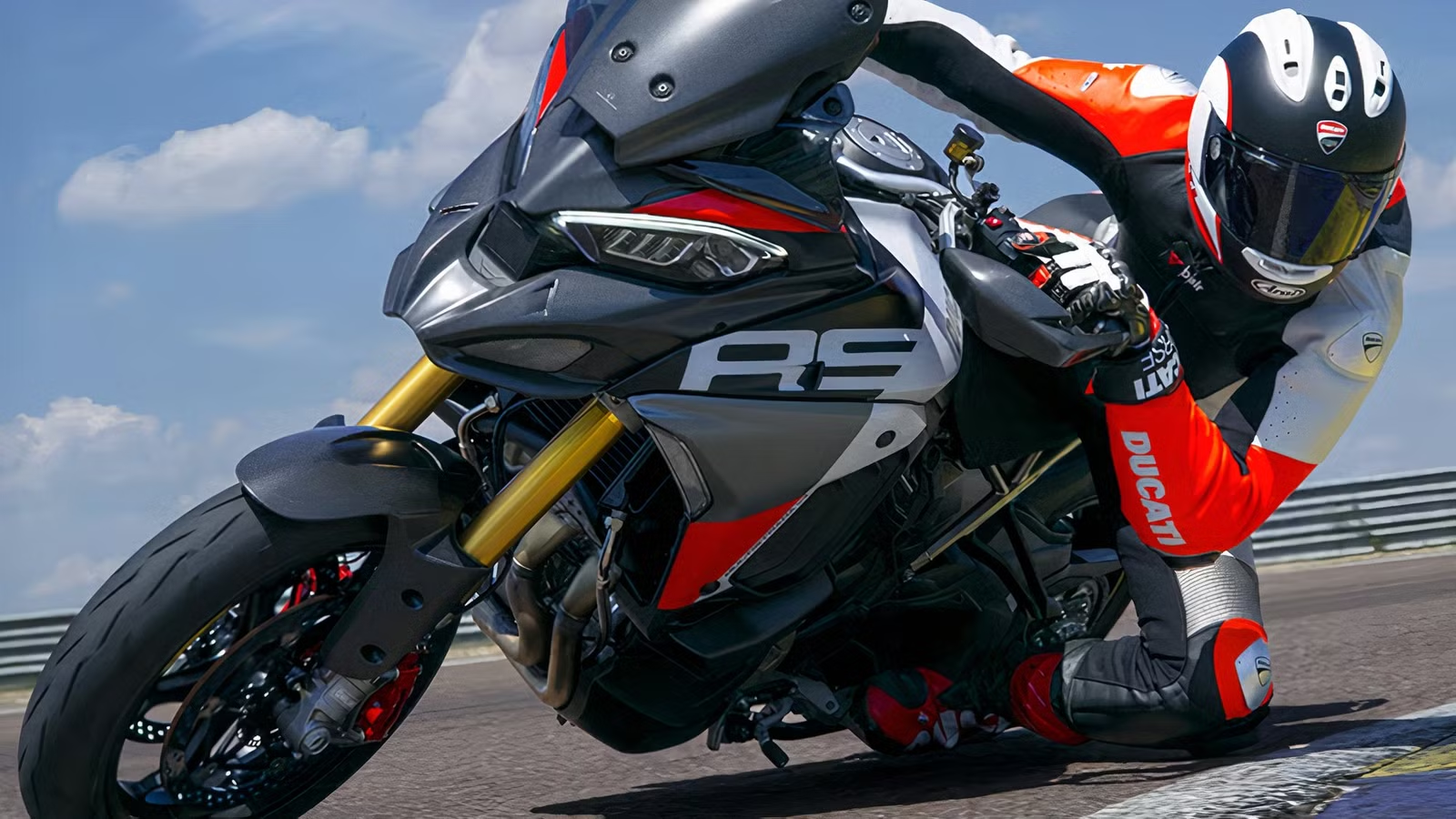
That brings us to the Ducati Multistrada V4 RS, the most extreme road-focused machine in the Multistrada lineup. It starts at $39,995 in the US and uses a 1,103cc Desmosedici Stradale V4 producing 180 horsepower at 12,250 rpm and 87 pound-feet at 9,500 rpm. The 90-degree, liquid-cooled engine features four desmodromically operated valves per cylinder, a counter-rotating crankshaft, twin-pulse firing order, 14.0:1 compression, and ride-by-wire throttle bodies.
This isn’t merely a regular Multistrada with a hotter engine map. Ducati gave it a titanium rear subframe, carbon-fiber body components, a compact battery, forged Marchesini wheels, an aluminum monocoque frame, and a single-sided aluminum swingarm. The RS weighs 496 pounds without fuel, carries 5.8 gallons, and rolls on 17-inch wheels wrapped in 120/70 front and 190/55 rear Pirelli Diablo Rosso IV Corsa tires. Its adjustable seat sits between 33.1 and 33.9 inches, while accessory seats broaden that range from 31.9 to 35 inches.
Ducati Put A Superbike Engine In A Bike You Can Ride All Day

The Desmosedici Stradale fundamentally changes the RS’s character compared with the Multistrada V4’s 1,158cc Granturismo engine. It revs harder, produces its peak power higher in the range, and uses a multiplate dry slipper clutch that brings a layer of mechanical theater absent from most touring motorcycles. A titanium Akrapovič muffler handles the soundtrack, while the six-speed transmission works with Ducati Quick Shift 2.0 for clutchless changes in either direction.
Power is managed through Race, Sport, Touring, Urban, and Wet riding modes, supported by Full, High, Medium, and Low power settings. Full delivers maximum output in every gear, while Low caps the engine at 114 horsepower with a softer response. Ducati Traction Control, Engine Brake Control, Ducati Wheelie Control, auto tire calibration, vehicle hold control, and Bosch Cornering ABS help translate the engine’s output into something usable rather than merely intimidating.
The chassis receives equally serious hardware. A fully adjustable 48mm Öhlins fork and TTX36 rear shock provide 6.7 inches of travel at both ends, with Smart EC 2.0 electronically controlling compression and rebound damping. Riders can choose Track, Dynamic, Touring, or Low Grip suspension strategies independently of the selected riding mode. Twin 330mm front discs use Brembo Stylema four-piston monobloc calipers, while a 280mm rear disc works with a two-piston caliper.
The RS Still Remembers That It Is A Multistrada

Despite all that hardware, the RS hasn’t abandoned the qualities that make a Multistrada useful beyond a mountain road. Its handlebars remain upright, although they’re lower and narrower than the regular bike, while the footpegs are raised and moved rearward for additional cornering clearance. The titanium subframe still supports a passenger and can accept a top case, preserving enough practicality for weekends away.
Its standard equipment includes adaptive cruise control, blind-spot detection, full-map navigation, a 6.5-inch TFT display, Ducati Connect, full LED lighting, cornering lights, self-canceling indicators, keyless ignition, backlit controls, a USB port, and a 12-volt socket. Heated grips, tire-pressure monitoring, auxiliary lights, and a hands-free fuel cap remain optional. Ducati also provides a two-year unlimited-mileage warranty.

Of course, to say there are compromises would be a massive understatement. The price is by far the most obvious. The RS also trades the regular V4’s relaxed touring focus for a firmer, more aggressive personality, and its road tires make it poorly suited to meaningful off-road exploration. Maintenance is more involved than on the Granturismo-powered Multistrada, although the oil-service interval remains 9,000 miles or 24 months and the valve-clearance inspection is scheduled every 18,000 miles.
The Unexpected Luxury Isn’t Comfort But Endurance

The Multistrada V4 RS doesn’t make speed less dramatic. It simply removes many of the physical inconveniences that usually shorten the experience. Riders still get the noise of a dry-clutch Ducati, the rush of a high-revving V4, Panigale-derived brakes, fast steering, and the visual theater of carbon fiber and a single-sided swingarm. What they don’t have to accept is a committed racing position every time they leave the garage.
Its real luxury is therefore not softness, but the ability to keep going. The wind protection, roomy proportions, adjustable suspension, radar systems, and cruise control preserve the rider’s energy between the interesting roads, allowing the performance hardware to matter for more than a few frantic miles. At $39,995, it’s an extravagant answer to a question few motorcycles can address, but it proves serious speed doesn’t have to come with an expiration timer.
Source: Ducati

Related posts

Latest Post


No Comments