The Luxury Sedan That Quietly Beats The Mercedes E-Class On Five-Year Costs
13 minutes reading
Monday, 22 Jun 2026 20:00 0 87 autotech
It isn’t often that you’ll find a luxury car that doesn’t cost more than a mainstream one. That’s not the point of them; luxury cars cost more to buy and run for a reason, and for many, that is a fine trade-off. If there is a line of luxury sedans that has, by far, proven themselves as everything we want from a luxury model (comfortable, powerful, prestigious, and classy), it is the Mercedes-Benz E-Class.
For years, it has been the go-to for many luxury buyers. However, it can be very expensive to own and run, even for a German luxury sedan. If you are looking for luxury without the wallet-busting costs, though, there are some options out there. More than most, this Lexus sedan is the answer.
Luxury Sedans Aren’t Always The Smart Financial Choice
Front 3/4 action shot of 2026 Audi A3 driving on roadAudi
They look great, they feel great, and they come with some bragging rights. However, luxury cars can be money pits, and not just at the showroom. The new Audi A3 has a reasonable starting price of around $45,000, but it has an average maintenance bill of $741 a year.
The new BMW 3 Series has a starting price of $48,000, but it will cost you approximately $14,300 to maintain over ten years, and the new Mercedes-Benz C-Class has a starting price just shy of $50,000, but will cost you $739 at the garage annually. Compared to the market average of just over $600 a year for maintenance, all of them are a lot of money. Not all luxury cars cost a fortune to maintain, but we tend to see them cost more than the mainstream market.
Rear 3/4 shot of 2026 BMW 3 Series parkedBMW
We also tend to see starting prices far more hefty than the mainstream market. For example, the new BMW 7 Series has a whopping MSRP of $99,300, while a well-equipped mainstream sedan like the 2026 Kia K5 costs just under $28,000. However, in this case, alongside a lot of other cases, you tend to get more power, better tech, nicer materials, and a more comfortable cabin.
Next up, though, is depreciation. Brands like Honda have an average depreciation rate of 40 percent over five years, while Audi has an average five-year depreciation rate of 48 percent alongside the higher starting prices, so you can lose more money over the same period.
Profile shot of 2025 BMW 7 Series parkedBMW
The market wouldn’t be anywhere without the luxury segment, but the initial glitter of poshness and badge appeal can quickly wear off when you take into consideration how much it can cost you over the short and long-term.
The Korean Luxury Sedan Built For Long-Term Ownership
This Korean luxury sedan combines supple luxury with athleticism, offering low ownership costs and industry-leading warranties.
The Lexus ES 350 Is Built To Age Gracefully
Front 3/4 shot of 2026 Lexus ES 350h parkedLexus
Since 2007, the Lexus ES has quietly been laying waste to some of the more established luxury models on the market in the typical Lexus fashion. It has proved itself as comfortable, affordable to own, classy, and good at retaining value.
2026 Lexus ES 350h
Premium
Premium AWD
Premium+
Premium+ AWD
MSRP
$51,095
$52,495
$55,895
$57,295
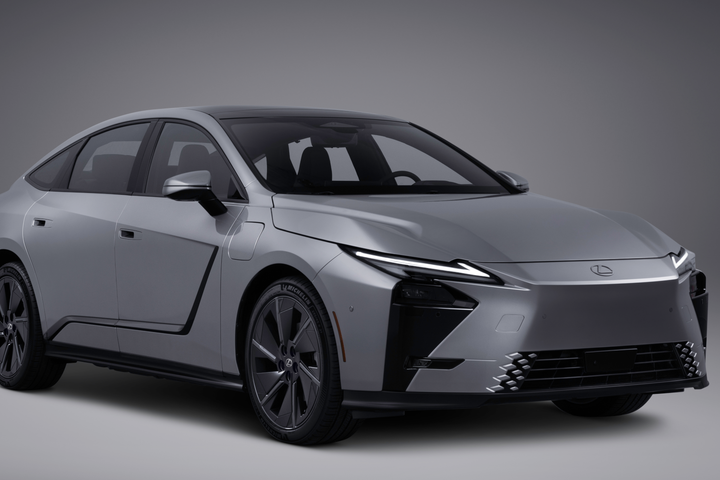
The 2026 Lexus ES 350 is available as either a hybrid or an EV, and it retains the same bulletproof luxe that Lexus is so good at. From the hybrid range, the new ES 350 is available as the 350h Premium, the 350h Premium AWD, the 350h Premium+, and the 350h Premium+ AWD.
Base Trim Engine
2.5-liter inline-4 hybrid
Base Trim Transmission
e-CVT
Base Trim Drivetrain
Front-Wheel Drive
Base Trim Horsepower
244 HP
Base Trim Torque
175 lb.-ft. @ 5000 RPM
Make
Lexus
Model
ES
Segment
Midsize Luxury Sedan
The all-electric ES 350 models include the 350e Premium and the 350e Luxury. They have the following MSRPs.
2026 Lexus ES 350e
Premium
Luxury
MSRP
$48,895
$57,295
Strong Resale Values Keep More Money In Your Pocket
Profile shot of 2026 Lexus ES 350h parkedLexus
Alongside quiet luxury, if there is one thing that Lexus is known for, it’s remarkably good value retention compared to both mainstream and other luxury marques. CarEdge says that new Lexus vehicles retain, on average, 38 percent of their value. This ranks them as the number-one luxury brand for value retention over five years.
The ES 350 does not miss out on this exceptional reputation either. According to iSeeCars, the Lexus ES 350 loses just 16 percent of its value in the first three years, 35.8 percent after five years, 49.2 percent after seven years, and 63.7 percent after ten years. To put that into perspective, something like the Toyota Camry Hybrid is reported to lose 34.4 percent of its value after five years.
Then there is the bulletproof reliability reputation of Toyota’s luxury arm. Like Toyota, they are very good at staying on the road and out of the garage with proper maintenance. The 2026 U.S. Vehicle Dependability Survey says the average brand experiences 204 problems per 100 vehicles (PP100). Lexus only experiences 151 PP100, again placing them at the top of another prestigious list.
RepairPal reports that the Lexus ES 350 has a 4 out of 5 reliability rating. This places the ES 350 as the fourth most reliable luxury car they monitor, while Lexus, overall, is also rated 4 out of 5 for reliability, making it the seventh most reliable brand they monitor. There aren’t many other ways to describe Lexus’ and the ES 350’s reputation apart from trusted.
Why The ES 350 Makes Sense In 2026
Rear 3/4 shot of 2026 Lexus ES 350h parkedLexus
A luxury car would be boring if it were just reliable and didn’t deliver what we want from them: comfort, good tech, bragging rights, and a touch of class. Lexus hasn’t forgotten this, and the new ES 350 lineup is very nicely equipped, despite the reasonable costs compared to a lot of the luxury sedan market.
Luxury And Class Without The Price Tag
Close-up shot of 2026 Lexus ES 350h wheelLexus
Lexus models always do a good job at making you feel like you’ve spent flagship money when you haven’t, and the new ES 350 carries this tradition on. While German luxury rivals often reserve their best luxury features for the expensive trim options, the new ES gets a good deal of premium materials, flowing design, and impressive tech from build.
The Premium grade gets power-adjustable heated and ventilated seats, a heated steering wheel, wireless phone charging, and ambient cabin lighting, all finished with the typical Lexus-fashion fit. You get a 12.3-inch digital driver display paired with a huge 14-inch Lexus Connect touchscreen as standard, Tahara synthetic leather seats, and soft-touch materials on the dash, doors, and center console.
Shot of 2026 Lexus ES 350 interior showing front cabinLexus
The Premium+ trim keeps the same tech setup, but you get more in the way of luxury additions and convenience features. This trim gets a 17-speaker Mark Levinson audio system, a HUD, a digital rearview mirror, dual wireless phone chargers, and a panoramic view monitor.
The 350e Luxury is the most expensive flavor you can buy, but if you are looking for true limo-like luxury, then this is where you’ll find it. The Tahara upholstery is replaced by semi-aniline leather, while genuine bamboo trim is used for the inserts, and Bamboo Layering illuminated door panels lift the whole cabin design.
Shot of 2026 Lexus ES interior showing rear seatsLexus
Combined with a lot of sound insulation and a whisper-quiet cabin, your rear-seat passengers also get power-reclining seats with an ottoman function. It may not be the flashiest sedan on the market, but it gets it right where it matters.
Close-up shot of 2026 Lexus ES 350h engine bayLexus
As mentioned, there are two powertrain options for the 2026 ES 350 lineup; they are a hybrid inline-four and a single-motor all-electric system. What is good about both of them is that you get a choice between efficient hybrid power that doesn’t leave you wanting for more power and pokey EV power that still delivers good mileage.
2026 ES 350 Powertrain Specifications
Spec
2026 ES 350h
2026 ES 350e
Engine/Motor
2.5-Liter Inline-Four Hybrid
Single-Motor w/ 74.7 kWh Battery
Transmission
eCVT
eCVT
Horsepower
244 hp
220 hp
Torque
175 lb-ft
198 lb-ft
Lexus says the FWD ES 350h can hit 60 mph in 7.3 seconds, and the AWD flavor can do it in around 7.1 seconds. The ES 350e is front-wheel drive (the ES 500e is the AWD version), and Lexus says that it can do 0–60 mph in around 7.4 seconds. The ES 350 lineup is not one of the quickest luxury sedans on the market, but it is an exceptionally fuel-efficient one.
Front 3/4 shot of 2026 Lexus ES 350e parkedLexus
FuelEconomy.gov doesn’t have any data on the new ES lineup (hybrid or EV), but Lexus claims that the front-wheel drive ES 350h models can achieve 46 combined mpg, while the all-wheel drive models can achieve 44 combined mpg. Lexus also says that you get an estimated 307-mile driving range from a fully-charged 2026 ES 350e sedan.
The Forgotten Lincoln MKZ Luxury Sedan That Became A Bargain
This overlooked luxury sedan quietly evolved into one of the best used bargains for a fraction of what German rivals cost today.
The E-Class Is Good; The ES 350 Is Smart
Front 3/4 shot of 2026 Lexus ES 350h parkedLexus
For many, many years, the Mercedes-Benz E-Class has been synonymous with ultra-luxurious European mid-size sedan cruising. It is no different this year; you still get the über opulence, comfort, badge appeal, and impressive on-road manners that are associated with it.
The 2026 Mercedes-Benz E-Class is available in the following trims (before getting to AMG levels): the E 350, the E 350 4MATIC, the E 450 4MATIC, the EQE 320+, and the EQE 320 4MATIC. The lineup has the following MSRPs.
2026 E 350
2026 E 350 4MATIC
2026 E 450 4MATIC
2026 EQE 320+
EQE 320 4MATIC
$63,900
$66,400
$72,300
$64,950
$67,450
Front 3/4 action shot of 2026 Mercedes-Benz EQE 320+ driving on roadMercedes-Benz
There is also a choice of two engine options and one EV option. Rear-wheel drive is standard fare for the E 350 and the EQE 320+, and all-wheel drive is standard for the 4MATIC models. The 2026 E-Class has the following engine and motor specifications.
Spec
2026 Mercedes-Benz E 350
2026 Mercedes-Benz E 450
2026 Mercedes-Benz EQE 320+
2026 Mercedes-Benz EQE 320 4MATIC
Engine/Motor
2.0-Liter Turbocharged Inline-Four Mild-Hybrid
3.0-Liter Turbocharged Inline-Six Mild-Hybrid
Single PSM
Dual PSM
Transmission
Nine-Speed 9G-Tronic Automatic
Nine-Speed 9G-Tronic Automatic
Single-Speed Direct Drive
Single-Speed Direct Drive
Horsepower
255 hp
375 hp
315 hp
315 hp
Torque
295 lb-ft
369 lb-ft
416 lb-ft
564 lb-ft
Mercedes says that the E 350 models can hit 60 mph in 6.1 seconds, regardless of whether you opt for AWD or not, and the E 450 4MATIC can scorch to speed in 4.4 seconds. They also say that the EQE can sprint to 60 mph in 5.5 to 5.8 seconds. So, there is no competition when it comes to speed or power; the whole 2026 E-Class lineup trumps the ES 350 there.
The ES 350 Outperforms The E-Class Where It Matters Today
In a world where saving money has become a key area of owning any vehicle, luxury or not, why wouldn’t you buy a luxury vehicle that balances poshness and budget-friendliness? This is where the Lexus ES 350 comes into its own.
Firstly, value retention for the E-Class is not what you’d call inspiring. According to iSeeCars, a new E-Class is estimated to lose 29.1 percent of its value in the first three years, 52.5 percent in the first five years, 63.1 percent in the first seven years, and a whopping 76.4 percent in the first ten years. We have seen 2024 models of the EQE luxury EV sedan lineup already being sold on the used market for between $38,300 and $42,000 — a fraction of the original cost.
Front 3/4 action shot of 2026 Mercedes-Benz E-Class sedan driving on roadMercedes-Benz
On the other hand, 2024 models of the Lexus ES lineup are still selling for between $34,500 and $44,000, despite costing a lot less to start with. Marque-wide, CarEdge estimates that Mercedes models lose, on average, 46 percent of their value in the first five years.
Then there are the overall costs (to accompany the higher starting prices across the board). CarEdge says that the average five-year cost of owning an ES 350 is $42,140, while the average five-year ownership cost of an E 350 is $68,259. Every aspect of ownership is estimated to be a lot higher; CarEdge has provided the following average five-year cost breakdown for both the Lexus ES 350 and Mercedes-Benz E 350.
Average Five-Year Cost
Lexus ES 350
Mercedes-Benz E 350
Depreciation
$22,620
$30,578
Insurance
$9,064
$15,220
Interest
$7,005
$10,189
Fuel
$8,165
$8,555
Maintenance
$2,513
$3,717
Mercedes’ EV Challenges Highlight Lexus’ Patient Approach
Front 3/4 shot 2026 Mercedes-Benz EQS parkedMercedes-Benz
While not all German brands are unreliable, Mercedes-Benz is doing nothing to improve the overall pricey and untrustworthy reputation. While Lexus has topped the U.S. Vehicle Dependability Survey, Mercedes has a reported PP100 of 235, far above the market average.
RepairPal also reports that Mercedes-Benz (as a whole brand) has an average annual maintenance bill of $908, while Lexus has an average annual maintenance bill of $551. At model level, the average annual maintenance bill for a Mercedes-Benz E 350 is $788, while it will cost you just $468 a year to maintain a Lexus ES 350.
Front 3/4 action shot of 2026 Lexus ES 350e driving on roadLexus
Where things get more complicated for Mercedes is the EV transition that has sent a lot of ripples through all their lineups. The EQE sedan was meant to modernize the E-Class, but instead, it has been caught up in a reality of weak demand, heavy discounts, and lease returns, all compounding already high rates of depreciation.
The issue comes from an aggressive switch to EV tech and pushing it (maybe at the wrong time) onto their buyers, who aren’t exactly thrilled with the current results. There’s no doubt that the power and luxe appointments of the EQE are good, but when it struggles, it brings down the wider E-Class family with it, especially in a market where we are all more wary of high running costs and resale value.
Front 3/4 action shot of 2026 Lexus ES 350h driving on roadLexus
Then there is Lexus’ approach: calm and patient. The ES 350h uses Toyota’s long-established Hybrid Drive system, which has been continuously improving for well over a decade and evolving over multiple generations rather than responding to trends. Yes, the ES 350e gets a single-motor EV rig, but it is not hugely overpowered and is refined for smooth power delivery over outright sprints.
The Affordable Luxury Sedan That Makes A Mercedes Feel Unnecessary
Mercedes-Benz used to be top dog when it comes to sedans. Is there another that’s recently dethroned it?
The Lexus ES 350 Is Still The Smartest Luxury Sedan Buy
Front action shot of 2026 Lexus ES 350h driving on roadLexus
When you take a step back and ignore the “less-prestigious” badge on the front, the ES 350’s appeal becomes very straightforward: it’s a luxury sedan that behaves like one in the real world, not just on the spec sheet. It doesn’t try to win headline wars on horsepower or sprint times, and it doesn’t need to. It focuses on the parts of ownership that actually matter once the novelty of owning a luxury sedan wears off.
Both the 2026 ES 350h and ES 350e essentially offer you two different flavors of the same idea: calm, low-stress luxury. The hybrid leans on proven, continuously refined tech, while the 350e EV is deliberately simple where it matters most. Neither feels experimental, and that’s why they work.
Being cautious of depreciation costs, servicing costs, and long-term ownership headaches is all part of owning a car today, and this is why the ES 350 lands so well. It isn’t the most exciting luxury car on the market, and it isn’t the fastest, but it does offer a lot of comfort, ease-of-use, refined feels, and long-term ownership confidence. In today’s luxury landscape, they might be the most valuable traits of all.
Sources: Lexus, J.D. Power, Kelley Blue Book, RepairPal, CarEdge, and iSeeCars

















No Comments