
The Cruiser Riders Recommend To Their Friends Again And Again
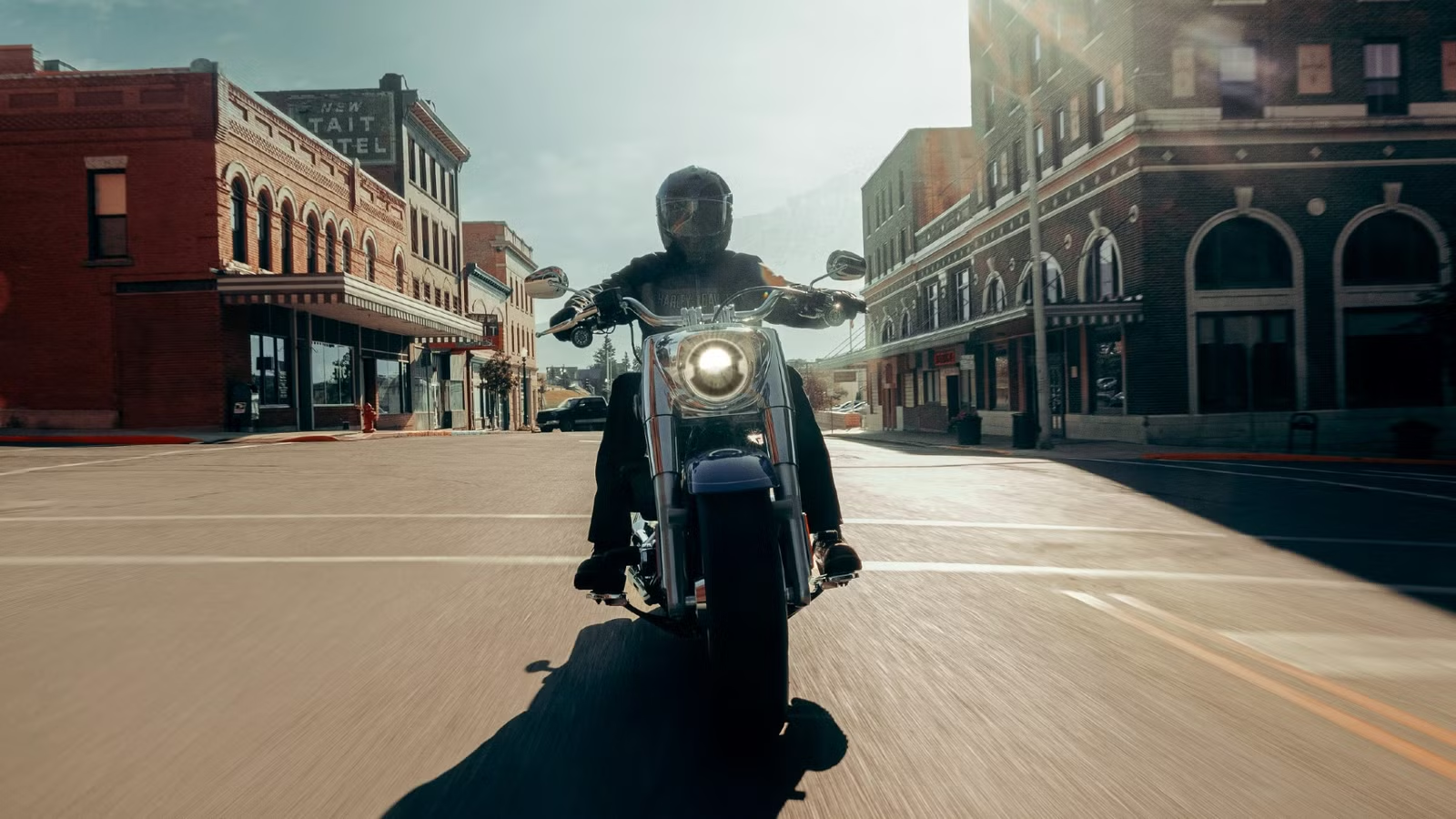
Recommending a motorcycle usually means walking someone through why it works, laying out the numbers, the dynamic abilities, the case for it in terms of use and finances, and so on. Once you’re past that, a genre of motorcycling becomes clear. And if the list of requirements has the words iconic and cruiser in quick succession, then this one is the easy recommendation.

Every non-rider on the planet already half-recognizes this bike, if only from a killer robot on a movie poster more than three decades ago. Arnie, John Connor, and even the AI they were fighting against can now suggest this badass cruiser to a friend who already half-believes in its potential. But why is that? For that, we’ll have to first answer another question.
What Actually Turns A Cruiser Into An Icon
Willie G. Davidson wanted to build a cruiser that was right from the get-go. The decision shaped a prototype in 1988 that he then took to the Daytona Bike Week to gauge public interest before it reached production. The idea itself, however, went back further than that prototype. Davidson had spent nearly two decades proving that a factory bike could look custom, starting with the Super Glide in 1971 and carrying through everything he touched afterward.


Davidson’s whole design language was built around handing a buyer the finished look of a custom motorcycle. After two years of showing that prototype to strangers at Daytona, Davidson was testing whether the ideology actually worked, and by 1990 the answer was clear enough to put into production. The production version wore solid cast disc wheels inspired by the look of a steam roller and a shotgun-style dual exhaust running low along the frame. A wide, full-coverage front fender dropped the whole front end lower, and it looked heavier than anything else, finished off in a monochrome with a nickname “Gray Ghost.” The design had all the makings of being iconic and memorable for a long time to come.
Riders Recommend The Harley-Davidson Fat Boy To Their Friends Again And Again

That prototype went into production as the Fat Boy in 1990 on the Softail chassis Harley-Davidson had introduced a few years earlier. It has stayed in the catalog every year since, to become the longest continuous production run of any Softail that Harley has ever built. At $22,599, it isn’t the cheapest Softail on the floor, but it undercuts most touring-focused Harleys wearing similar chrome and admirable presence by a wide margin.

What makes it the bike people keep pointing their friends toward is less about nostalgia and more about a silhouette H-D locked in decades ago that still registers instantly to someone who has never sat on a motorcycle. It’s a powerful visage of a Harley with traditional looks wrapped in modern tech. So the recommendation doesn’t need follow-up questions to really land with a friend looking to get their perfect American riding experience. And then there are more reasons to list.
A Milwaukee-Eight With A Higher State Of Tune

The Fat Boy specifically runs the Custom state of tune on its Milwaukee-Eight 117, which adds an extra 6 lb-ft and 5 horsepower over the Classic tune. The final numbers are 103 horsepower at 4,800 rpm and 126 lb-ft at 3,000 rpm. This is a step up from the 98 horsepower and 120 lb-ft coming out of the Classic tune powering the Heritage Classic and Street Bob. That’s fitting since the bike that looks the heaviest and least urgent actually pulls harder than most of its own stablemates.

We’re talking big V-twins here, so there’s none of the top-end screaming performance that comes from revving the engine out. Peak torque comes in low and thick, so the extra shove is just a tad above a gentle twist of the wrist after getting rolling. There are three switchable ride modes (Road, Rain, and Sport) to retune that same throttle response, softening it for a nervous first ride or sharpening it for the rider who actually knows the bike. Topping things off is a 5-gallon tank that stretches the ride out past 200 miles between stops.
The Details That Make It Easy To Hand Someone The Keys

A recommendation only works if the person on the other end can actually live with the bike once the excitement of getting it wears off. And one of the things that ensures that the excitement of it lives on is the wheel and tire package that draws attention to date. Then there is the rider triangle that’s low and open enough for a five-foot-two beginner and a six-foot-four seasoned rider to both climb on and feel like the bike was built around them.
Solid Cast Aluminum Wheels With A 240 Rear Tire That Define The Look

The whole identity of the Fat Boy rides on the uniqueness of the solid Lakester cast aluminum wheels, a design element that has been its highlight for the 30 years of its existence. Measuring 18 inches at both ends, they’re wrapped in Michelin Scorcher 11 rubber, with a 160/60 up front and a massive 240/40 out back on a whopping 8-inch-wide rim. The rear tire runs nearly 9.5 inches across, one of the widest Harley puts on any production cruiser, shared only with the Breakout. Riding it means accepting some deliberate weight in the bars at slow speed, but once the bike is rolling past walking pace, that same width makes for a reassuring planted feel around a sweeper.
A Seat Height That Fits Almost Anyone

At 25.9 inches laden, the seat sits low enough that even a rider stepping up from a much smaller commuter bike can also feel comfortable and confident. Unladen, that number climbs to 26.6 inches. The 65-inch wheelbase spreads that low seat over a long, planted footprint that stays composed rolling out of a parking space at slow speeds.

The low seat is a result of the frame and suspension geometry rather than a cramped cockpit, so a six-footer gets the same easy reach and comfortable ergonomics without folding into a cramped cockpit. The combination of the engine and its ergonomic accessibility makes the Fat Boy a great pick for someone looking for both muscle and mellow.
The Indian Chief Bobber And Suzuki Boulevard M109R Are Rivals Worth Considering, Too

The Indian Chief Bobber comes closest in spirit to the Fat Boy. It starts at $17,499 with a 1,811cc Thunderstroke 111 making 108 lb-ft of torque and has a seat height of 26.0 inches, numbers that sit within a few clicks of the Fat Boy’s own. Running weight lands at an identical 694 pounds too. Where the two split is the tire footprint, with the Bobber’s 16-inch wire wheels wrapped in a more conventional 180-section rear tire, trading some of that steamroller stance for a lighter, more flickable ride feel.

The Suzuki Boulevard M109R undercuts both on price at $15,799, and its 1,783cc V-twin makes a claimed 128 horsepower, more than either of the American bikes. And that power figure comes from some of the largest pistons ever fitted to a production motorcycle, a tech point to brag about at the café. The Suzuki also shares a 240-section rear tire size with the Fat Boy, right down to the 18-inch wheel size. But it draws someone who’s chasing spec-sheet bragging rights of what is essentially a safe purchase. The Fat Boy, on the other hand, is simply the icon that it has been throughout its existence, and rewards someone who just wants a bike that never needs justification, which is exactly why it’s easy to recommend to friends time and again.
Source: Harley-Davidson

Related posts
Latest Post


No Comments