
The Best Beginner Motorcycles For New Riders
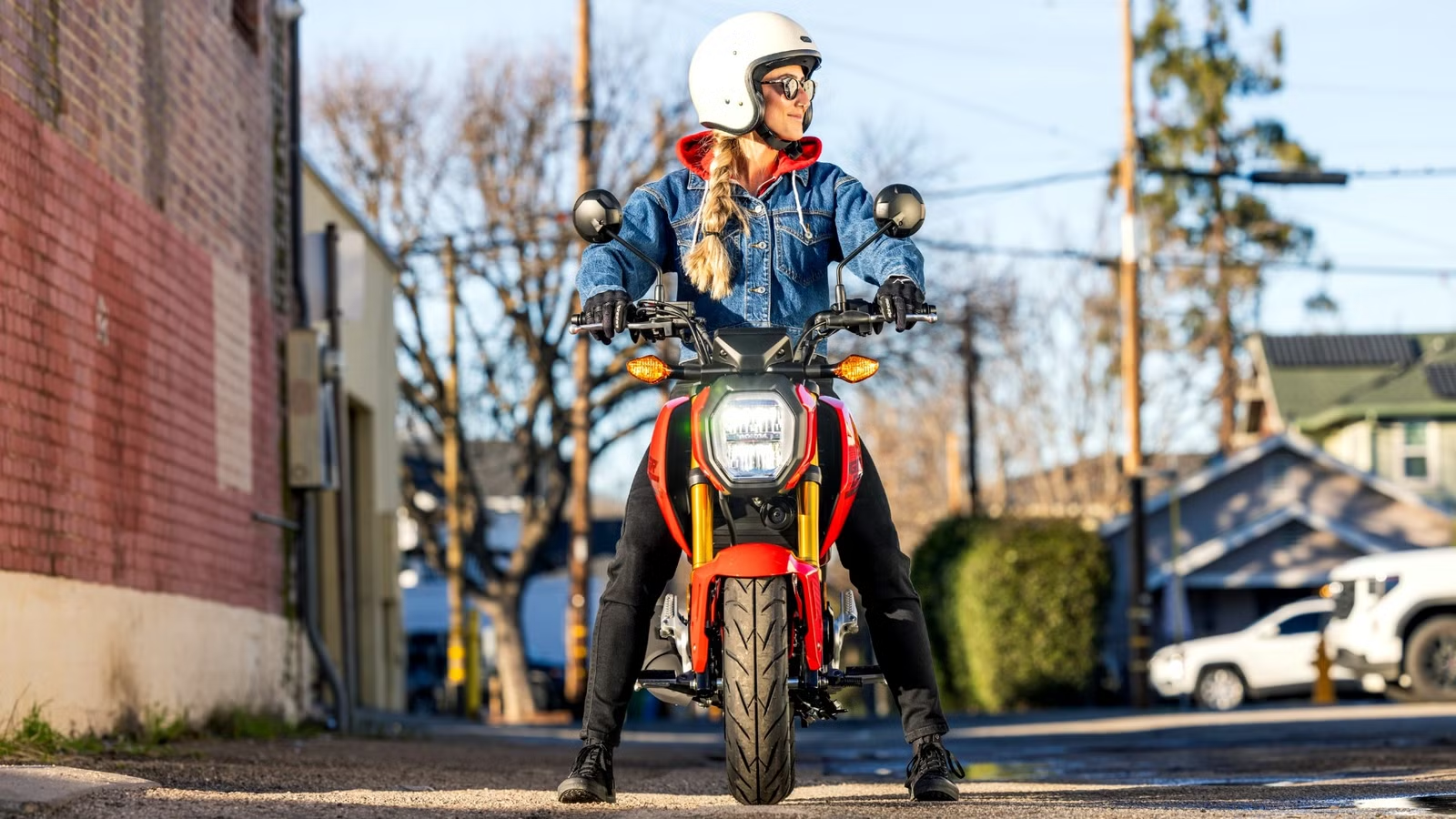
When you are just starting your two-wheel journey, finding the best motorcycle to start on is a pivotal moment. Choosing the right machine can often feel daunting, especially with so many options available today. You can take the used-market route to save some money, but that usually comes with questionable reliability that can dampen your enthusiasm for learning. Because your first motorcycle directly influences how quickly you build saddle skills, entry-level models are the best place to get you moving swiftly. That’s why, to simplify things, we have rounded up ten of the best beginner motorcycles, arranged in ascending order by price.
Kawasaki W175 LTD
Starting Price: $2,999

If you are a brand-new rider on a tight budget, the Kawasaki W175 LTD is a perfect entry point with its under-$3,000 price tag. Powered by a modest 177cc air‑cooled single‑cylinder engine, you get 13 horsepower and 9.7 pound-feet of torque. Those numbers, combined with fuel injection, ensure smooth, predictable power delivery and precise throttle response that’s easy to manage. Additionally, impressive fuel efficiency of over 110 mpg and a 3.2-gallon tank give you stress-free, long rides between fill-ups.

With classic retro styling and a single-bench saddle set at a low 30.7-inch seat height, you can build riding skills in comfort. At the same time, its under-300-pound curb weight keeps it approachable for new riders. A telescopic front fork and dual rear shocks, coupled with a single front disc and single-channel ABS, keep things simple. All in all, you get the cheapest full-sized Kawasaki roadster backed by Japanese dependability, which makes it the most affordable first step into the sport.
Honda Grom
Starting Price: $3,599

Moving slightly up in price brings you to the iconic Honda Grom. In the mini-moto space, it has long been a cult favorite among beginners, thanks to its approachable dimensions and playful personality. Its 124cc air-cooled single-cylinder engine delivers 9.7 horsepower and 7.7 pound-feet of torque, offering plenty of zip for city commutes and weekend fun. Also, the industry-leading 166.5 mpg fuel efficiency is another bonus. Meanwhile, its customizable bodywork panels let you make the bike your own, keeping the learning process fun.

With a compact form factor, 224 pounds of curb weight, and a 30-inch seat height, it is easy to maneuver and control. A 31mm inverted fork with 3.9 inches of travel gives the Grom surprisingly composed handling for something this small, making it a non-intimidating platform for practicing the fundamentals. Meanwhile, 12-inch wheels paired with a 220mm front and 190mm rear disc brake setup offer sharp, responsive braking. However, ABS is an optional $200 extra with the SP variant.
Yamaha WR125R
Starting Price: $3,999

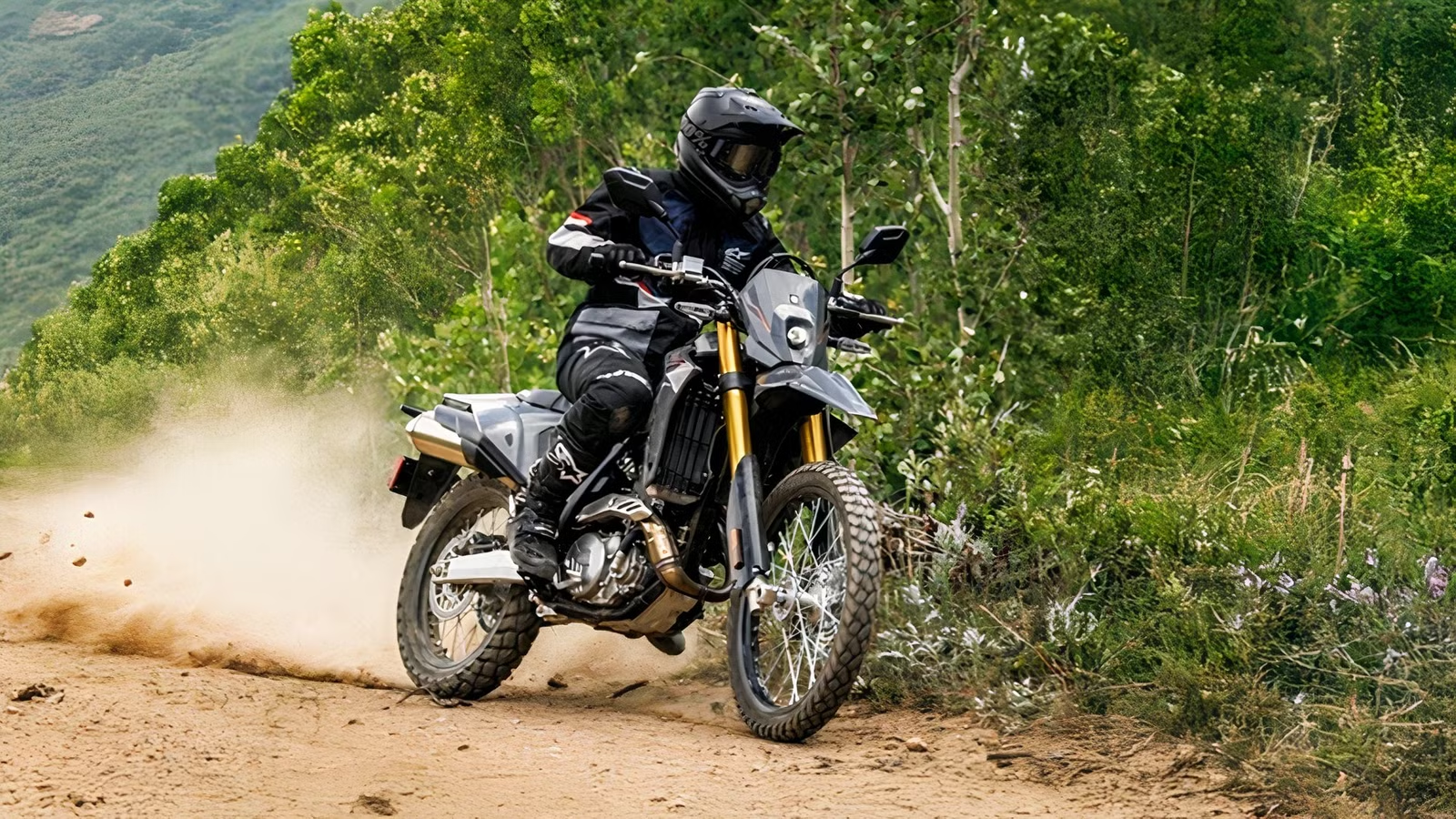
If you want your beginner motorcycle to double as a dirt-capable companion, the Yamaha WR125R is a beginner-friendly dual-sport perfect for honing your skills. Its 125cc liquid-cooled single-cylinder engine produces 14.4 horsepower and 8 pound-feet of torque. Paired with a six-speed gearbox, you get low-end pull with smooth top-end power, building your core off-road fundamentals. While its 304-pound curb weight is light enough for beginners to control easily, its taller 34.4-inch seat height requires a slight stretch for shorter riders.

With long‑travel suspension, a 21‑inch front wheel, and 9.4 inches of ground clearance, it’s built to handle dirt roads while remaining street‑legal. A 41mm KYB front fork offers 8.5 inches of travel, while a rear monoshock provides 7.3 inches. That generous suspension travel, combined with 21/18-inch spoked wheels and 9.4 inches of ground clearance, allows you to roll over obstacles with ease while building the fundamentals.
Honda CB300R
Starting Price: $4,499

Stepping into naked bike territory, the CB300R is a well-rounded entry-level beginner motorcycle featuring neo‑retro styling and easy-to-handle performance. You get a healthy 30.7 horsepower and 20.2 pound-feet of torque from a 286cc liquid-cooled single-cylinder motor. Power delivery is smooth for both city and highway riding, making your learning curve easier without becoming unmanageable. In addition, a six-speed gearbox with slipper-clutch assist smooths out gear changes, helping you learn proper gear control.

Weighing in at a light 316 pounds, the CB300R is lightweight and affordable for a full-size naked that feels stable yet agile. Meanwhile, its 31.6-inch seat height ensures accessibility for most riders. Suspension comes from an upside-down Showa fork up front and a Pro-Link monoshock at the rear. Braking hardware includes a single-disc setup at both ends, with dual-channel ABS as standard. You also get all-around LED lighting, a crisp LCD display, and Honda’s impressive fit and finish.
Honda Rebel 300 E-Clutch
Starting Price: $5,349

If laid-back cruisers appeal to you, for an additional $850 over the CB300R, the Rebel 300 is your best motorcycle to learn relaxed cruising on. You get the same 286cc single, but it is tuned for low-end torque that suits cruiser duties. More importantly, it is the cheapest beginner motorcycle to get Honda’s e-clutch feature. This system allows you to start, shift gears, and come to a complete stop without touching the clutch lever, while still offering manual control if you want it.

Furthermore, thanks to its low 27.2-inch seat height and relaxed ergonomics, and despite 379 pounds of curb weight, you can flat-foot at stops and maneuver effortlessly. Likewise, a 41mm fork with 5.5 inches of travel and dual rear shocks with 3.7 inches of travel keep the ride comfortable. Backed by Honda’s bulletproof reliability, you will find the Rebel 300 is much easier to begin your cruiser journey as a first-time rider.
Kawasaki Ninja 500 ABS
Starting Price: $5,799

For many new riders, a sportsbike is the dream machine, and the Ninja 500 is a good place to begin. It slots between the re-introduced entry‑level Ninja 300 and the midrange Ninja 650, with the right fundamentals for beginners. Its 451 cc parallel-twin churns out 51 horsepower and 31.7 pound-feet of torque, balanced for real‑world usability. Mated to a six-speed transmission with an assist-and-slipper clutch, you get lighter lever pull and smoother downshifts that make riding easier.

While it looks a little aggressive, the ergonomics are slightly more upright compared to supersports, reducing wrist and back strain. With a 30.9-inch seat height and 377-pound curb weight, you can easily manage the bike for city and highway riding alike. As a result, its balance of approachable performance and accessible sporty dynamics makes the Ninja 500 a manageable sportsbike you can grow with over time.
CFMoto Ibex 450
Starting Price: $5,999

Now, coming to the booming adventure segment, the Ibex 450 is a beginner-friendly ADV that doesn’t feel like a compromise as you learn the ropes of off-roading. Powering the machine is a 449 cc liquid‑cooled parallel twin with a 270-degree crankshaft. And output stands at 44 horsepower and 32.5 pound‑feet of torque, specially tuned for versatility. Further supported by an adjustable 32.3-inch seat height and 419-pound wet weight, you can effortlessly handle both on the highway and off the beaten path with confidence.

The highlight of the Ibex 450’s value proposition is the off-road-ready hardware and advanced electronics. You get a fully adjustable KYB suspension setup offering about 7.9 inches of travel at both ends. This is paired with spoked wheels in a 21/18-inch combination and 8.7 inches of ground clearance. On the tech front, a 5-inch TFT display manages modern rider aids, including selectable riding modes, traction control, and switchable rear ABS for controlled rear-wheel slides on off-road terrain.
KTM 390 Adventure X
Starting Price: $6,499

If you prefer long-distance adventure touring over serious off-roading, the 390 Adventure X is a more street-focused choice compared to its off-road-ready R variant sibling. Both models are powered by KTM’s punchy 398.7 cc LC4c single-cylinder engine, generating 44.4 horsepower alongside 28.8 pound-feet of torque. You get strong, usable performance without stepping into intimidating territory, and a six-speed transmission with slipper clutch makes gear selection easier for new riders.

Additionally, a lightweight trellis frame keeps it nimble, while a wet weight of 388 pounds and a 32.4-inch seat height make it easy to manage. Touring comfort comes from WP Apex forks and a preload-adjustable monoshock with 7.87 inches of travel, and the bike rolls on 19/17-inch alloy wheels. Also, a tall windshield, ABS, ride‑by‑wire throttle, and a five-inch LCD with USB-C charging round out a package built around everyday usability.
Honda Rebel 500
Starting Price: $6,799

For new riders who like the Rebel 300’s beginner‑friendly ergonomics but want a bit more oomph, the Rebel 500 offers a natural step up. Powered by a bulletproof 471cc liquid-cooled parallel twin that delivers 46.9 horsepower and 43.3 pound-feet of torque, it offers more highway confidence than its smaller sibling. Because it is tuned specifically for low-end and midrange grunt, you get instant, linear power delivery without ever needing to wring out the engine.

Just like the 300, the seat height comes in at an accessible 27.2 inches for the 500, but the weight rises to 414 pounds wet while still staying approachable for new riders. Also, the upright, relaxed riding position makes it easy to build confidence at low speeds, while offering comfort for longer rides. Though the Rebel 500 may not be the absolute best beginner motorcycle, the advantage is that you get a bit more room to grow before needing to upgrade again.
Aprilia RS 457
Starting Price: $6,849

Rounding out the list, the Aprilia RS 457 is a proper entry-level track-focused sportsbike for building your riding skills. Power comes from a high-revving 457 cc parallel-twin motor that runs a 270-degree crank setup, producing 47 horsepower and 32 pound-feet. Paired with a six‑speed gearbox and slipper clutch, you can breeze through gears smoothly. With a 385-pound curb weight, it also offers one of the best-in-class power-to-weight ratios, further enhancing its performance credentials.

Though the ergonomics are aggressive, with a more crouched riding position, you are rewarded with surgical cornering precision. What gives this best-in-class motorcycle its sharp riding dynamics is its lightweight aluminum chassis, paired with an adjustable suspension setup comprising a 41mm inverted front fork and rear monoshock. In addition, the RS 457 includes a high-end feature set like a five-inch TFT display, a ride‑by‑wire throttle offering selectable riding modes, multi-level Traction Control, and dual-channel ABS.
Sources: Powersports Honda, Kawasaki, Yamaha, Aprilia USA, CFMoto and KTM

Related posts
Latest Post


No Comments