
Pontiac’s Forgotten Luxury Coupe Makes the Ferrari 250 GTO Look Common
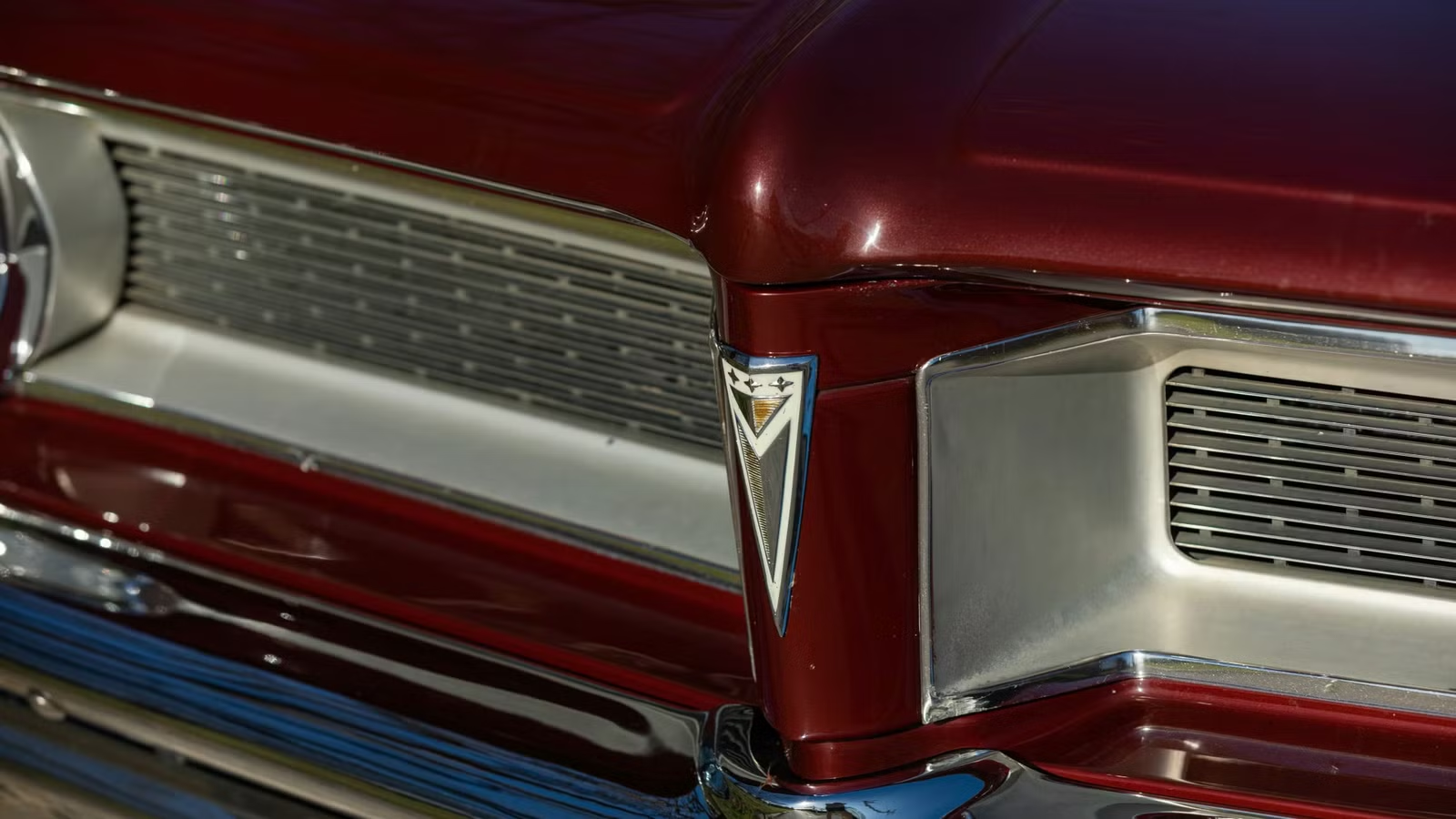
Before the mid-size GTO was born, real muscle hid in a luxury package, creating the ultimate Pontiac sleeper. Under the flashy exterior and plush interior, you’ll find a potent engine designed for NASCAR and the NHRA. Fewer of these models were produced than the highly coveted Ferrari 250 GTO and Catalina 421 SD. As a comfortable drag strip brawler, it’s worth hunting for, especially compared to more expensive rivals that haven’t been overlooked by collectors.
Sure, The Ferrari 250 GTO Is Pretty Rare

Only about 36 to 39 Ferrari 250 GTO models were produced between 1962 and 1964. So, of course, this Gran Turismo Omologato, or Grand Touring homologation car, is pretty rare. The public models were built and released to meet production requirements set by the Fédération Internationale de l’Automobile (FIA).
It’s powered by a 2,953 cc (3.0-liter) Colombo 60-degree V12 engine with 300 hp and 217 to 246 lb-ft of torque depending on the model year. The engine has six Weber 38DCN carburetors paired with a five-speed manual transmission. Also, the car has a front-engine, rear-wheel-drive setup.
The Ferrari 250 GTO can accelerate from 0 to 60 mph in about 5.4 seconds and covers a quarter-mile in about 13.1 seconds. It has a top speed of roughly 174 mph and dominated racetracks for years. While the 250 GTO deserves to be celebrated, another prestigious car entered the scene two years before the GTO badge allowed Pontiac to flex its muscles. It exists in even fewer numbers.

The 1962 Pontiac Grand Prix SD Got A Race Car Engine

In the early 1960s, Pontiac was caught up in the horsepower wars. With John Z. DeLorean at the helm, it was time to compete against big-block rivals built by Ford, Chrysler, and Chevrolet. So, the 1962 Pontiac Grand Prix SD was born to race, and only 16 models were built. The full-size two-door coupe gained the factory-backed Pontiac 421 Super Duty engine that was specifically designed to dominate the motorsports series.
The 421 cubic-inch (6.9-liter) V8 delivers a factory-rated 405 hp and 425 lb-ft of torque. However, historians and dyno tests estimate that its output is closer to 460 to 500 hp and 505 lb-ft of torque. It helps the Grand Prix SD accelerate from 0 to 60 mph in about 6.0 seconds, with a quarter-mile time of 14.3 seconds at 103 mph. Plus, its top speed hovers around 135 mph.

Adding the 421 SD performance package cost about $2,000 on top of the Grand Prix price of $3,490, but it was worth it. The engine has a heavy-duty block with thick web castings, a five-main bearing layout, and four-bolt main caps. Also, the forged-steel, cross-drilled crankshaft features immense 3.25-inch main journals.
It benefits from a high-duration solid-lifter McKellar #10 camshaft and a dual quad intake manifold featuring twin Carter AFB four-barrel carburetors. Also, the high-strength forged-steel connecting rods paired with lightweight forged aluminum pistons were designed by Mickey Thompson.
The Pontiac Grand Prix Was Built Differently

Another car to receive the legendary 421 engine was the 1962 Pontiac Catalina 421 Super Duty. This is a stripped-down race car with the ability to accelerate from 0 to 60 mph in 5.4 seconds, with a 13.9-second quarter-mile time and a top speed of 135 mph. To reduce weight, it received aluminum panels, hoods, and bumpers.
It’s famous for having a Swiss cheese frame, meaning holes were drilled through the frame rails to cut about 200 pounds. Ordering this car without the radio, heater, cushioned seats, and more reduced its weight even more. About 162 Pontiac Catalina 421 SD models were built before General Motors imposed a factory-backed racing ban in 1963.
Meanwhile, the Pontiac Grand Prix SD delivered luxury comfort. Sources conflict over whether the body was steel or aluminum, but the rest of the car was extremely plush. The interior features deep-cradled bucket seats, a full-length center console with a transmission shifter, nylon loop-blend carpeting, a deluxe steering wheel, power windows, and comprehensive interior lighting.
But Survivors Don’t Attract Ferrari 250 Money

Historians estimate that about five 1962 Pontiac Grand Prix 421 SD models still survive today. You would expect such a rare and powerful car to have a higher price tag. However, models in average condition typically sell for about $144,000. Then models in pristine, show-ready condition fetch about $267,000.
The 1962 Pontiac Catalina 421 SD tends to hold less value. Examples in good condition sell for an average of $62,000. Survivors in excellent condition that are ready for museums and car shows sell for about $141,000 to over $200,000. It’s unclear how many models still survive today, as most were raced into the ground.
The value of the Ferrari 250 GTO is astronomical. They sell for between $40,000,000 and $70,000,000, depending on whether they’re sold privately or at auction. The specific chassis, paint color, and history tied to each chassis make a massive difference. Historians estimate that about 36 models still survive.
Source: Curbside Classic, Hagerty

Related posts



Latest Post


No Comments