
Honda’s CR-V Is On Track To Beat The RAV4 This Year, Here’s What’s Driving The Gap
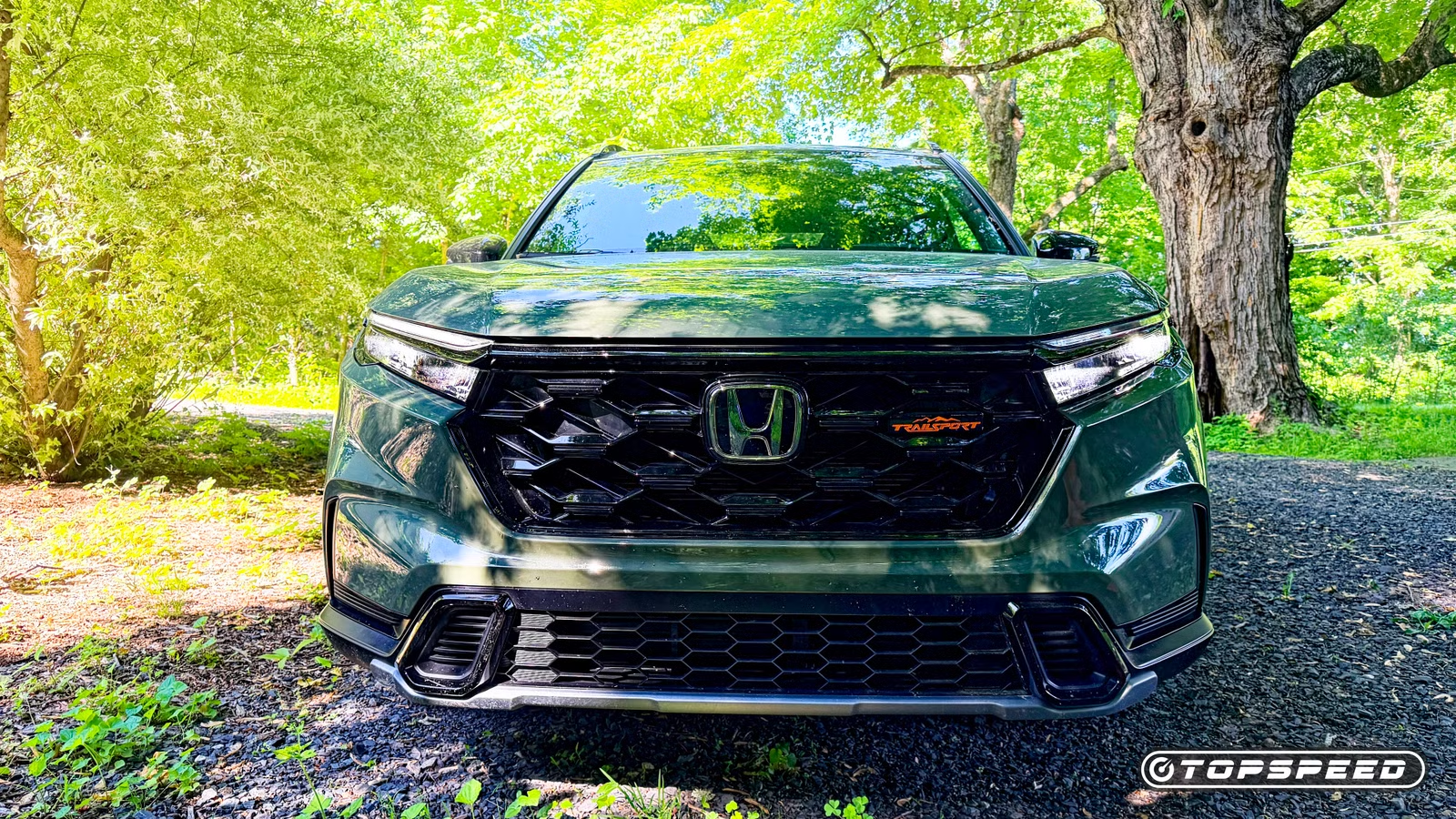
Honda’s CR-V is about to do something it hasn’t done since Toyota’s RAV4 existed in its modern form: outsell it for an entire year. With three months left on the 2026 calendar, the CR-V holds an 83,000-unit lead over the RAV4, and the gap is wide enough that Toyota would need a historic surge paired with a Honda collapse to close it. That’s not happening.

Honda sold 37,778 CR-Vs in September alone, up 21.9% year over year, pushing its 2026 total to 336,834 units. The RAV4, meanwhile, is down 29.2% for the year, with 253,663 units sold through September against 358,134 over the same stretch in 2025. If the trend holds, it will be the first time Honda has outsold Toyota’s equivalent model since the Accord did it to the Taurus back in 1991, and the first time since the Accord beat Toyota outright in 2001.
Why The RAV4 Fell Off A Clif This Year
The RAV4 didn’t lose this race on merit. Toyota relaunched a redesigned sixth-generation RAV4 earlier this year, and the rollout has been rough. Sales fell nearly 50% in the first quarter as Toyota struggled to build enough of the new model to meet demand. Production has improved since then, but the brand still hasn’t closed the gap with where it stood a year ago.
That’s a structural problem, not a demand problem. The new RAV4 brought real upgrades, including its first-ever plug-in hybrid variant, which posted strong numbers where it has launched. But building enough of them fast enough has been the issue, and that’s cost Toyota dearly against a Honda rival that’s never had an easier lane to drive through.
The CR-V’s Hybrid Mix Is Doing The Heavy Lifting

More than half of every CR-V Honda sold in September, 53%, was a hybrid. That’s a new high for the nameplate, and it lines up with what buyers are telling every automaker right now: they want electrified efficiency without going all-in on a plug. Honda has leaned into that demand with its e:HEV system, pairing a 2.0-liter four-cylinder acting mostly as a generator with an electric traction motor, and it’s paying off at the dealership.
Toyota still sells plenty of RAV4 hybrids, and its new plug-in hybrid variant is a legitimately quick, well-equipped option. But the PHEV rollout has been slower to scale than Honda’s straightforward hybrid push, and that gap in available inventory, not technology, is where Honda is winning buyers over.
Inventory And Price Are The Real Story For Shoppers Right Now

For someone cross-shopping these two crossovers today, the practical numbers matter more than the sales race. CR-V inventory sits at just 17 days, less than half of what Honda would like, which tells you the hybrid-heavy model is selling almost as fast as it arrives. RAV4 availability has been similarly squeezed by the production constraints tied to the redesign, meaning neither automaker is handing out great deals on these two models this fall.
That’s pushed some RAV4 shoppers sideways rather than over to Honda. Camry sales are up 11.2% this year to 260,684 units, edging ahead of the RAV4’s 253,663, suggesting Toyota is at least keeping some of that demand in-house even as the SUV struggles.

If you’re set on a CR-V or a RAV4 specifically, don’t expect much negotiating room. Both are tight on inventory, and tight inventory means dealers have little incentive to deal. Honda’s production is already running close to the edge to keep up with 53% hybrid demand, and Toyota is still playing catch-up on its redesigned model.
That tightness is exactly why this might be the moment to look elsewhere. Competitors watching Honda and Toyota struggle to keep lots stocked may be more willing to offer aggressive incentives to pull shoppers away before they commit to a long wait. Whether the RAV4’s production issues are temporary or a longer-term symptom of the redesign remains to be seen, but for now, Honda’s advantage looks less like a fluke and more like the product of two deliberate choices: more hybrids, built faster.
Whether this turns into a lasting shift in the compact crossover pecking order or just a one-year blip tied to Toyota’s launch stumbles, the next few months should make it official. Barring a dramatic reversal, Honda gets to claim a title it hasn’t held in 35 years, and buyers get a real lesson in how fast an inventory problem can cost a segment leader its crown.

Related posts



Latest Post



No Comments