
Harley-Davidson Raises Full-Year Sales Guidance After North American Retail Grows 3% in Q2 2026
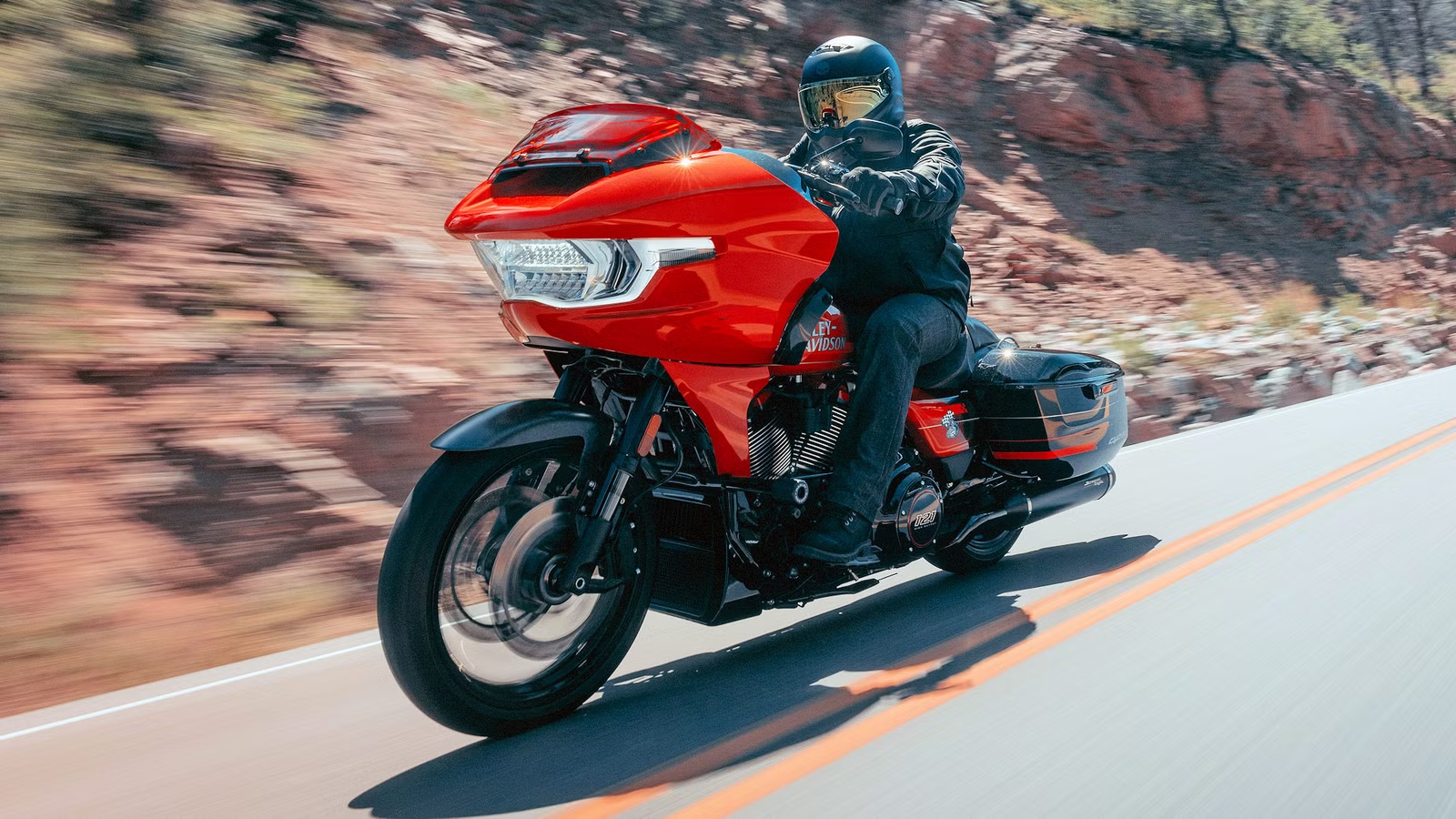
Harley-Davidson closed out the second quarter of 2026 with 29,751 North American retail units sold — a 3% year-over-year gain — and immediately used that momentum to raise its full-year global retail forecast from 130,000–135,000 units to 133,500–138,500. The announcement, made July 23, puts concrete numbers behind what the company has been calling its ‘Back to the Bricks’ turnaround, and the signals it sends to riders shopping Touring and Sport models right now are worth paying attention to.

Strength in those two categories drove the North American gain, alongside a positive early reception for the 2026 model lineup. Global retail edged up 1% to roughly 42,500 units for the quarter, with softness in Europe — down 9%, largely in Germany — offset by solid results in Latin America and flat-but-stable Asia Pacific numbers. The domestic story, though, is the one that matters most for riders in the U.S. and Canada.
Dealer Inventory Is Down 17% — And That’s Actually Good News
The headline retail numbers are encouraging, but the inventory figure tells the more interesting story. Global dealer inventory of new motorcycles ended Q2 2026 down 17% compared to the same point last year. On the surface that sounds like a shortage. In practice, it reflects a deliberate strategy: Harley-Davidson has been managing shipments carefully so dealers sell bikes rather than accumulate them.

When inventory piles up at dealerships, two things happen that hurt riders. Dealers start discounting aggressively to move metal, which erodes resale values on bikes already in garages. And the brand loses pricing discipline, which tends to signal broader health problems. The opposite dynamic is now in play. CEO Artie Starrs noted that dealers are once again asking for additional inventory rather than trying to reduce it — a meaningful reversal from recent years. Used motorcycle values are improving, and MSRP realization (the gap between sticker price and what bikes actually sell for) has strengthened. For anyone shopping a new Road Glide or a Street Fighter, that environment means less pressure to wait for a clearance event and more confidence that the price you see today reflects real market demand.
The 2026 Super Glide Signals Where the Brand Is Headed

One concrete product move that accompanied the Q2 results: Harley-Davidson introduced the 2026 Super Glide in June, and management cited its early reception as part of the confidence behind the raised guidance. The model is a limited run of 2,500 serialized units, built on the Softail platform and styled as a direct callback to the original 1971 Super Glide — the bike that effectively created the factory custom category. Power comes from the Milwaukee-Eight 117 cubic-inch V-twin (1,923cc), tuned to a claimed 98 horsepower and 120 lb-ft of torque. White Onyx Pearl paint, red and blue fender striping, chrome laced wheels, and a five-gallon teardrop tank complete the period-correct look. Availability is limited to U.S. and Canadian dealerships, with units already arriving on showroom floors.
The Super Glide’s introduction matters beyond its own specs. It shows Harley leaning into heritage product at a moment when the brand is trying to re-anchor itself with core riders — exactly the kind of move the ‘Back to the Bricks’ strategy calls for.

Global motorcycle shipments from the factory rose 9% in Q2 to 39,209 units, and motorcycle revenue climbed 9% to $848 million — both healthy signals that production is keeping pace with demand without flooding the channel. The Motor Company’s operating income for the quarter came in at $72 million, up from $61 million a year earlier, with operating margin improving to 6.6% from 5.9%.
For riders evaluating whether now is a good time to buy, the picture is relatively clear. Dealer networks are in better financial shape than they were a year ago — Starrs has said the company is on track to double domestic dealer profitability in 2026. Healthier dealers invest in service, staffing, and inventory selection, which translates to a better ownership experience beyond the initial purchase. Inventory discipline means the bike you want is more likely to be priced fairly, and the dealer you buy from is more likely to still be operating well when you bring it in for service two years from now. The raised full-year guidance, backed by two consecutive quarters of North American retail growth, suggests that momentum is real rather than seasonal.
Harley-Davidson’s Q1 2026 results had already shown a 14% North American retail gain, so Q2’s 3% growth represents a normalization rather than a slowdown — the easy year-over-year comparisons are fading, and the brand is still moving forward. Riders who have been waiting for a sign that the domestic turnaround has legs now have two quarters of data pointing in the same direction.

Related posts




Latest Post


No Comments