
Ford Built A 795-HP Everyday Mustang That Can Humiliate Genuine Supercars
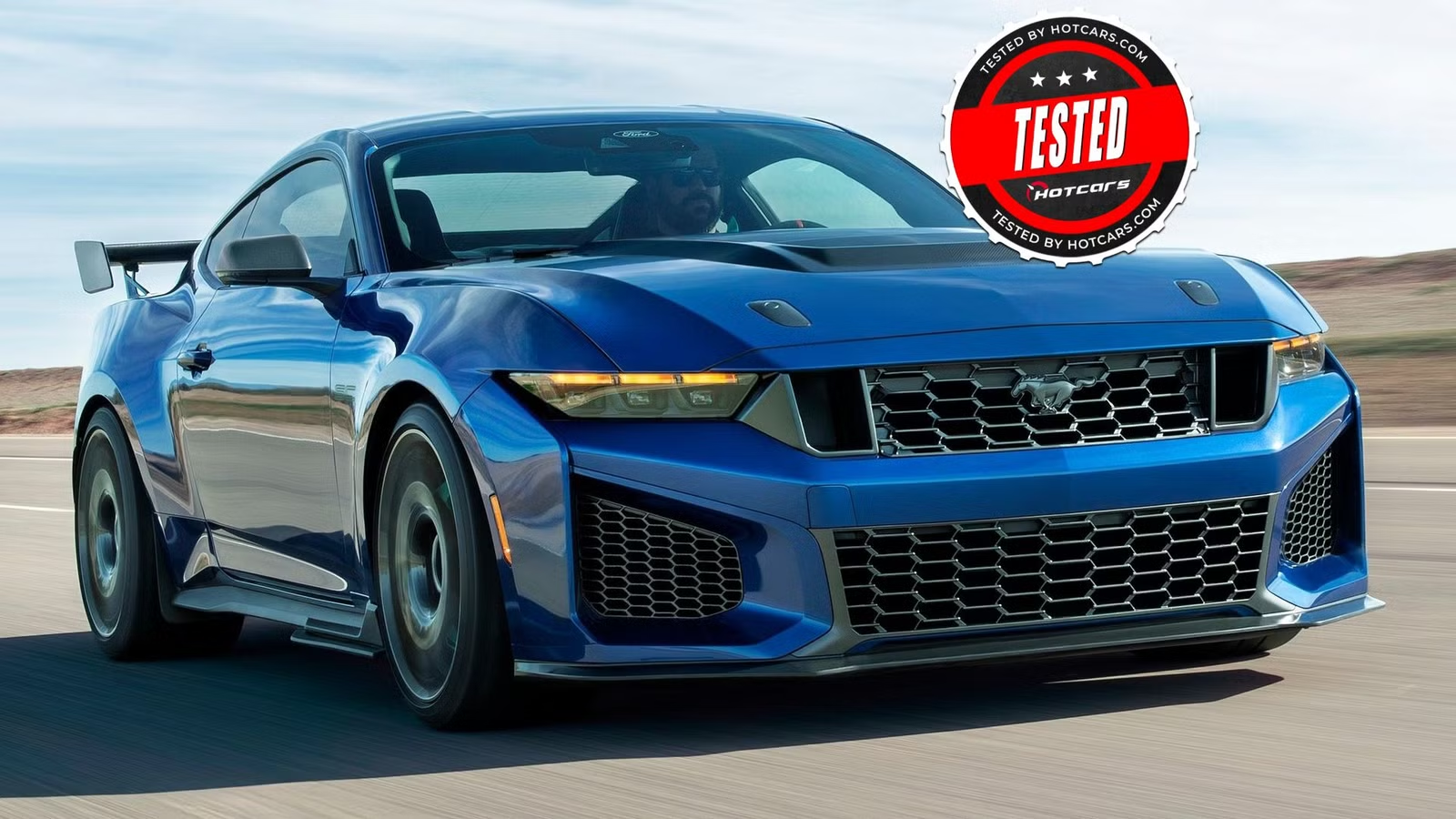
Sebring International Raceway is not gentle. Its cracked concrete, nasty bumps and fast corners expose weaknesses faster than a mechanic with a hammer. This is where Ford handed me the keys to its newest high-performance Mustang and invited me to push it properly. What followed was one of the most effortless and confidence-inspiring track experiences I have ever had with an everyday sports car. Yes, the SC is brutally fast, but raw speed is only the beginning of the story.

I have spent nearly two decades as an automotive journalist, driving some of the fastest cars on the planet across more racetracks than I can remember. Yet whenever I met my European colleagues, the same tired joke eventually surfaced. American performance cars were apparently too heavy, obsessed with straight-line power, and handled like absolute shit. As I attacked Sebring in the Dark Horse SC, I desperately wished every one of those guys had been sitting beside me. This car feels like one massive, supercharged middle finger aimed directly at that outdated stereotype.
What Is The Mustang Dark Horse SC?
The Dark Horse SC is Ford Racing’s answer for drivers who want supercar performance without sacrificing the ability to use their Mustang away from a racetrack.

It sits between the regular Dark Horse and the mighty Mustang GTD. That is a seriously sweet spot. The GTD is an exotic carbon-fiber monster with a price tag to match, while the Dark Horse SC delivers much of that race-developed magic in a more approachable package.
This is still a Mustang you could drive regularly. It has a recognizable cabin, usable technology and enough comfort to prevent every journey from feeling like an endurance race. Drive it to work, point it toward a winding road or spend an entire day hammering around a circuit. It seems perfectly happy doing all three.

That does not mean Ford has built some watered-down grand tourer. This thing is freaking sick. The Dark Horse SC feels like an everyday Mustang that got locked inside Ford Racing overnight and emerged ready to throw punches at genuine supercars.
Also, we’ve seen the chatter online about how this is just a new GT500, but calling the Dark Horse SC a rebadged Shelby GT500 seriously undersells it. While the two cars share a supercharged 5.2-liter V8 and seven-speed dual-clutch transmission, the SC wraps that familiar firepower inside the newer S650 Mustang with more power, next-generation MagneRide dampers, revised suspension geometry and far more sophisticated aero developed alongside the Mustang GTD and GT3 race car. Throw in the Track Package with carbon-ceramic brakes, carbon-fiber wheels and 620 pounds of rear downforce at 180 mph, and this is clearly an evolution of the GT500 formula rather than the same old snake wearing a horse badge.
The Dark Horse SC Packs 795 Horsepower And Serious Aero

Under the hood is a hand-assembled supercharged 5.2-liter V8 producing 795 hp and 660 lb-ft of torque. It sends that fury to the rear wheels through a seven-speed Tremec dual-clutch transmission and a carbon-fiber driveshaft.
But that is just the beginning of what this car has to offer. The Dark Horse SC uses a 3.73 Torsen limited-slip differential, MagneRide adaptive dampers, variable traction control and Brembo brakes. The available Track Pack adds carbon-fiber wheels, Michelin Pilot Sport Cup 2 R tires and enormous carbon-ceramic brakes.

The aero is equally serious. An aggressively vented hood helps evacuate heat and manage airflow, while the Track Pack’s ducktail rear deck and carbon-fiber wing generate up to 620 pounds of rear downforce, if you manage to hit 180 mph. That is not decorative carbon fiber installed for parking-lot bragging rights. It is working hardware developed using lessons from the Mustang GTD and Ford’s racing programs.
You can feel that engineering working from behind the wheel. The Dark Horse SC does not merely have a gigantic power figure. Its brakes, suspension, tires, transmission and aero appear to be working together instead of arguing over who gets to frighten the driver first.
Driving The Dark Horse SC At Sebring Was Almost Too Easy

Our day began on an autocross course, which gave us time to explore the different driving modes and understand how the car reacted before attacking Sebring at proper speed. All the vehicles we got to drive were equipped with the Track Package.
My first surprise was how manageable everything felt. A rear-wheel-drive Mustang with 795 hp sounds like the sort of machine that should constantly threaten to fire you backward through a hedge. The Dark Horse SC does nothing of the sort. Its controls feel natural, its responses are immediate, and the chassis communicates exactly what is happening beneath you.
Turn the wheel and the front end reacts sharply without feeling nervous. The car changes direction with far more precision than its muscular proportions suggest, and the MagneRide suspension keeps the body composed without making the ride brutally stiff.
Then there are the brakes. Holy hell, the stopping power is immense. You can arrive carrying serious speed, hit the brakes and scrub it away with remarkable control. It remains smooth and easy to modulate, so the brakes build confidence instead of merely trying to detach your eyeballs.

Once we moved onto Sebring for the hot laps, the Dark Horse SC revealed just how complete it really is.
The supercharged V8 responds instantly. There is no waiting for boost, and no awkward pause while the car considers your request. Squeeze the throttle, and it launches forward with ferocious tenacity. The exhaust note is deep, violent and beautifully mechanical, filling the cabin without artificial nonsense.
The dual-clutch transmission is every bit as impressive. Gear changes arrive almost instantly, hammering through ratios without disrupting the car’s balance. Each pull of the paddle brings another savage surge from the V8, yet the delivery remains smooth enough that you never feel like the powertrain is fighting the chassis.

What impressed me most was how naturally the car attacked corners. It remained planted through Sebring’s faster sections, while the steering gave me the confidence to place it exactly where I wanted. The aerodynamics showed exactly why this car handled the way it did, as it helped push the car onto the surface as speed builds.
The Dark Horse SC is enormously fast, but it does not scare the crap out of you simply to prove a point. It wants the driver to lean on it. The harder I pushed, the more settled and reassuring it became.
What’s Not To Like About This Awesome Mustang?

My experience with the Dark Horse SC was so good that I had to go through other reviews to see if there was in fact anything to complain about. Let’s start with the price. Yes, the Dark Horse SC is an expensive Mustang, but it also delivers 795 hp, carbon-fiber hardware, supercar-grade aero and enough performance to chase machines wearing far fancier badges. Serious speed costs serious money. Complaining that a Mustang should never cost six figures ignores how much engineering and performance Ford has packed into this thing.
Then there is the interior. Apparently, every expensive performance car must now resemble a luxury hotel lobby. The SC is still supposed to feel like a Mustang. Its cabin is comfortable, sporty and functional, which is exactly what it needs to be. Nobody buys one because the dashboard plastic feels nice enough to lick. Calling the interior unacceptable feels like journalists complaining out of habit because finding faults has become second nature.

Some reviewers also say the car feels wide and bulky. Now, I have not driven it on public roads yet, so I cannot fairly judge that part. However, most American roads are not tiny European village lanes built when horses were the main form of transportation. On the track, the SC hides its weight brilliantly and feels remarkably sharp. Is it quite as perfect as a Porsche 911 GT3? Probably not, but it gets shockingly close while offering a completely different personality. This car is built for people who want to have fun, not professional racers chasing tenths of a second.
The complaint about having too many driving modes and performance settings is even weaker. Any car this advanced takes time to understand. A journalist jumping into it for one day cannot expect to master every traction setting, suspension mode and launch-control function before lunch. That is not a fault with the car. It is simply the reality of learning a sophisticated performance machine.
After driving the Dark Horse SC at Sebring, I genuinely struggled to find something worth criticizing. Not the handling, not the power delivery, not the brakes and not even the price. Within the limits of our track experience, this is a phenomenal machine. Sometimes a car really is that bloody good, and inventing complaints does not make a review more intelligent. Maybe I am different. I am not chasing perfection. I want a car that makes every drive feel like an event and leaves me excited to climb behind the wheel again.
Ford Racing Built One Hell Of A Mustang

The Mustang Dark Horse SC is not just about stuffing nearly 800 hp into the world’s most popular sports car. Its real achievement is making all that power usable. Ford has spent generations racing Mustangs, prototypes, GT cars and everything in between. The company is celebrating 125 years of racing, and that experience is clearly baked into this car. The aero works, the chassis remains composed, the brakes are phenomenal and the powertrain responds like it has been waiting all day for a fight.
Yet none of that makes the Dark Horse SC exhausting or intimidating. This is a car you can learn quickly, trust completely and drive faster with every lap. It flatters the driver without hiding what is happening underneath. Plenty of cars are fast in a straight line. The Dark Horse SC feels like a complete performance machine. It can cruise comfortably on the road, thunder down a highway and then arrive at Sebring ready to embarrass cars with far more exotic badges. You get genuine supercar performance in a car that you can comfortably drive every single day.
After driving it hard, one thing became perfectly clear to me. The Dark Horse SC is not merely a faster Mustang. It is Ford Racing showing exactly what it has learned after 125 years of going bloody fast.

Related posts


Latest Post


No Comments