
The Most Powerful Muscle Car In The World In The ’90s Was British
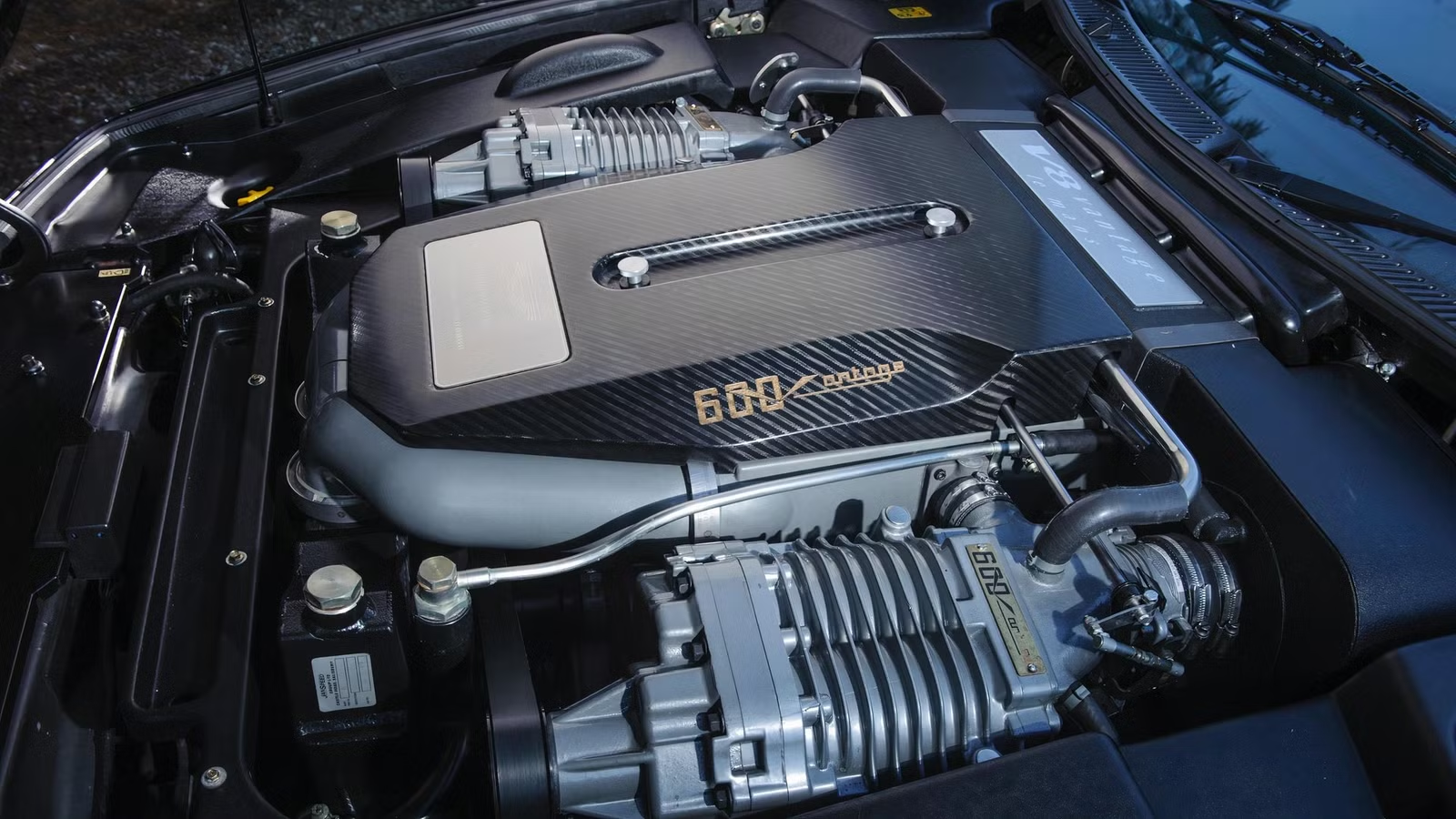
When enthusiasts debate the greatest muscle cars ever built, the conversation almost always drifts toward Detroit iron — big-block Chevys, thundering Mopars, and screaming Fords. But the most powerful muscle car of the 1990s didn’t come from any of those places. It came from a quiet corner of Buckinghamshire, England, built by hand in a factory better known for producing gentlemanly grand tourers. The Aston Martin V8 Vantage V600 packed 600 horsepower at a time when that figure was essentially science fiction — outgunning every Ferrari, Bugatti, and Dodge on the planet. Here’s the story of how a British carmaker accidentally built the baddest muscle car of its era.
The 1996 Aston Martin V8 Vantage V600 Was The Most Powerful Muscle Car Of Its Time

Aston Martin may have been building cars in Newport Pagnell, a sleepy part of upmarket Buckinghamshire, but the company had the spirit of the American muscle car running through it. Yes, Ford had bought a large slice of the prestigious British sports car brand in 1987, but Aston had been producing V8 GTs for years.
It was in the ’90s that the company decided to experiment with enormous power, combined with rear-wheel drive and an old-school approach. The Virage model had been introduced in 1988, with its Volkswagen Scirocco rear lights and Audi 200 headlights, but it hadn’t captured the imagination of Aston fans. Just 178 were built in 1990, says Hemmings.
The Vantage Was The Car The Virage Should Have Been
The Vantage was clearly built on the Virage, but it was extensively improved. Steve Waddingham, who worked at Aston in the lead-up to the Vantage’s 1993 launch, told Top Gear that the Virage name was dropped because of its poor reception. The Vantage was launched at the Birmingham Motor Show in 1992. It may have looked like a Virage, but the only shared body panels were the door and roof skins.

At the front, the Audi lights were gone, replaced by two groups of three headlamps, each behind a heated lens. There was a more menacing deep front chin spoiler with three vents, chunky flared wheel arches, and two mesh-filled air vents in the panel behind the front wheels. Finally, the car looked the part. Power matched the new makeover: a 5.3-liter V8 fitted with two large Eaton superchargers produced 542 horsepower, placing it among the highest-output road cars of its day.
Aston Decided To Just Go And Make The World’s Most Powerful Car
Aston wasn’t finished, however. The company’s special projects division, Aston Works Service, then developed the V600 kit, largely through an improved cooling system designed to unlock the full potential of the superchargers. The option, which cost around $55,000 at the time, was retrofitted to all cars — even if customers wanted it on a new car, a standard Vantage would be delivered, stripped down, and converted into V600 specification.
Evident from its name, the V600’s output was a nice round 600 hp and 600 lb-ft of torque, making this the most powerful muscle car of its time.
The Aston Martin Vantage V600 Was Ridiculously Fast
Aston Martin Vantage V600 Specs
|
Engine |
Twin-supercharged 5.3-litre V8 |
|
Power |
592 hp |
|
Torque |
600 lb-ft |
|
0 – 60 mph |
4.6 seconds |
|
Top Speed |
200 mph |
Source: Aston Martin
In the mid-’90s, Aston Martins were still being built entirely by hand, with each Vantage taking around 1,200 hours to complete. The V600 package, launched in 1998, raised engine output to 600 horsepower and also brought uprated suspension and AP Racing brakes — a system featuring six-piston calipers front and rear, along with large brake discs with circumferential cooling grooves.
The six-speed ZF manual gearbox was replaced by a five-speed close-ratio unit better suited to the car’s performance envelope. The V600 also benefited from ultra-lightweight hollow-spoke magnesium wheels, uprated springs, adjustable dampers, and a stiffer anti-roll bar. According to Top Gear, of the 300 twin-supercharged Vantages made, 90% ended up with the V600 package.
The Aston Vantage V600 Was A 200mph Supercar In A Tuxedo
The performance, perhaps unsurprisingly, was formidable. The sprint to 60 mph took 4.6 seconds and the top speed was 200 mph — an extraordinary figure at a time before Mercedes sold 200 mph sedans. Aston went on to create the Vantage Le Mans, a limited run of 40 cars also available with the V600 pack, built to celebrate the company’s Le Mans victory in 1959. These supercar-eating Vantages included a restyled bonnet with twin air intakes, a distinctive blanked-off nostril-style radiator grille, larger side vents, and magnesium alloy wheels.
The Aston Martin V8 Vantage V600 Was Even More Powerful Than Supercars

Horsepower Comparison: How The ’90s Big Hitters Squared Up
- 1997 Mercedes-Benz AMG E55: 349 hp
- 1997 Dodge Viper GTS: 450 hp
- 1997 Ferrari F50: 512 hp
- 1995 Bugatti EB 110 GT: 553 hp
Yes, the Aston Vantage V600 was the most powerful muscle car of the time, but that’s selling it short. The V600 was the most powerful car you could buy fresh from a factory, anywhere. Period. First, let’s look at the American competition. A 1997 Dodge Viper GTS with its 8.0-liter V10 and terrifying reputation produced 450 horsepower. A 1994 Porsche 911 Turbo managed just 355 horsepower, while a 1997 Ferrari F50 made do with 512 horses.
The 1995 Bugatti EB 110 GT, with its 60-valve, quad-turbocharged V12 engine, produced 553 horsepower. And those monster V8 AMG Mercs everyone raved about? A 1997 Mercedes-Benz AMG E55 made 349 horsepower.
How Much The Aston Martin Vantage V600 Costs Today

The Aston Martin Vantage took so long to build — around 30 weeks of work time — that your dot-com business funding the purchase had probably gone bust by the time it arrived. As a result, production numbers were modest, but because the V600 pack could be retrofitted, there are quite a few examples on the secondhand market.
Naturally, to find a proper Le Mans, you need to track down one of the 40 manufactured. Here is a fine example of a Le Mans with the V600 package fitted from new. A 1995 Vantage with the V600 pack went for $145,000 at a Bonhams sale in 2024. However, perhaps the best guide to what a true Aston Martin Vantage Le Mans V600 commands in the US is this example finished in Aston Martin Racing Green — one of just 22 left-hand-drive examples — which was sold by RM Sotheby’s for $379,000 at a Florida auction.
Sources: Aston Martin, Hemmings, Tom Hartley Jnr, Bonhams.

Related posts
Latest Post



No Comments