
The Fastest Quarter-Mile Time For A Muscle Car In The ’60s
The quarter-mile has always been the great equalizer for muscle car bragging rights — a single number that cuts through the noise of horsepower claims and badge wars. When it comes to the golden era of American muscle, the 1960s, that number tells a story of factory-built drag racers that still commands respect today. We dug into the record books to find which production muscle car from that decade posted the fastest time down the strip, and the answer might surprise anyone who assumed cubic inches alone told the whole story.

American muscle car manufacturers loved providing their customers with vehicles that could attack the drag strip like a real racer, as illustrated by wild machines like the 1962 Pontiac Catalina Super Duty. HotCars set out to find the 1960s muscle car that stopped the clock in the fastest time over a quarter mile.
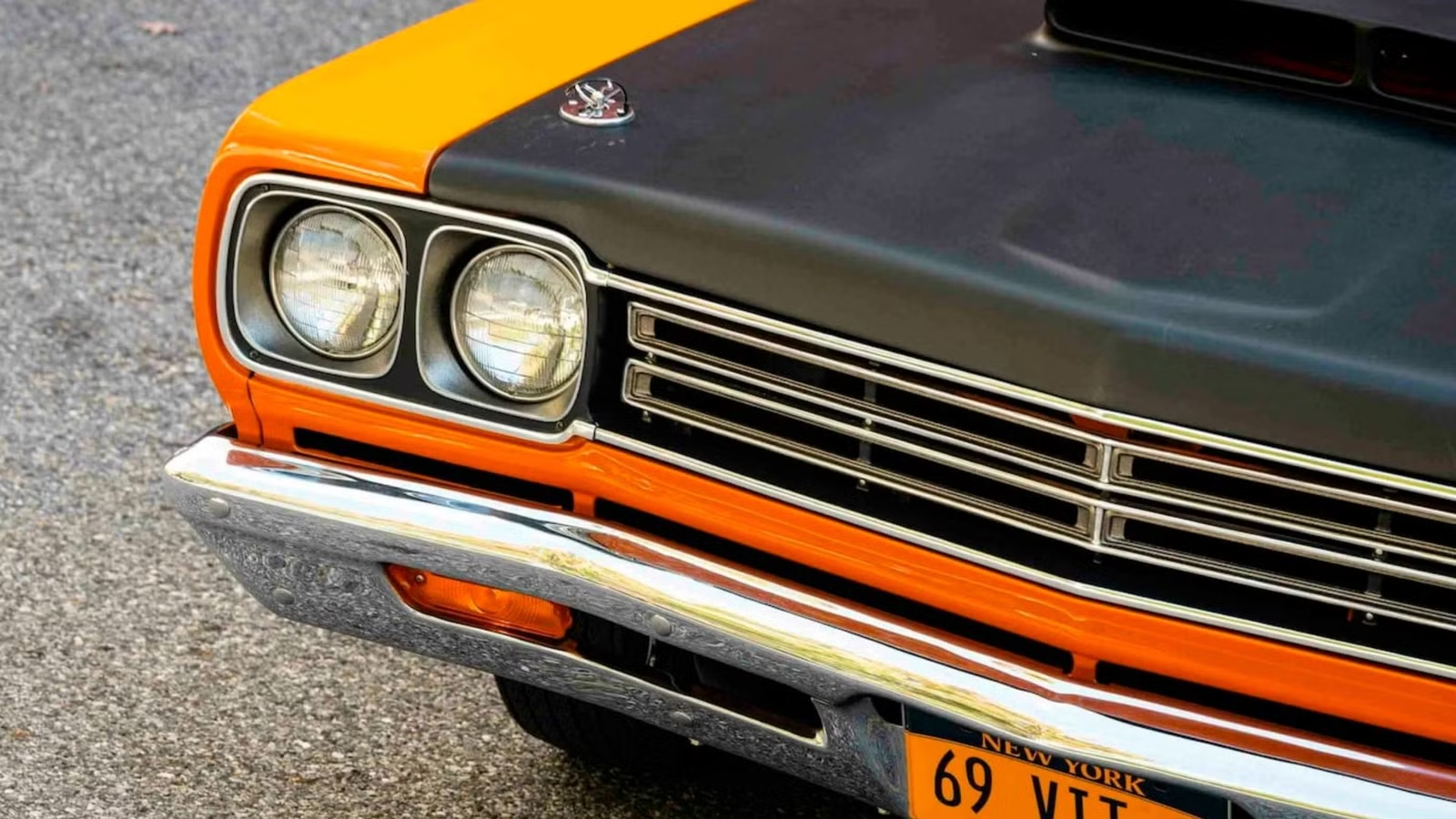
1969 Plymouth Road Runner A12 Blazed The Quarter-Mile In Only 13.0 Seconds
1969 Road Runner A12 Specs
|
Engine |
 81 autotech 440 ci V8 |
|
Power |
390 hp |
|
Torque |
490 lb-ft |
|
Quarter-Mile Time |
13.0 seconds |
(Source: Hemmings)
The fastest 1960s muscle car to ever blitz the quarter mile was the A12 version of the iconic Plymouth Road Runner. The Road Runner, essentially an upgraded version of the trusty Belvedere mid-size platform, was already a potent option as the decade drew to a close. It came standard with a meaty 383 ci V8 engine mated to a four-speed manual transmission, and owners even received a nifty Hurst-designed shifter arrangement as part of the deal.
It also came with heavy-duty suspension to help keep it stable through the bends, while a dual-braking system was present to ensure its pilot could survive to take it out for another drive. Forget the performance gear though — arguably the most charming trait of the Road Runner was its ‘Beep Beep’ horn, a nod to the cartoon bird the car was named after.
Should its future owner fancy something a little more potent, the Road Runner was also available with the 375 hp 440 ci Super Commando V8 that came standard in the range-topping Plymouth GTX, as well as the legendary racing-derived 426 ci Hemi. Keen to extract the most from the Road Runner while keeping it genuinely streetable, Plymouth got to work on a special package that would transform it from a competent muscle car into a full-blown drag weapon.
Designated the A12, the package would ultimately allow the Road Runner to complete a standing quarter-mile in 13 seconds flat as per Hemmings. This made it the quickest production muscle car to clear the distance during the 1960s.
A12 Package Turned Normal Road Runner Into Drag Hero
The enhanced A12 model featured the marque’s new Six-Pack 440 ci V8. Unlike the Super Commando unit, which relied on a single four-barrel carburetor, the new powerplant used a trio of two-barrel carbs. The concept behind the Six-Pack — one of the biggest Mopar engines ever produced — was to deliver power comparable to the Hemi while remaining more tractable in everyday driving.
At low speeds, the engine operated on a single carburetor. Bury the throttle, and the other two carburetors opened up, unleashing the full force of the powerplant. This progressive setup allowed for reasonable fuel economy around town before the engine could show its true colors. While the base 440 SC produced 375 hp and 440 lb-ft of torque, the Six-Pack raised the stakes to 390 hp and 490 lb-ft.
While still trailing the Hemi in peak horsepower, the Six-Pack matched it exactly in torque. Alongside the trio of carbs, the additional punch came courtesy of a new aluminum intake manifold, chrome intake and exhaust valve stems, and a higher compression ratio of 10.5:1. To keep the engine reliable under hard use, Plymouth borrowed the heavier-duty valve springs from the Hemi and also introduced flat-face hydraulic tappets and a new low-taper camshaft. A heavy-duty radiator was also fitted to keep the legendary Road Runner’s powertrain running cool.
Of course, power is only one part of the equation when building a serious drag racer. The A12 package also included a 4.10:1 rear axle with a limited-slip differential, while larger, stickier 15-inch Goodyear tires rounded out the hardware.
They weren’t exactly popular, with Plymouth producing only 3,384 examples in 1969. That was a shame, because the Road Runner A12 offered performance on par with the demanding Hemi without the constant tuning the Hemi required to stay on song. Consequently, concours-condition examples now command well in excess of $100,000 according to Hagerty’s Valuation Tool. Even fair-condition models can fetch around $50,000, so any interested gearheads had better have some serious depth in their wallets.
1969 Chevrolet Camaro ZL1 Gave A12 A Run For Its Money

1969 Camaro ZL1 Specs
|
Engine |
427 ci V8 |
|
Power |
430 hp |
|
Torque |
450 lb-ft |
|
Quarter-Mile Time |
13.2 seconds |
(Source: Mecum Auctions, 0-60 Times)
Plymouth wasn’t the only one chasing quarter-mile glory in the late ’60s. Bitter rival Chevrolet was busy fitting its Camaro with an engine developed for the SCCA racing series. While not a standard factory offering, a ZL1-powered Camaro was commissioned by Chevy dealer Fred Gibb, who believed there was a market for a street-legal version of the race engine.
The 427 ci ZL1 V8 was a genuine beast. The all-aluminum motor combined lightweight construction with tire-shredding outputs of 430 hp and 450 lb-ft of torque, as per Mecum Auctions. Being a competition engine, it also carried a sky-high compression ratio of 12.5:1, which forced Chevy to build it robustly enough to withstand sustained racetrack punishment. That was achieved through large-port cylinder heads, an advanced bottom-end lubrication system, and a tried-and-tested four-barrel Holley carburetor.
The ZL1’s party piece, beyond its otherworldly power, was its weight. The engine tipped the scales at around 500 pounds — roughly the same as a much smaller 327 small-block V8 of the era. Positioned up front, this kept weight distribution far more favorable than a conventional production big-block would have allowed.
It was also equipped with competition-spec F41 suspension, a limited-slip differential, and a four-speed manual gearbox to help launch it hard and carry speed through the gears. The result was a storming quarter-mile time of just 13.2 seconds according to 0-60 Times — a remarkable effort, if just a tick behind the Road Runner A12’s benchmark.
Largely because of the exotic ZL1 racing engine, the package added a stiff $4,160 to the base MSRP of the standard Camaro. That premium — equivalent to a substantial sum in today’s money — led to just 69 examples ever being sold. Finding one today is extraordinarily difficult, and Hagerty values a good-condition car at $635,000.
While the A12 isn’t exactly cheap, it’s a relative bargain compared to the stratospheric ZL1. The special Road Runner would also beat the Camaro to the finish line over a quarter mile, so in terms of pace per dollar, no other 1960s muscle car eclipses the A12.
Sources: Hemmings, Mecum Auctions, Plymouth, 0-60 Times, Hagerty.

Related posts
Latest Post


No Comments