
RAV4 Vs. Highlander: Toyota’s Own Lineup Now Makes The Strongest Case Against Buying A Bigger SUV
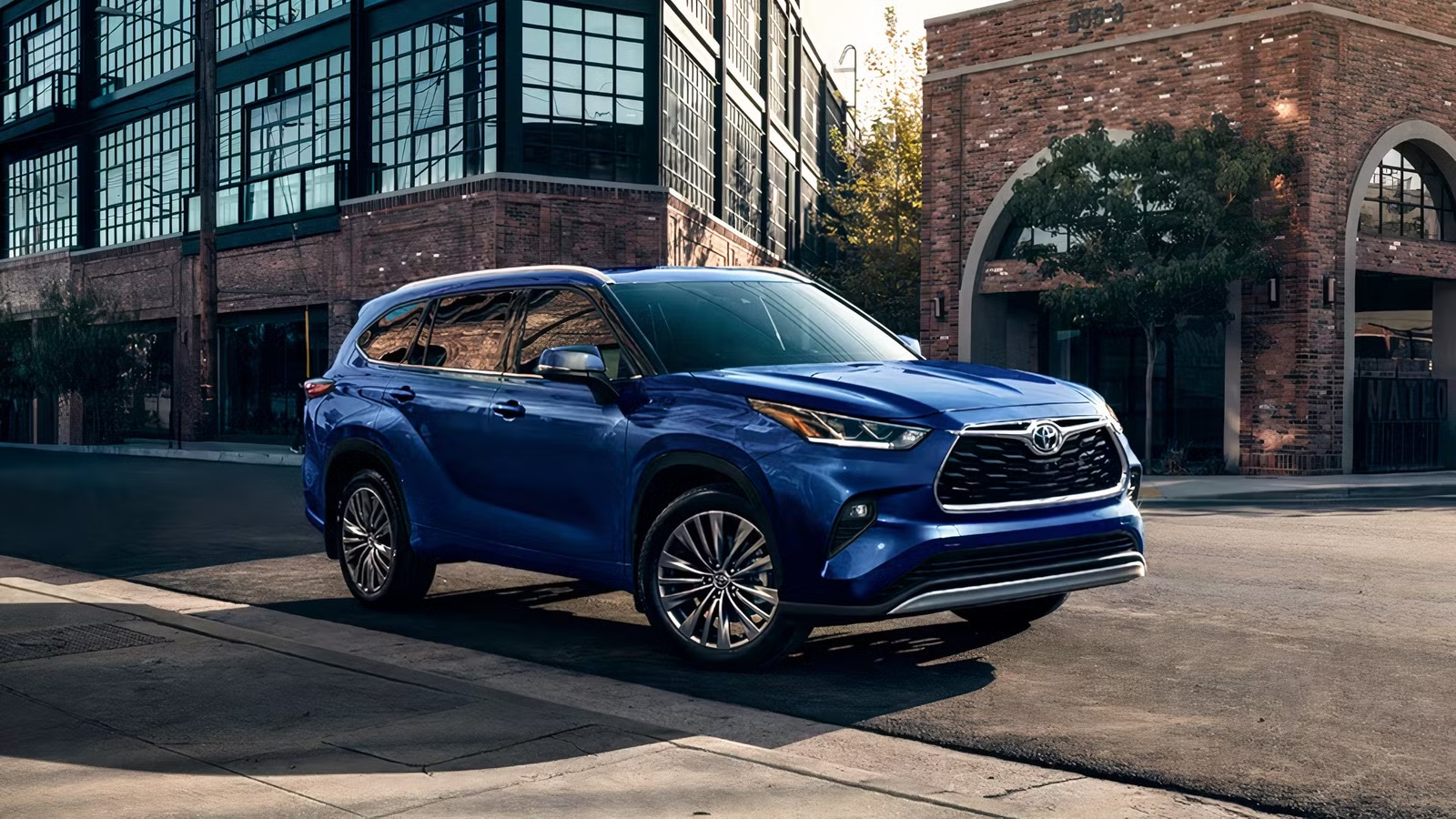
Toyota just handed its own Highlander a problem it can’t easily fix: a smaller, cheaper SUV that does almost everything it does, for a lot less money. The 2026 RAV4 LE Hybrid starts at $31,900, while a Highlander XLE AWD now opens at $46,270 after Toyota dropped the base L and LE trims entirely. That’s a $14,370 gap at the showroom door, and it only grows once insurance, registration, and fuel costs get added up over a few years of ownership.

The pitch for the Highlander has always been more room, more power, more capability. But the redesigned, sixth-generation RAV4 closes those gaps so completely that the math no longer favors the bigger SUV for most families cross-shopping the two.
The Space Argument Doesn’t Hold Up Under A Tape Measure
Buyers gravitate toward the Highlander because it looks like it should have dramatically more room, especially for growing kids and bulky car seats. The numbers tell a different story. Front-row legroom runs 42.0 inches in the Highlander versus 41.0 in the RAV4, and the second row favors the Highlander by less than an inch, 38.7 inches to 37.8. That’s essentially a wash.

The Highlander’s standard third row is where the practicality argument collapses. It offers just 27.7 inches of legroom, roughly 10 inches tighter than the RAV4’s back seat, and it eats into cargo space badly. With all seats up, the Highlander holds only 16.0 cubic feet behind the third row, less than half the RAV4’s 37.8 cubic feet. Fold that third row down and the Highlander’s 48.4 cubic feet barely beats the RAV4 by a suitcase or two.
The RAV4 Hybrid Keeps Pace With The Highlander’s Turbo, And The PHEV Blows Past It

The Highlander’s four-cylinder turbo makes 265 horsepower, with the hybrid version down at 243 hp. Every 2026 RAV4 now comes standard with a 2.5-liter hybrid system producing up to 236 hp, and because the RAV4 weighs 760 pounds less, it feels just as quick off the line as the base Highlander. Buyers who want real urgency can step into the RAV4 Plug-in Hybrid, which packs 320 hp, standard all-wheel drive, a 5.4-second 0-60 time, and 50 miles of electric-only range, numbers the Highlander simply doesn’t touch.
Fuel Costs And Tech Tip The Scale Even Further

The 2026 RAV4 Hybrid delivers up to 43 mpg combined against 24 mpg for the base gas Highlander AWD. At 15,000 miles a year and $3.50-per-gallon gas, that works out to roughly $970 in annual fuel savings for the RAV4, or close to $5,000 over five years. The redesign also gave the RAV4 a 12.3-inch digital instrument cluster and a 10.5-inch touchscreen as standard equipment, with a 12.9-inch display available on upper trims. The Highlander still runs its 2020-era platform, with entry trims stuck on an 8.0-inch screen. Toyota Safety Sense 4.0 comes standard across every RAV4 trim too, while the Highlander carries over the older Safety Sense 2.5+ suite.
The Highlander still earns its keep in two specific situations: towing beyond 3,500 pounds, where its 5,000-lb rating matters, and households that genuinely need a seventh or eighth seatbelt on a regular basis. Outside of those cases, the pricing and equipment gap is hard to justify.
Toyota built a genuinely compelling case for buying down, not up. For most families cross-shopping these two nameplates, the smarter move might be a well-equipped RAV4 and a savings account for that leftover $15,000.

Related posts






Latest Post


No Comments