
Toyota Previa: The Mid-Engine Supercharged Minivan
The specs read like deliberate enthusiast bait. Mid-engine layout. Available all-wheel drive. Factory supercharger. At one point, even a five-speed manual transmission.

It was the ’90s, and a great time to be a person who cared about driving cars. But no, this wasn’t some obscure JDM tuner favorite that’s just aged into import eligibility. It was something you’d have seen in traffic every day.
These Are Sports Car Specs, But Not A Sports Car
Usually the things that make for a great sports car also keep it from being an everyday family hauler that can seat seven plus groceries, existence of the Mercedes-Benz R63 AMG notwithstanding. But sometimes, a little twist on the fundamentals of great sports car engineering can open the door to serious practicality.

All-wheel drive can let drivers power around a loose-surface corner at speed, but it can also get you up a snowy driveway. A factory supercharger can help chase a drag strip record, or it can just help tired parents do Little League pickup without the weight of the Johnson twins from up the street making their fuel-efficient four-cylinder feel overworked. The same basic mid-engine principle Toyota used in the MR2 can also open up creative possibilities for interior space in a vehicle that’s pretty much the opposite of that.
Toyota Built One Of The Strangest Minivans Of The 1990s

Not only was the Toyota Previa not a sports car, it only vaguely qualified as a minivan. It looked kind of like an egg and arrived for American buyers for the 1991 model year, replacing Toyota’s outgoing segment offering, which the company referred to poetically as the Toyota Van.
It offered seating for up to eight passengers, and its unusual mechanical layout allowed for a nearly flat floor, which Toyota took as an invitation to make a wildly adjustable interior, including available second-row seating that could swivel around to face forwards or backwards.
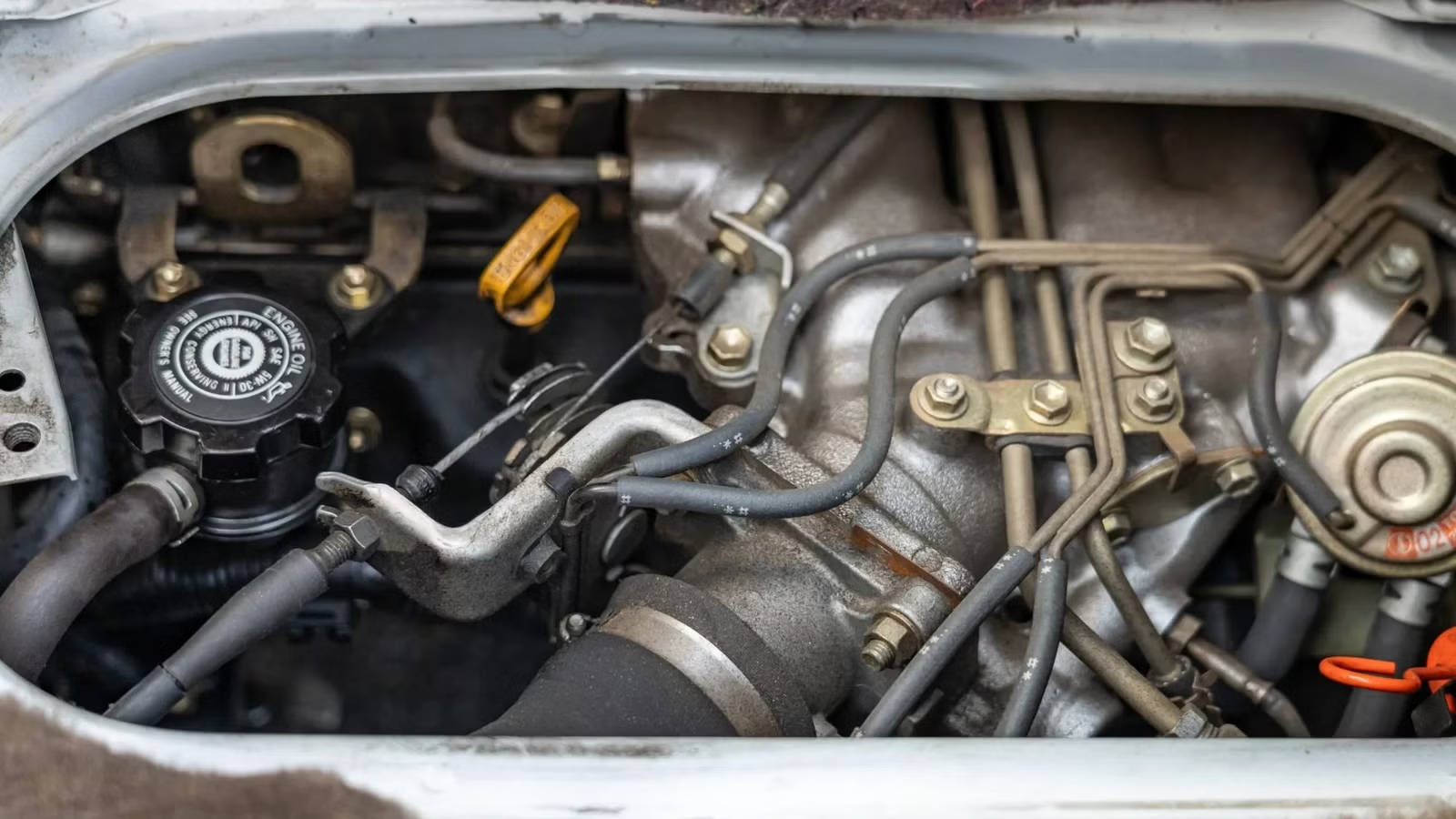
A 2.4-liter four-cylinder sat beneath the front seats, tilted 75 degrees to make everything fit. This helped keep the center of gravity low while allowing for that flat floor, with the engine’s weight distributed between the axles.
It was genuinely clever engineering, even if most showroom demonstrations were going to focus on how rear passengers could ride face to face if they wanted to.
You Could Even Get AWD And A Five-Speed Manual

The first Previa was rear-wheel drive with 138 horsepower, already a departure from front-wheel-drive competitors like Chrysler’s Town & Country or its Voyager/Caravan equivalents. Notably, it wasn’t out of step with the outgoing Toyota, which was available in rear- or four-wheel drive. The Previa’s available all-wheel-drive setup used Toyota’s All-Trac full-time system, delivering extra traction when things got slippery.
During those first two model years in ’91 and ’92, buyers could combine All-Trac AWD with a five-speed manual transmission, which really rounded out the premise of this odd thing that had so many trappings of a great sports car and yet was somehow the complete opposite of one.
The manual remained available through 1993 before disappearing, but sometimes when a door closes a window opens. And this time, Toyota was shoving a supercharger through the open window.
A Supercharger Helped Make Up For The Missing V6

For the 1994 model year, Toyota rolled out the Previa S/C, adding a supercharger to the existing 2.4-liter four-cylinder, bringing horsepower from a potentially anemic 138 to a more spirited 161. Torque jumped from 154 to 201 lb-ft, making a fully loaded Previa considerably less miserable to drive.
The supercharger wasn’t bolted onto the engine—because why embrace convention now? Toyota instead placed it toward the front of the vehicle (where the engine wasn’t), using a belt driven by the same accessory shaft that powered the alternator and A/C compressor.
The supercharger could be had with either drivetrain, but at this point the five-speed was gone. For ’96 and ’97 it would be standard equipment, but there was no overlap allowing anyone to build the kind of stick-shift, supercharged Previa configuration that would make you a hero today at your town’s nerdiest Cars & Coffee.
The Previa Was Too Weird For Its Own Good

Unfortunately, just because engineering is clever doesn’t necessarily make it good, and the Previa’s fundamental weirdness created some headaches for owners and especially mechanics, as accessing the engine could be challenging depending on what you were trying to do.
And if you’re thinking that the unusual cabin configuration might have some consequences for crash protection in a vehicle hauling half a dozen Girl Scouts, you’d have reason to worry. The Previa received a rating of “Poor” in the Insurance Institute for Highway Safety’s moderate-overlap frontal crash test.
And so the future of Toyota minivans would be one of convention. The Previa gave way to the Sienna, which borrowed the engine and front-wheel-drive architecture from the Camry, and the rest is very boring history: no mid-engine layout, no supercharger, and definitely no third pedal.
Sources: Toyota

Related posts

Latest Post



No Comments