
New Honda CBR1000RR-R Vs Old CBR1000RR-R: Key Differences
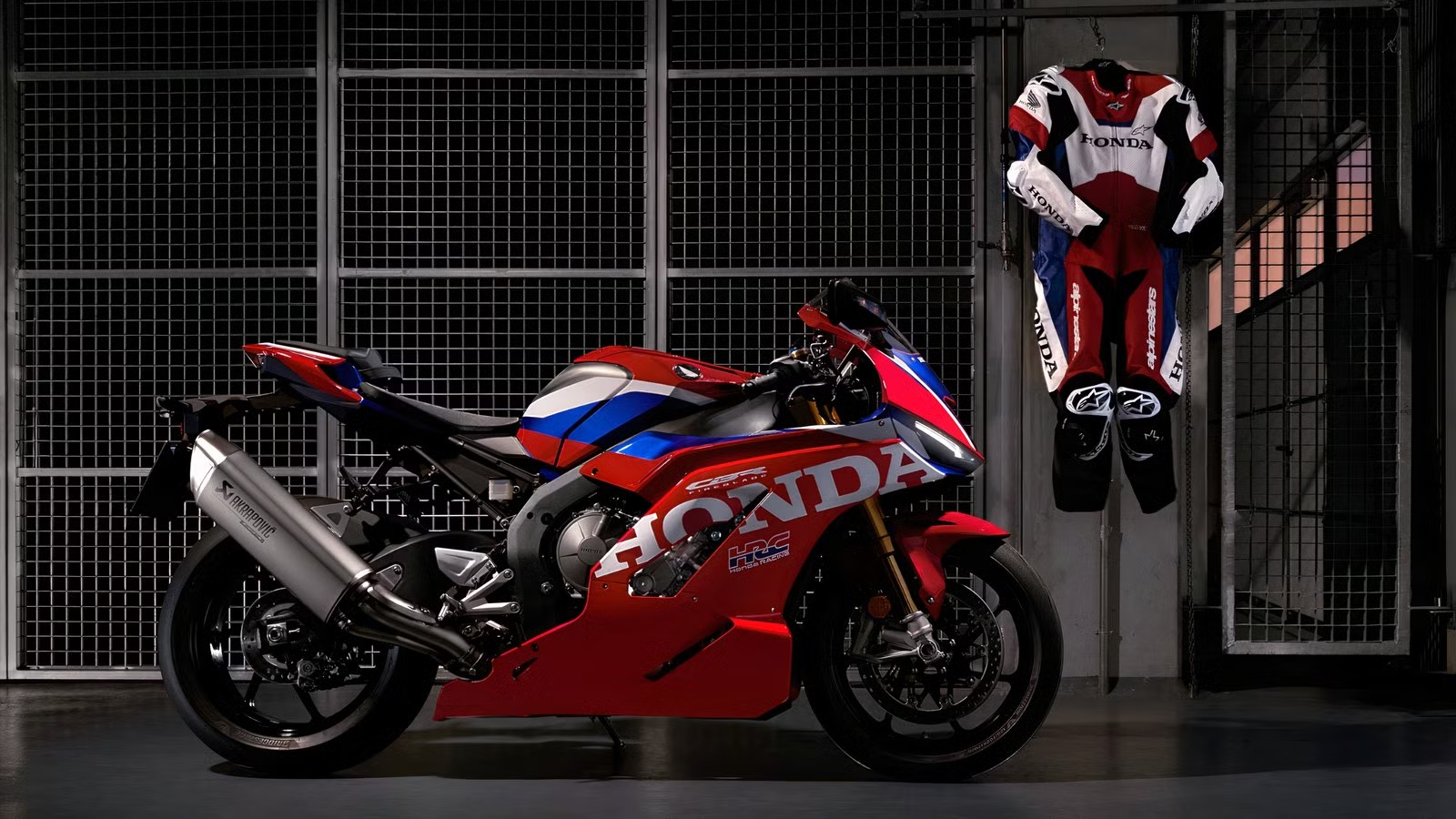
The CBR1000RR-R Fireblade SP shook up Honda’s superbike lineup when it debuted in 2020. Gone was the friendly, street-first CBR, and in came a MotoGP-derived screamer gunning for World Superbike glory. Then the results never quite followed, and Big Red kept tinkering instead of transforming. Now, though, Honda has pulled the covers off an all-new Fireblade SP at EICMA 2026, developed alongside HRC with roughly 75 percent new parts. Here are the key differences between the new and old CBR1000RR-R.
A Sharper Design With No Wings

Remember those MotoGP-style winglets sticking out of the old Fireblade SP’s fairing? Yeah, they’re gone. In their place, Honda has fitted a layered midsection fairing and new lower sidepods, which it claims generate the same downforce with less drag and better wind protection. The new sidepods work at lean, a trick borrowed straight from MotoGP. The face is new, too. A set of new LED headlights now gets daytime running lights and comes off as a single unit for race prep. Its tank finally ditches its plastic cover for a titanium construction, saving 3.1 pounds, and its brushed metal is new as well. If you miss the wings, the new HRC Works Edition still wears a carbon pair.
Retuned Rider Aids And A Smarter Throttle

The two-motor throttle-by-wire arrived with the 2024 update (2025 in the U.S.), with one motor handling cylinders one and two and another taking care of three and four. What’s new is how cleverly Honda now uses it. Roll off the gas, and cylinders three and four are managed on their own for stronger engine braking, while one and two stay shut for a smoother return to the throttle. Crack it open gently, and the first pair opens solo for finer torque control. Honda has also recalibrated every rider aid for the new engine and chassis, covering the Race, Road, and Rain modes, nine-level traction control, wheelie control, and engine braking.

The Screamer Inline-Four Learns Some New Midrange Tricks

The old SP’s inline-four was a top-end monster that saved all its fireworks for the redline. The new one is said to be far friendlier lower down. Peak figures stay put at a claimed 214.6 hp at 14,000 rpm and 84.1 lb-ft at 10,500 rpm, but Honda says it has made big strides in midrange delivery and rideability. The credit goes to a two-stage Variable Air Funnel system, a Honda production-bike first. The funnels stay long below 11,750 rpm to fatten the midrange, then shorten to keep the top end screaming. Compression also climbs from 13.6:1 to 13.8:1, alongside revised cam timing and a strengthened valvetrain.
A Race-Ready Gearbox Is Standard

The gearbox is where HRC’s fingerprints really show. First gear is now five percent taller, and the gap between the main shaft and countershaft grows to 68mm, making room for more gear ratio options. Honda doesn’t allow ratio changes for road use, but for SP owners who take their bikes to the track, it’s a welcome bit of flexibility. Elsewhere, the brand went gram-hunting inside the engine, which now uses magnesium for the cylinder head cover, right crankcase cover, clutch cover, ACG cover, and oil pan, while 35 aluminum bolts replace steel ones. Together, they save 2.4 pounds, and that’s before counting the lighter crankcases.
The Swingarm, Wheels, And Chain All Go On A Diet

The diet continues out back. The new pressed-aluminum swingarm is 1.2mm shorter and 200 grams lighter, with 12 percent less lateral rigidity to match the frame’s more flexible character. Its pivot shaft shrinks from 20mm to 17mm, and the rear shock now mounts to the lower part of the engine rather than the rear. The rolling stock sheds weight as well. New seven-spoke hollow cast-aluminum wheels are 190 grams lighter up front and 590 grams lighter at the rear, while a switch to a 520 chain saves another 270 grams. Most of that is unsprung weight, and less of it lets the suspension react faster to bumps.
Chassis Updates Improve Cornering Stability

Big Red’s engineers first worked with HRC’s WorldSBK team to figure out what the race bike needed, then built the road bike around it, with corner-entry stability and front-end feel as the top priorities. That’s why the twin-spar frame is 20 percent less stiff laterally than the old one, while torsional rigidity stays the same. In simple terms, it flexes a touch more sideways, for more feedback from the front tire when leaned over. Ducati has taken a similar route with its 2027 Panigale V4, so Honda is in good company.
Taller, Slimmer Stance And Tweaked Geometry

Then, we have the ergos. The seat climbs from 32.7 inches to 33.2 inches, and the crankshaft centerline now sits 5.2mm higher. Honda says the higher center of gravity helps with direction changes. Weight distribution also shifts forward from 52.8/47.2 to 53.3/46.7, putting more load on the front tire. The new SP also slims down, measuring 28.9 inches wide against the old bike’s 29.6 inches, while standing a touch taller overall. Interestingly, the fairing’s frontal area still grows to give the rider more room to move around.
Revised Suspension With Sharper Brembo Stoppers
The SP’s semi-active Ohlins setup carries over in hardware, which is no bad thing. The old bike was the first Honda to run Öhlins’ Smart EC 3.0 suspension, and the new one keeps the 43mm NPX fork and TTX36 shock, now with damping tuned specifically for the new chassis. Adjustments still run through Ohlins’ OBTi interface.
The brakes are where things really change. Brembo’s Stylema R calipers make way for new Hypure radial-mount four-piston units, paired with a new Brembo master cylinder and lever. Honda says the switch is all about consistent performance as temperatures climb during long track sessions. The 330mm front discs are lighter, too, and measure 4.5mm thick.
Source: Honda Powersports

Related posts



Latest Post


No Comments