
The 400-HP Japanese Sedan That Never Needed A Turbo
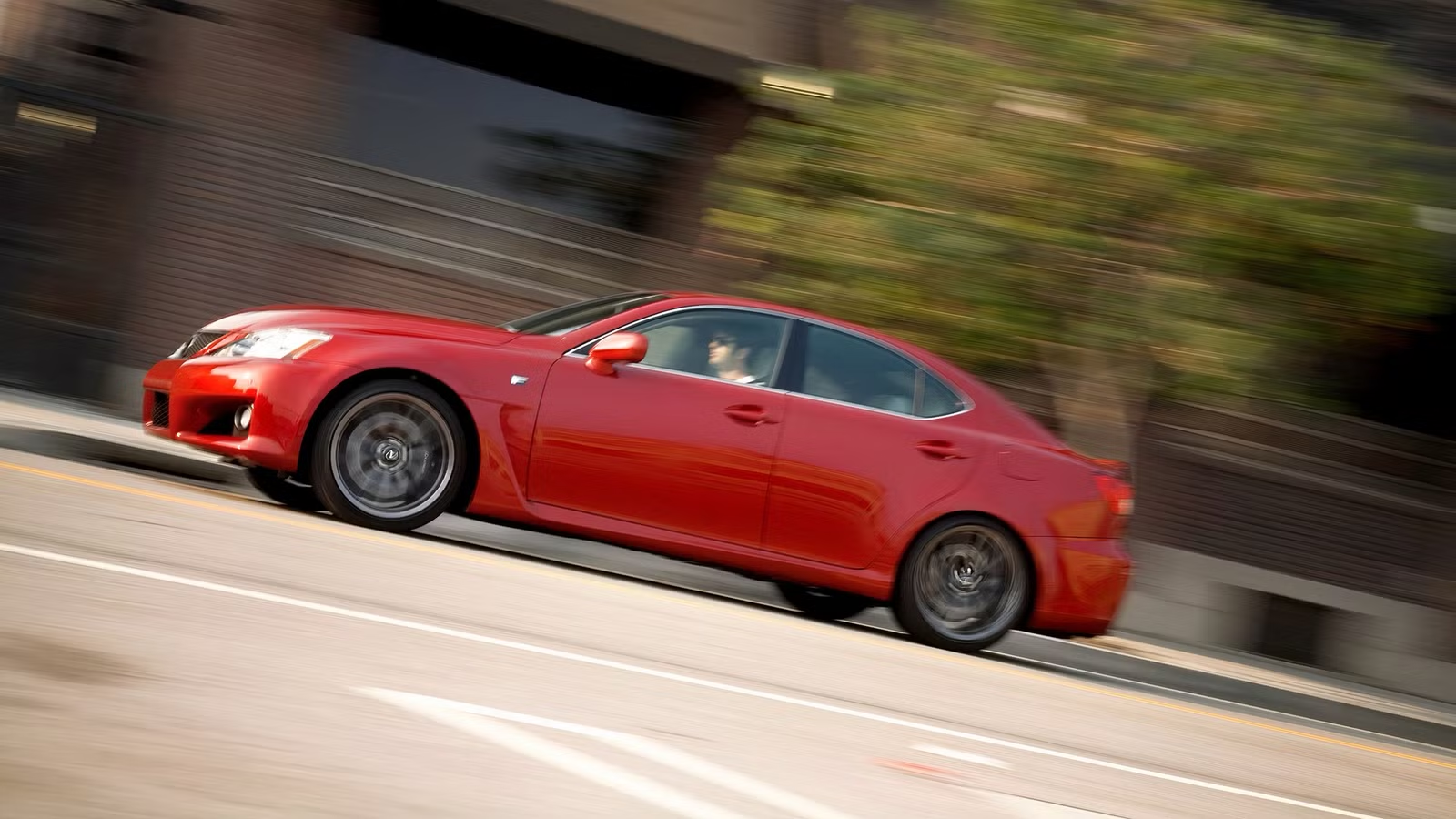
For many, turbo plus speed equals a good sedan. Take the 2026 Kia K5 GT; it has a 2.5-liter turbo-four good for 290 horsepower and 0–60 mph times under 5.5 seconds. Older models, like the post-facelift BMW F30 330i, also offer some great turbo fun thanks to a B46 turbo-four kicking out 248 horsepower and 258 pound-feet of torque.

But now that the evolution of turbo tech has all but taken over the sedan market, some of us are missing the good old days of big naturally aspirated engines. This Japanese sedan never needed forced induction to get over 400 horsepower, just a V8.
The V8 Sports Sedan Was Once BMW’s Territory
There was once a time when a proper performance sedan meant a big naturally aspirated engine up front, a manual transmission, and rear-wheel drive. Models like the BMW E39 M5 set the benchmark with its 4.9-liter S62 V8 good for 394 horsepower and 369 pound-feet of torque without a turbo in sight.
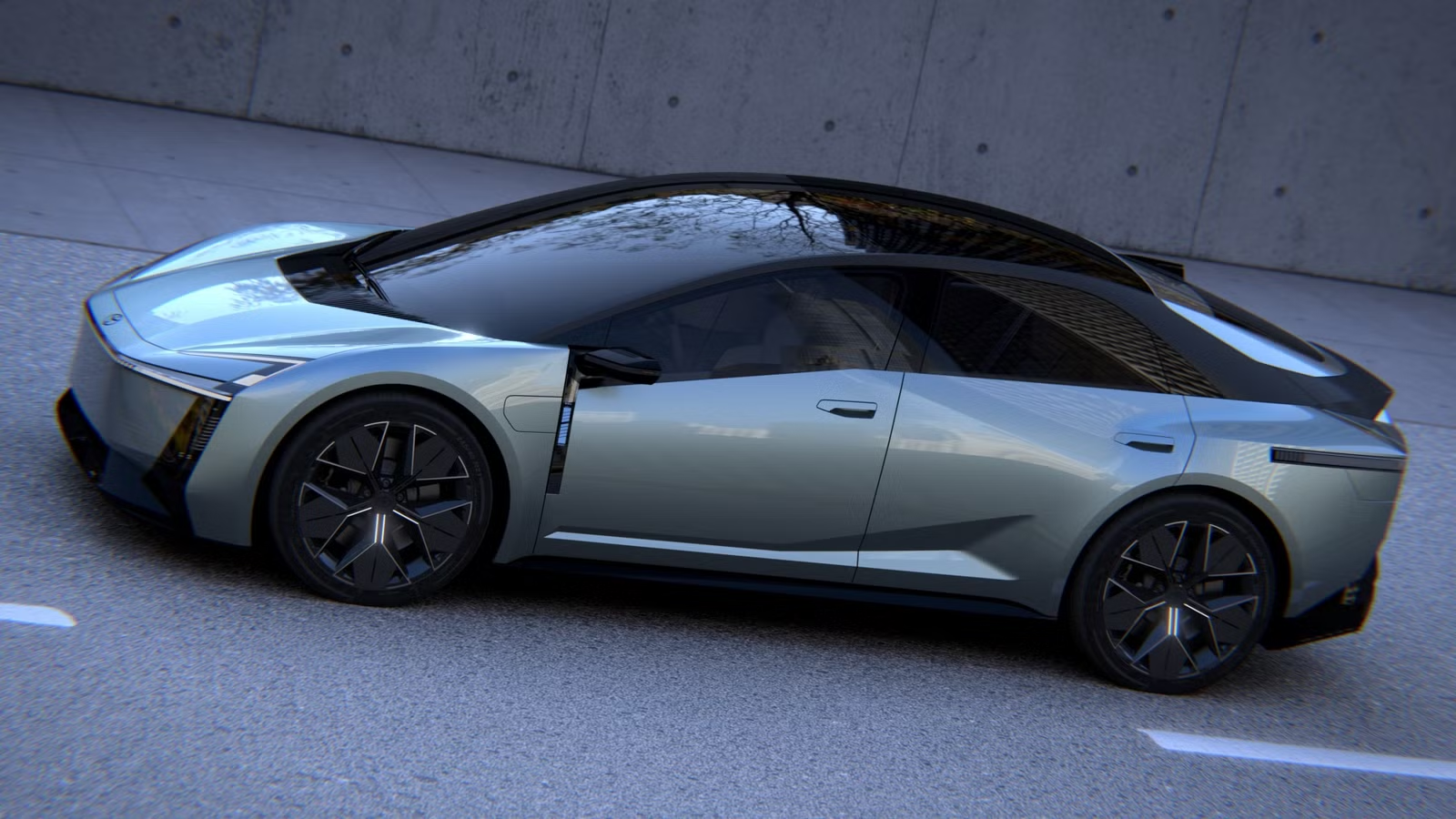
That formula is becoming hard to find as emissions rules and forced induction have reshaped the market. BMW’s M cars and Mercedes-AMG’s increasingly powerful sedans have kept performance going in the right direction, but the character of these big-engined four-doors has changed.
The BMW M3 And Mercedes C63 AMG Set The Pace For Compact Performance

If you wanted serious performance from a manageable-sized sedan, the easy option was to fork out for a German model. The BMW E90 M3 is a legend among German performance aficionados thanks to its S65 V8 kicking out 414 horsepower, with Mercedes following in 2008 with the C63 AMG and its 6.2-liter M156 V8 good for 451 horsepower.
Both have all the right credentials: a big engine and oodles of luxury. However, they weren’t the only ones making the most of getting away with using the best engine configuration before rules got tighter.
The Lexus IS F Puts A Naturally Aspirated V8 Front And Center

Built between 2008 and 2014, the Lexus IS F didn’t need German engineering or any turbos to provide us with proper compact performance sedan prowess. When originally released, the 2008 IS F was equipped with a 5.0-liter naturally aspirated 2UR-GSE V8 paired with an automatic transmission. All the way through to the final 2014 model, this iconic Japanese engine and configuration stayed.
The V8 Makes 400+ HP Without Turbos

In the Lexus IS F, the 2UR-GSE V8 is rated at 416 horsepower at 6,600 rpm and 371 pound-feet at 5,200 rpm. Power is routed through an eight-speed Sport Direct-Shift transmission and down to the rear wheels.
0–60 mph times have been clocked at 4.6 seconds, and top speeds are electronically limited to 170 mph. For model years between 2008 and 2009, power is sent through an open differential, and from 2010 onwards, a Torsen limited-slip diff is used.
A High Redline Means More Than Pace
4.6 seconds to 60 mph is nothing to be sniffed at, but at the time, something like the 552-horsepower twin-turbo V8-equipped F10 M5 could hit 60 mph in as little as 3.7 seconds, while the 2014 M235i could reach 60 mph in around 4.3 seconds, thanks to its 3.0-liter twin-scroll N55 turbo-six. However, that’s not always the point of a performance sedan; there needs to be room left for feel. If you are prepared to work for it, the 2UR-GSE is arguably one of the best V8s for pushing.
Its high redline of 6,800 rpm gives it plenty of room to breathe, while torque builds progressively instead of arriving all at once. A second intake passage also opens at around 3,600 rpm, giving a hard-edged bark as you press the throttle. It is the kind of engine designed to feel eager the more you push it, with a smooth, building surge accompanied by a proper naturally aspirated soundtrack, not just a sudden wall of boost.
The Advantages The IS F Has Over Its German Rivals


The IS F is in the same kind of class as the E90/E92 M3, the B7-gen Audi RS4, and the Alpina B3. Yes, some of them have turbo engines, but they are of a similar ilk. The obvious thing you get from a Lexus over a German alternative is the inherent reliability, but it doesn’t quite stop there.
Lexus Reliability Matters
The closest model that iSeeCars monitors is the IS 350, which it says has a predicted lifespan of 182,431 miles. While the IS 350 has a naturally aspirated 2GR-FSE V6, which is also reliable, the IS F has the very well-tested 2UR-GSE V8 under the hood, especially in the latter model years.
In comparison, iSeeCars says the 3 Series has an average lifespan of just 119,348 miles, while the Audi S4 has a lifespan of 114,787 miles. Owners who left a review on Kelley Blue Book (KBB) rate the IS F 4.5 out of 5 for both overall quality and reliability, with 83 percent of owners recommending it. The 2014 BMW 3 Series gets exactly the same rating and recommendation rate, but comes with lower life expectancy and much higher running costs.
Used Prices And Ownership Costs Fall In Favor Of The Japanese… Just

KBB says the 2014 3 Series has average used prices ranging from $8,725 to $14,150, so it is a lot of bang for your buck. However, CarEdge estimates that owning a 3 Series (not an M3) will cost you $67,622 to own over five years.
CarEdge also says that owning a Lexus IS will cost you between $49,555 and $60,924, with the higher costs reserved for the IS F. The IS F, though, costs a lot more to buy. KBB says it will cost you $32,000 on average, while Classic.com reports that the average auction price of a 2008–2014 Lexus IS F is $25,806, with mint-condition, well-looked-after models reaching as much as $41,000.
Who Should Actually Buy A Lexus IS F (And Who Should Look Elsewhere)

For good reason, the Lexus IS F is held in high esteem by owners and fans of proper Lexus performance sedans. Buying an IS F does not make sense if you are looking for the most up-to-date cabin with the latest tech.
You get a seven-inch touchscreen in models originally optioned with the Navigation Package, and an originally optional 14-speaker Mark Levinson audio system. Dual-zone climate control is included, and you get push-button start.
As is the case with many Lexus models from this era, the luxury on offer has aged remarkably well. The sport seats are heavily bolstered and leather-trimmed; there is a quiet luxury about everything; the center console is hand-finished; and the aluminum sport pedals add a touch of athleticism.

You also get fully-independent suspension on all four corners, a thick anti-roll bar, and in the 2010–2014 models, the most sorted shocks. The IS F can’t be described as the most flat-out performing sedan through the corners, but it is one that can balance the comfortable, luxurious side of ownership with the more engaging, heavy-footed pure V8 experience.
There is a choice to be made, though. You can either go for a slightly cheaper German sedan that has depreciated more but potentially end up paying the typically higher German maintenance costs, or spend a lot more on a Lexus IS F but get the slightly lower ownership costs and peace of mind.
Sources: Lexus, J.D. Power, iSeeCars, Kelley Blue Book, Bring A Trailer, and CarEdge.

Related posts




Latest Post


No Comments