
Harley’s $5,000 Premium Over Kawasaki’s Vaquero Partly Comes Back At Resale
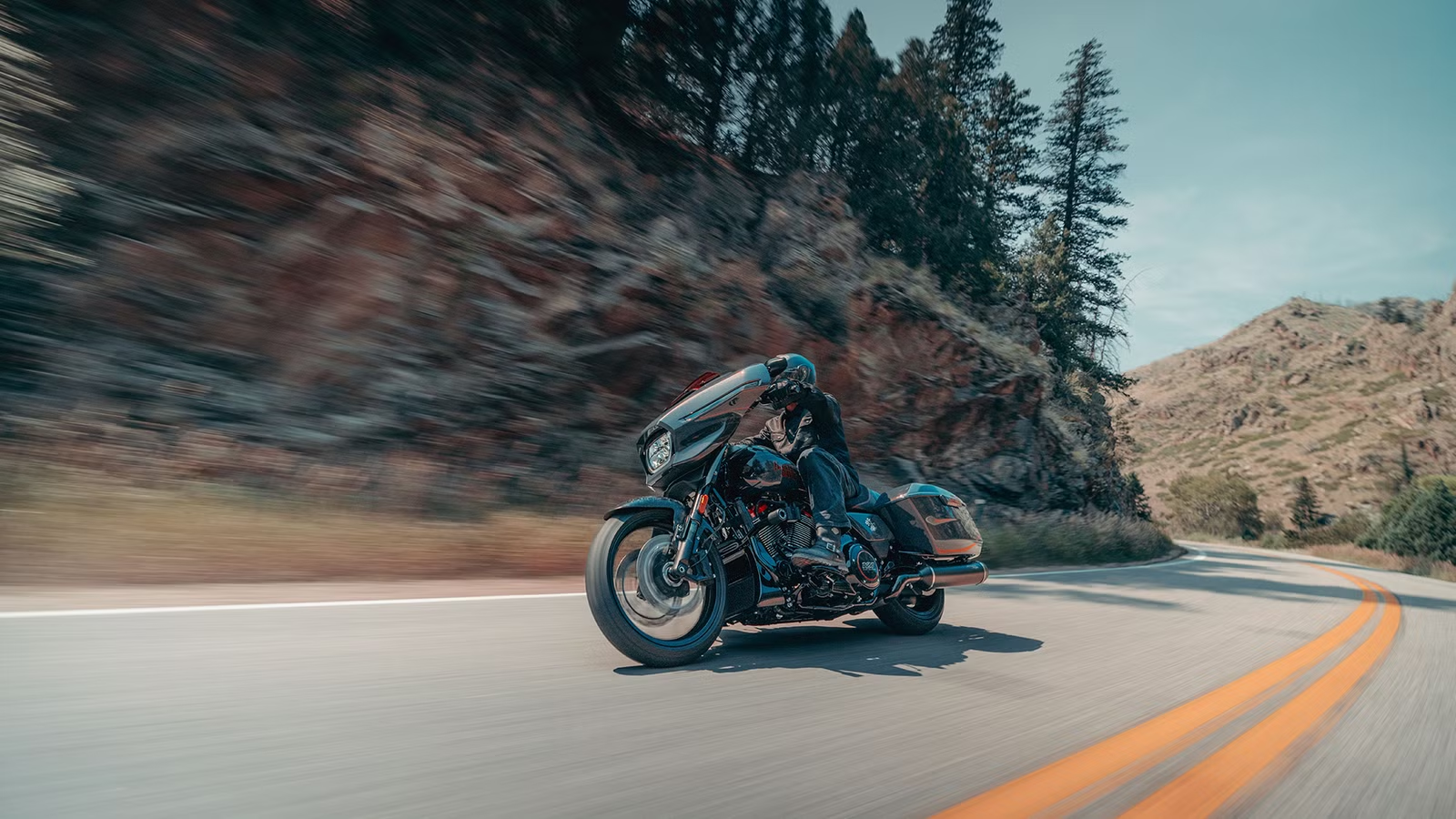
Five thousand dollars buys plenty of gas, motel rooms, and time away from work to take a nice motorcycle trip. Spend it on a motorcycle instead, and you ought to know what you’re getting. Harley-Davidson’s reputation certainly counts for something among bagger buyers, but reputation alone makes a thin explanation for a larger payment. The equipment deserves a look, followed by what happens to that extra money when the motorcycle changes hands.
Harley-Davidson’s Street Glide Is An Expensive Benchmark

The 2026 Street Glide starts at $24,999, before freight, taxes, and other charges. That price applies to the Dark Billiard Gray solo configuration, with no passenger pegs. Anyone planning two-up trips needs to account for that distinction before comparing showroom prices. The advertised starting figure isn’t necessarily the price of the motorcycle they’ll take home.
Harley’s batwing fairing and hard saddlebags give the Street Glide its familiar touring profile. However, the latest motorcycle also asks buyers to pay for equipment they can use every day. Its larger engine and touchscreen deserve attention before dismissing the difference as a badge surcharge. Resale enters the discussion later, once the purchase price has been established.
The Street Glide Offers More Torque And A Modern Cockpit

The Milwaukee-Eight 117 produces a claimed 130 lb-ft of torque, giving the Harley a substantial advantage over its Japanese rival. Displacement measures 1,923cc. Harley also lists 105 horsepower for the current Street Glide. Buyers looking for stronger engine specifications receive something measurable for their additional money.

Harley fits the Street Glide with a 12.3-inch Skyline OS touchscreen, replacing the cluster of separate gauges found on older touring bikes. Apple CarPlay connects a compatible iPhone, and Bluetooth handles phone, media, and headset connections. The rider can also select different ride modes. Built-in navigation is sold separately, so the large screen doesn’t mean every function comes with the base price.
The 2026 Kawasaki Vulcan 1700 Vaquero Starts At $19,999

Kawasaki’s Vulcan 1700 Vaquero ABS starts at $19,999, putting precisely $5,000 between the two base prices. It already includes a frame-mounted fairing, sealed saddlebags, and an integrated audio system. Those are substantial pieces of touring equipment. The savings come with a complete bagger, rather than a stripped cruiser awaiting several accessory orders.
The side-opening saddlebags provide nearly 10 gallons of storage apiece, according to Kawasaki. Locking compartments offer additional places for smaller belongings. A 36-month limited warranty also accompanies the motorcycle. Someone shopping primarily for luggage capacity and highway equipment has good reason to examine the Kawasaki before stretching the budget.
The Vulcan Comes With Cruise Control And K-ACT ABS

Kawasaki Vulcan 1700 Vaquero Brakes
The Vaquero’s liquid-cooled, 52-degree V-twin displaces 1,700cc and produces a claimed 107.6 lb-ft at 2,750 rpm. Kawasaki lists 82 horsepower under the ISO 4106 measurement standard. Harley’s torque figure is approximately 21 percent higher. That difference belongs in the comparison, even if outright engine output isn’t the buyer’s first priority.
Electronic cruise control comes standard, along with a six-speed transmission and belt final drive. Kawasaki’s K-ACT ABS combines linked braking with antilock control. The front end carries dual discs, with another disc at the rear. These features make the analog-looking Kawasaki considerably more sophisticated than its dashboard might initially suggest.
Analog Instruments Show Where The Two Baggers Differ

The Vaquero’s dashboard looks more like something from an older American car, with round analog dials grouped above the radio. Kawasaki supplies AM/FM and weather-band reception, plus SiriusXM compatibility. Audio controls sit within reach of the rider’s left thumb. Anyone trading a touchscreen-equipped motorcycle for the Kawasaki will be returning to a cockpit built around gauges and radio buttons.
There’s little reason to pay for a large touchscreen if you spend most trips listening to the radio and following familiar roads. The Vaquero already covers that routine. On longer journeys, though, having phone functions on the Harley’s display could be worth paying for. The Kawasaki’s $5,000 saving is more appealing if its older dashboard won’t send you shopping for upgrades.
Resale Determines How Much Of Harley’s Premium Comes Back

Comparable 2020 models provide a useful historical check. J.D. Power’s valuation pages consulted for this comparison list average retail at $15,380 for the standard FLHX Street Glide and $10,960 for the Vaquero ABS. That leaves the Harley worth $4,420 more at retail. These are valuation benchmarks, rather than guaranteed selling prices.
The original suggested prices listed on those pages were $23,399 and $16,799, respectively. Harley therefore started $6,600 higher, with approximately two-thirds of that difference remaining in the used valuations. Part of the premium survived. These older motorcycles provide evidence of that pattern, although their prices cannot predict what today’s models will fetch.
A Higher Used Price Doesn’t Necessarily Mean Lower Depreciation

Kawasaki Vulcan 1700 Vaquero
Subtracting the retail valuations from those original prices produces an $8,019 decline for the Harley. The Kawasaki’s decline comes to $5,839. Harley retained approximately 66 percent of its listed original price, with Kawasaki close behind at approximately 65 percent. The percentages look similar, but the Harley lost $2,180 more in dollars.
That gives the Kawasaki buyer a defensible financial position even after resale enters the argument. The Street Glide returns more money when sold, having required considerably more money initially. These calculations also exclude financing, accessories, maintenance, and transaction costs. An owner’s actual proceeds will depend on condition and how the motorcycle is sold.
The Vaquero’s Upfront Savings Need To Be Weighed

The Vaquero asks buyers to accept less torque and an older dashboard in exchange for a smaller initial bill. It still supplies cruise control, linked ABS, luggage, and a substantial V-twin. Those are useful provisions for someone planning long trips. A touchscreen won’t matter equally to every rider who makes them.
Harley gives you more torque and Apple CarPlay, and the 2020 models suggest you’ll recover some of the extra purchase price when you sell. Even so, the Street Glide in that comparison lost $2,180 more than the Kawasaki. Paying more for equipment you’ll use is reasonable. Spending the difference on trips instead is a good argument for taking the Vaquero home.

Related posts

Latest Post


No Comments