
Toyota’s 2.5L Hybrid Keeps Showing Up In 250,000-Mile Used Cars, And That’s Reshaping What Buyers Trust
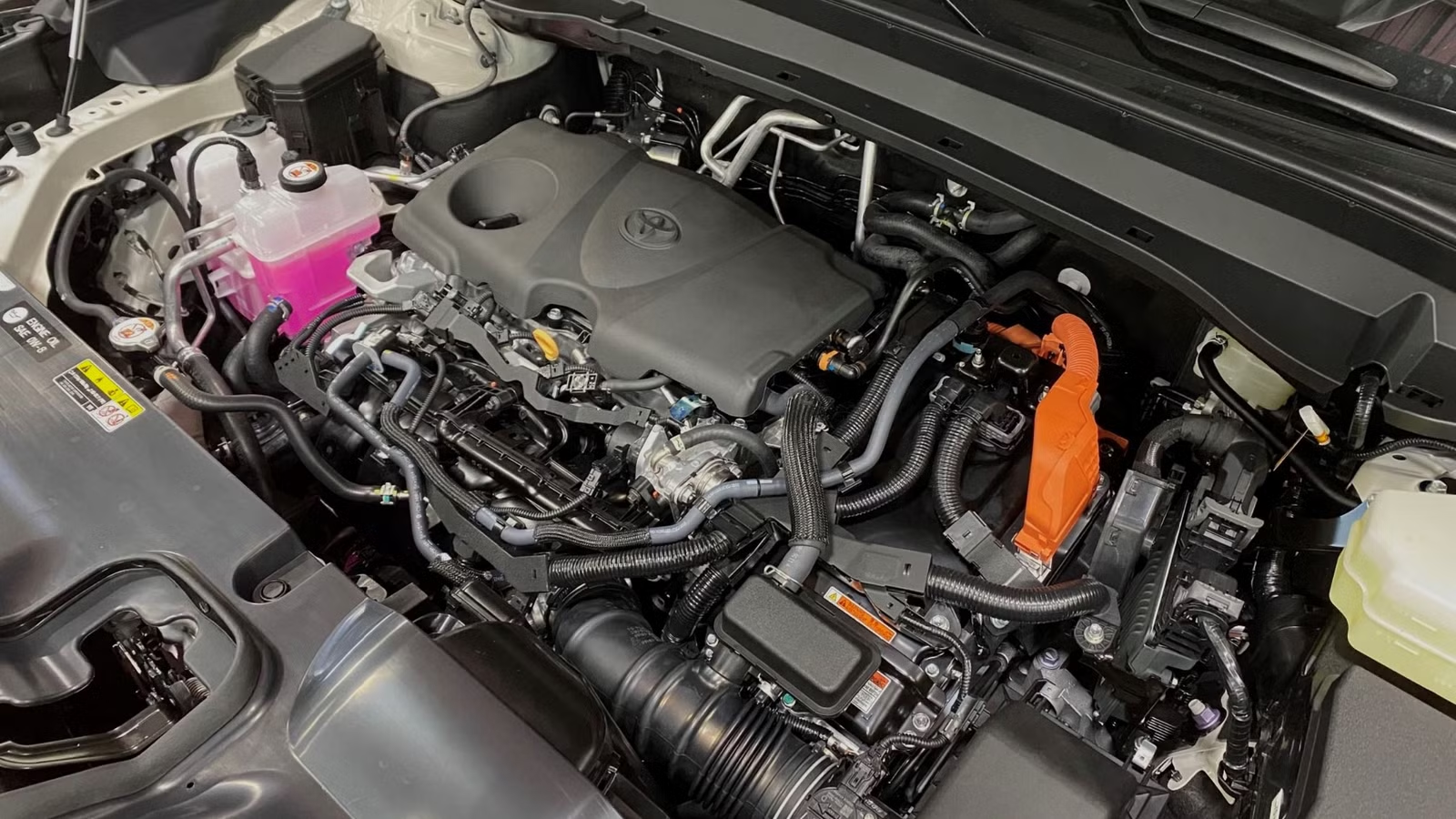
Toyota‘s 2.5-liter hybrid four-cylinder has quietly become one of the strongest arguments in the used-car market. The engine, found in the RAV4 Hybrid, Camry Hybrid, Highlander Hybrid, Sienna Hybrid, and Crown Hybrid, routinely reaches 300,000 miles with few complaints, and taxi fleets running these drivetrains have pushed the attached eCVT transmission as high as 500,000 miles on the original gearbox.
That durability isn’t an accident. It comes down to how Toyota’s hybrid system divides labor between the electric motor and the gas engine, sparing the engine from the exact moments that wear conventional four-cylinders out fastest: cold starts and hard acceleration from a stop.
The Electric Motor Takes The Hit So The Engine Doesn’t Have To
In a typical gas car, the engine delivers a big torque spike the instant you pull away from a stop. That’s one of the harshest moments for bearings, rods, and transmission clutches. Toyota’s hybrid system sidesteps this entirely. The electric motor’s instant torque gets the car rolling, and the gas engine joins in a moment later at a more optimal RPM and under a lighter load.

The eCVT transmission paired with the 2.5-liter hybrid reinforces that advantage. Unlike a conventional CVT, it has no belts or pulleys, relying instead on integrated electric motors that replace much of a standard automatic’s internals. Less friction means it runs cooler with fewer parts to wear out, which is exactly why these transmissions show up in taxi fleets logging half a million miles on the original gearbox.
Lower Compression, Dual Injection, And An Engine Built To Work Less

Rather than chasing more power from a smaller, more stressed engine, Toyota went the other direction. The 2.5-liter hybrid isn’t turbocharged, and it uses the Atkinson cycle to effectively lower its own compression ratio by holding the intake valves open briefly after the compression stroke begins. That cuts power output, but the electric motor fills the gap, and the gas engine runs cooler and under less strain as a result.
The D4-S dual-injection system adds another layer of protection, mixing high-pressure direct injection with low-pressure port injection to prevent the valve-deposit buildup that plagues many modern direct-injection engines over time. Regenerative braking rounds out the picture, recapturing energy during stop-and-go driving while reducing wear on brakes and the broader driveline. These are the engines Toyota built its Dynamic Force lineup around, hitting thermal efficiency as high as 41%.

For buyers comparing a used RAV4 Hybrid or Camry Hybrid against a similarly priced gas-only rival, the durability gap is no longer just a hunch. A hybrid powertrain that offloads startup and acceleration stress to an electric motor is mechanically built to outlast an engine doing all that work alone, and taxi fleet data backs it up in real-world mileage.
The one lingering question is the battery. Toyota covers hybrid batteries for 10 years or 150,000 miles if capacity drops below 70%, which covers most first owners outright. After that, costs vary widely. Some owners have reported bills as high as $12,000 for a Sienna Hybrid battery replacement, though independent shops now offer refurbished units for a few thousand dollars less. Most hybrid owners never deal with a battery failure at all, and those who do typically get well past 200,000 miles first.

Related posts



Latest Post


No Comments