
10 Forgotten Superbikes That Deserve Another Shot At Glory
Some superbikes become legends, while others disappear before the world realizes how special they are. The 1990s and 2000s produced some incredible machines, but not every motorcycle received the attention it deserved. Some brought unusual engines, clever engineering, and genuine racing talent. Others suffered from poor timing, financial trouble, or fierce competition from bigger names. These ten forgotten superbikes deserve another moment in the spotlight, and a few might surprise even seasoned riders.
EBR 1190RX
Production Years: 2014–2015

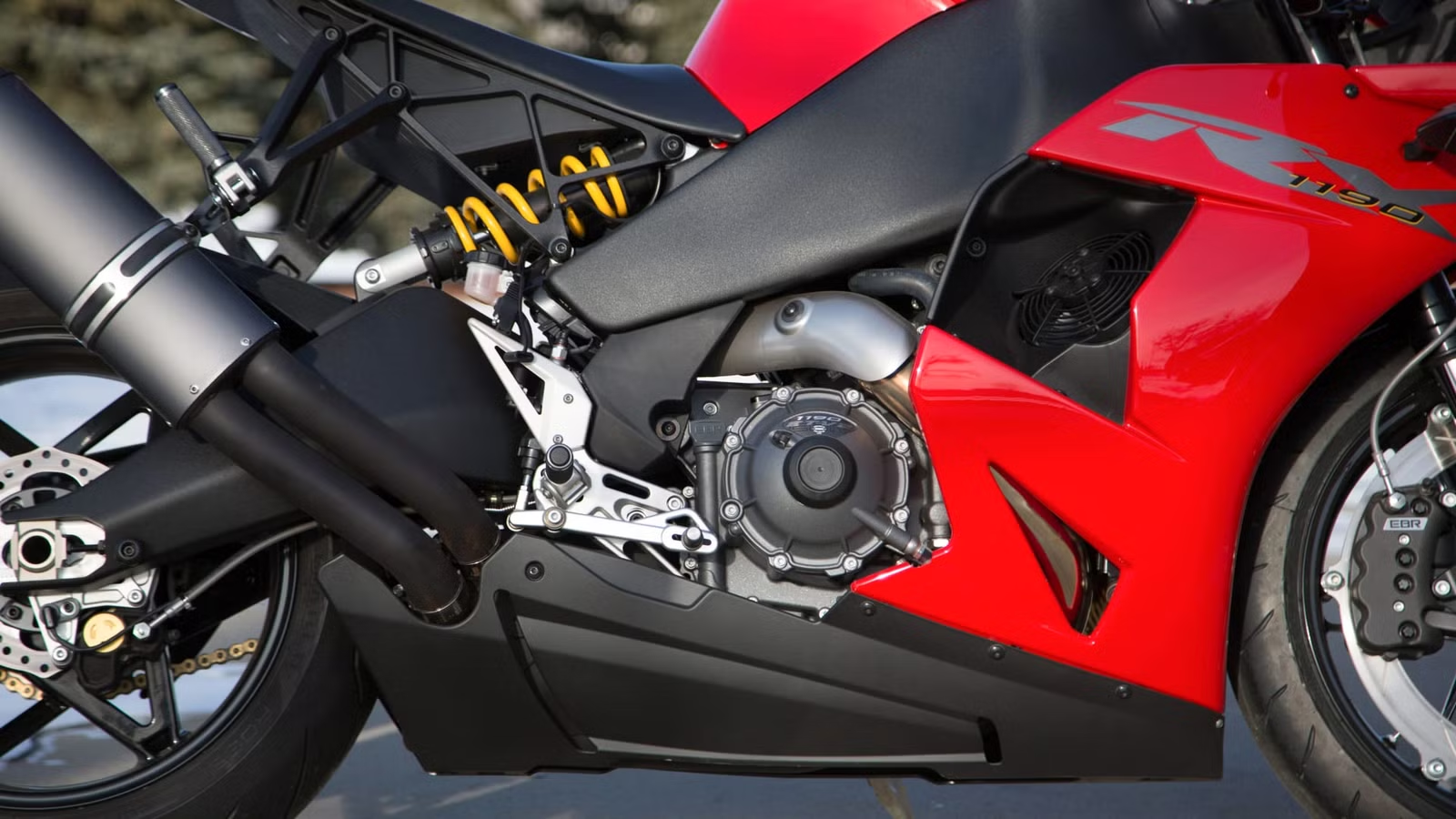
America has built plenty of powerful motorcycles, but few have challenged Europe’s finest superbikes. The EBR 1190RX was one exception. Erik Buell’s creation packed a 1,190cc V-twin producing a claimed 185 horsepower and 101.6 lb-ft of torque. Its $18,995 launch price also made it considerably cheaper than the exotic 1190RS that came before it.

The 1190RX featured some wonderfully strange engineering. Its aluminum frame doubled as a fuel reservoir, while a massive 386mm perimeter front brake disc replaced the usual twin-disc setup. These choices helped centralize mass and showcased Buell’s unconventional thinking. Unfortunately, financial problems brought the company to a halt in 2015.
KTM 1190 RC8 R
Production Years: 2009–2016


Before KTM became famous for its modern performance naked bikes, the Austrian manufacturer built a superbike that looked sharp enough to cut through traffic. The 1190 RC8 R featured aggressive bodywork and a 1,195cc V-twin. Later versions developed around 175 horsepower, giving it enough muscle to challenge established European and Japanese competitors.

However, its cleverest feature wasn’t the engine. KTM made the riding position unusually adjustable, allowing owners to change the seat height, handlebars, and footpeg placement. Even the chassis geometry offered meaningful adjustment. Riders could tailor the bike for track work without spending a fortune on aftermarket parts. Unfortunately, the RC8 R never received the sophisticated electronics that newer rivals offered. KTM ended production around 2015, leaving behind a superbike that deserved a longer career.
Petronas FP1
Racing Era: 2003–2005
Few motorcycles have a stranger backstory than the Petronas FP1. The Malaysian oil company originally backed a three-cylinder project aimed at Grand Prix racing. Plans changed, and Petronas teamed up with four-time World Superbike champion Carl Fogarty to enter the production-based championship. The resulting FP1 featured a 900cc triple, exotic components, and striking turquoise bodywork. Petronas built just 150 road-going examples to meet homologation requirements.
The rules soon spoiled the party, though. World Superbike allowed 1,000cc four-cylinder machines from 2003, leaving the FP1’s smaller engine at a disadvantage. Despite this handicap, the team secured two podium finishes in 2004. The racing effort continued through 2006, but victory remained out of reach. Years later, dozens of unused road bikes reportedly surfaced in storage in England.
Benelli Tornado Tre 900
Production Years: 2002–2010

Anyone who has seen the Benelli Tornado Tre 900 from behind probably remembers its enormous twin cooling fans. They resemble miniature jet engines, but they served a practical purpose. Benelli positioned the radiator beneath the seat rather than ahead of the engine. This allowed engineers to push the 898cc inline-three farther forward, improving weight distribution.

The engine produced around 140 claimed horsepower, accompanied by a distinctive three-cylinder soundtrack. Benelli even offered a limited-edition version with carbon-fiber bodywork, magnesium wheels, and Öhlins suspension. However, early examples suffered from troublesome fuel mapping and mechanical issues that damaged the bike’s reputation. Still, the Tornado had personality in abundance.
Mondial Piega 1000
Production Years: 2002–2003
The Mondial Piega 1000 had something most exotic Italian superbikes could only dream about: a Honda engine. It borrowed the 999cc V-twin from the VTR1000 SP-1, better known in America as the RC51. That gave this limited-production machine a proven racing foundation beneath its unusual bodywork. Its output approached 136 horsepower, while premium suspension and lightweight components completed the package.
The Honda connection carried a fascinating historical twist. During the 1950s, Mondial helped the young Japanese manufacturer by providing a racing motorcycle for study. Decades later, Honda returned the favor by supplying engines for Mondial’s revival. Unfortunately, financial problems restricted production to a tiny number of motorcycles.
Aprilia RSV Mille R
Production Years: 2000–2003

Before Aprilia’s RSV4 became a familiar name among performance enthusiasts, the company already knew how to build a formidable V-twin superbike. The RSV Mille R improved on the standard Mille with Öhlins suspension, lightweight forged OZ wheels, and carbon-fiber details. Its 997.6cc Rotax-developed engine delivered roughly 128 horsepower, making it a serious alternative to Ducati’s contemporary twins.

The real magic came from the engineering beneath the fairings. Rotax used a compact 60-degree cylinder layout, dry-sump lubrication, and twin balance shafts to control vibration. Aprilia also developed a vacuum-assisted clutch system that reduced rear-wheel hopping during aggressive downshifts. The Mille R never attracted Ducati-level attention, but its combination of capable handling, clever technology, and distinctive character deserves far more recognition.
Bimota SB8R
Production Years: 1998–2000

What happens when an Italian specialist takes Suzuki’s powerful TL1000 engine and builds an exotic chassis around it? The Bimota SB8R happens. Designed by Pier Luigi Marconi, it combined aluminum frame sections with carbon-fiber structures around the swingarm pivot. Premium components and lightweight construction helped distinguish it from the Suzuki supplying its engine.
Unlike many exotic motorcycles that spend their lives looking impressive in garages, the SB8R achieved a memorable racing victory. In 2000, Anthony Gobert won a wet World Superbike race at Phillip Island aboard the Bimota. His tire gamble worked brilliantly, and he finished almost 30 seconds ahead of Carl Fogarty. Financial difficulties ultimately limited the SB8R’s future, but that spectacular victory proved this unusual Italian superbike could defeat established giants.
Suzuki TL1000R
Production Years: 1998–2003

Suzuki’s TL1000R entered the superbike world with a clear mission: challenge Ducati using a Japanese-built V-twin. Its 996cc engine delivered strong torque, while the large aluminum frame and aggressive bodywork gave it serious racing intentions. However, the TL1000R struggled to become the Ducati-killer Suzuki had imagined. Critics also questioned its weight and unusual rear suspension.

That suspension deserves another look. Suzuki used a compact rotary damper instead of a conventional shock arrangement to package the large V-twin inside a short chassis. Although the earlier TL1000S damaged the system’s reputation, the TL1000R featured a larger, improved damper. Meanwhile, its muscular engine became a desirable foundation for other projects, including Bimota’s SB8R.
Kawasaki ZX-7RR
Production Years: 1996 Onward

Kawasaki’s ZX-7RR wasn’t just another green sportbike with extra letters attached to its name. The company built approximately 500 examples of this homologation special, mainly in 1996, to support its superbike racing ambitions. It featured Keihin flat-slide carburetors, a close-ratio gearbox, upgraded suspension, and six-piston Nissin front brakes. Adjustable steering geometry and a movable swingarm pivot gave racers additional tuning options.

Perhaps its most charming detail was the purple wheels. Kawasaki‘s American racing operation had previously used the color to distinguish its motorcycles from similar-looking green Ninjas on track. The combination eventually became part of the ZX-7RR’s identity. Although its four-cylinder engine faced increasingly tough competition, the RR delivered a focused racing package.
Yamaha YZF750R
Production Years: 1993–1998

The Yamaha YZF750R arrived when 750cc four-cylinder motorcycles represented the cutting edge of superbike racing. Its 749cc engine used Yamaha‘s famous five-valve cylinder heads, while the EXUP exhaust valve improved power delivery at lower engine speeds. Combined with a rigid aluminum frame and capable suspension, the YZF750R offered handling that appealed to serious riders.

Its racing connections ran deeper than appearances suggested. Yamaha developed the more specialized YZF750SP with flat-slide carburetors, adjustable chassis components, and competition-focused gearing. The YZF750 family also enjoyed success in endurance and national superbike racing. Yet the groundbreaking YZF-R1 quickly pushed the older 750 into the shadows in 1998. The R1 offered greater performance and captured the public’s imagination almost immediately.
Source: EBR, KTM, Petronas, Benelli, Aprillia, Bimota, Suzuki, Kawasaki, Yamaha

Related posts

Latest Post


No Comments