
Nissan’s 278-HP V8 Outgunned The Lexus LS400’s 256-HP Engine On Paper
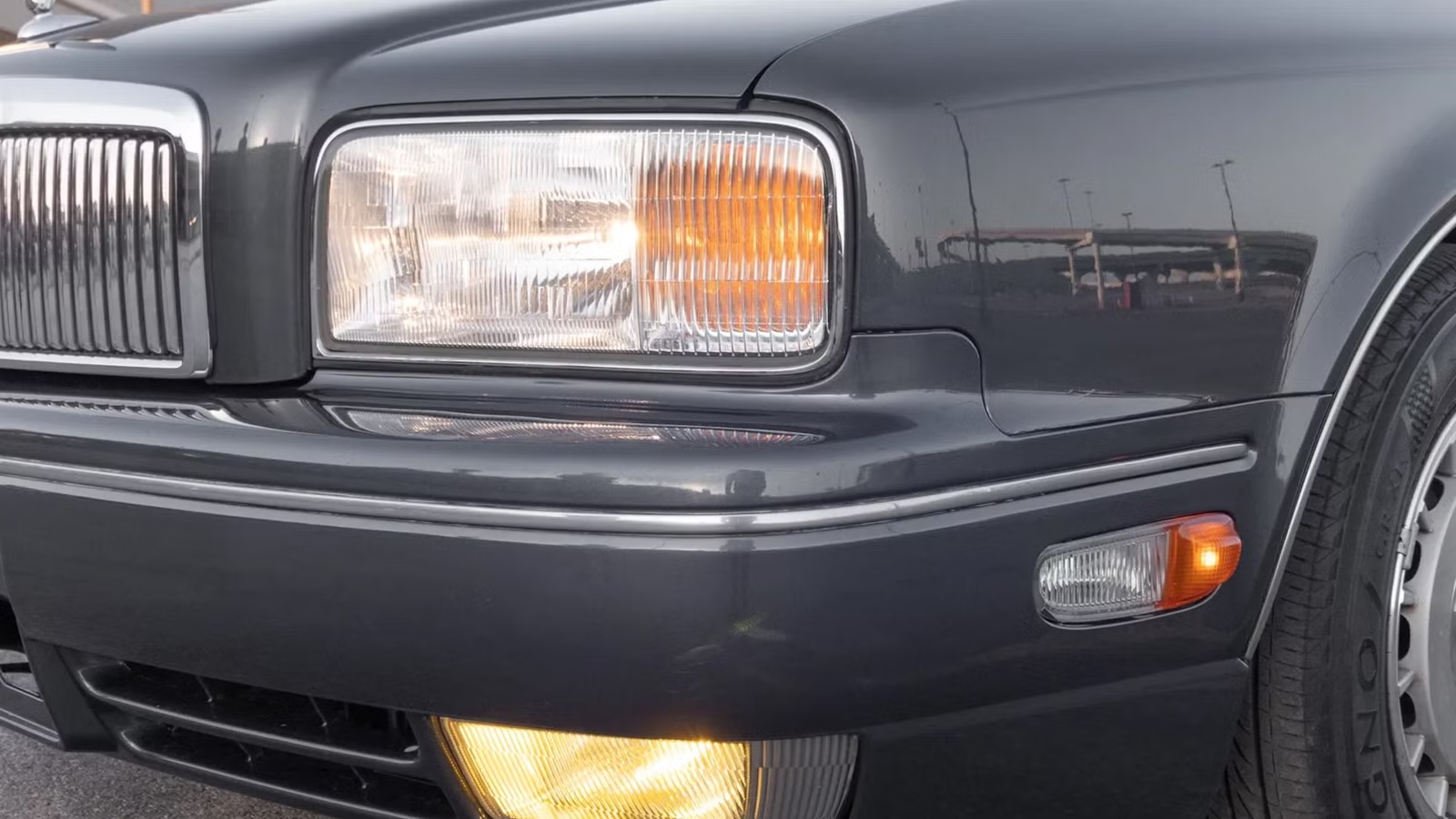
Someone told the Lexus LS400 and its Toyota engine to move out of the way. A durable Nissan engine has been stuck in its shadow for decades, touted as the ultimate sleeper option. This forgotten powerhouse already had more power than the Toyota 1UZ-FE 4.0-liter V8 on paper. But its factory-rated 278 hp was actually underrated, and Nissan couldn’t advertise how much power it actually puts out. But its potent power isn’t the only reason why it’s the perfect choice for swaps and racing builds.
The Toyota 1UZ-FE 4.0-liter V8 Gets All The Glory

Back in 1989, the Toyota 1UZ-FE 4.0-liter V8 emerged as a premium engine option available in the Lexus LS 400 and Toyota Celsior. It grew to fame as a stout powerhouse that delivers 256 hp and 260 lb-ft of torque. This open-deck engine was designed with overbuilt racing DNA to meet luxury refinement standards.
It was inspired by endurance motorsports, with an all-aluminum cylinder block with cast-iron cylinder liners and aluminum cylinder heads. The forged steel crankshaft has eight counterweights, and the overbuilt bottom end has a six-bolt main bearing design. Plus, it has 87.5 mm bores and an 82.5 mm stroke, so it provides smooth power while being lightweight and incredibly robust.
The engine weighs in at 364 to 430 lbs depending on its configuration, and it’s known to last. It regularly surpasses 300,000 to over 500,000 miles. Plus, a few examples have made it over the 1-million-mile mark with the original engine and transmission. The Toyota 1UZ-FE is so trusted that the FAA certified a twin-turbocharged variant for aircraft use.


This engine is pretty popular to tune and modify. It’s compact, lightweight, and confidently handles forced induction. It can easily handle 450 to 550 hp on the stock bottom end. With upgraded aftermarket forged rods and pistons, it can handle 600 to over 1,000 hp while racing builds push its limits even further.
The Nissan VH45DE 4.5-Liter V8 Was Born To Compete

While the Toyota 1UZ-FE stole the spotlight, the Nissan VH45DE 4.5-Liter V8 launched at the same time in the 1989 Infiniti Q45 luxury sedan and 1990 Nissan President limousine. It was built to directly challenge the Toyota 1UZ-FE and German luxury flagships. It churns out a factory-rated 278 hp and 295 lb-ft of torque.
This engine was not involved in any parts-sharing agreements between Nissan and Toyota. However, the Nissan VH45DE is widely believed to be underrated due to the Japanese gentlemen’s agreement. In the late 1980s, the Japanese Automobile Manufacturers Association (JAMA) informally agreed to limit advertised horsepower to 278 hp and top speeds to 112 mph.
The initiative was intended to crack down on the increasingly popular street racing culture and to hopefully prevent a horsepower war. Actual output for the Nissan VH45DE hovers between 300 and 310 hp. Even so, the VH45DE still makes an extra 22 hp compared to the 1UZ-FE on paper.

As a sleeper option for swaps, this engine is also incredibly reliable, with the ability to easily reach 200,000 to over 300,000 miles, and it can handle 500 to 600 hp on stock internals with forced induction. There are also documented extreme builds that push over 1,000 hp with aftermarket modifications.
Here’s Why The Toyota 1UZ-FE Engine Is More Popular

The Toyota 1UZ-FE is more popular than the Nissan VH45DE because it was used in multiple high-volume luxury and sports cars, such as the Lexus LS 400, SC 400, and GS 400. Meanwhile, the Nissan V8 was found primarily in a limousine and the Infiniti Q45. But it’s also in a few different Japanese-market options.
Because the 1UZ-FE was offered in more cars, it’s a bit easier to source and find. It also has a massive following and plenty of aftermarket support in the engine-swap community. Components such as adapter plates, headers, and standalone wiring solutions are readily available.
Its reputation for durability led to a cult following. The Toyota engine is also known for being extremely swap-friendly thanks to its manageable weight and size. You can get a Toyota 1UZ-FE engine for between about $2,050 and $3,295, depending on whether it’s a non-VVT-i version or the later VVT-i version, source, and condition.
The Nissan VH45DE’s Advantages Shouldn’t Be Ignored

First of all, the Nissan VH45DE immediately arrives with a little extra stock power thanks to having a larger displacement. However, it also has a superior design. For example, rival V8s are designed for quiet, low-end cruising, but the VH45DE V8 has an oversquare bore and stroke, plus Variable Valve Timing Control (VTC), to better optimize valve timing across a broader RPM range.
It’s also built with racing-inspired internals, such as a forged steel crankshaft, connecting rods, six-bolt main bearing caps, and a full-length girdle for structural support. Plus, it has an open-deck design, which is better for cooling, thermal management, reliability, fuel efficiency, and weight distribution. This is great for preventing the cylinder walls from flexing. The Nissan VH45DE has an aluminum block and weighs in at 493 to 500 lbs, yet is still compact and lightweight for a 4.5-liter V8 engine.
However, you will want to go for engines built after 1994. Units built before 1994 have plastic timing chain guides that can snap and lead to catastrophic failure. These were replaced by metal-backed guides in 1994. It’s known for being non-destructive and predictable with proper maintenance, though.

Pricing for standalone Nissan VH45DE units hovers around $750 to $1,499 from specialized importers. Engines built after 1994 are typically more expensive, but every unit built before 2001 falls within the 25-year import rule. Overseas shipping costs may add another $1,000 to $1,800 in import and shipping fees.
Source: Drifted, Q45, Nissan, Toyota

Related posts





Latest Post



No Comments