
How Much A 10-Year-Old Toyota Camry Is Worth Today
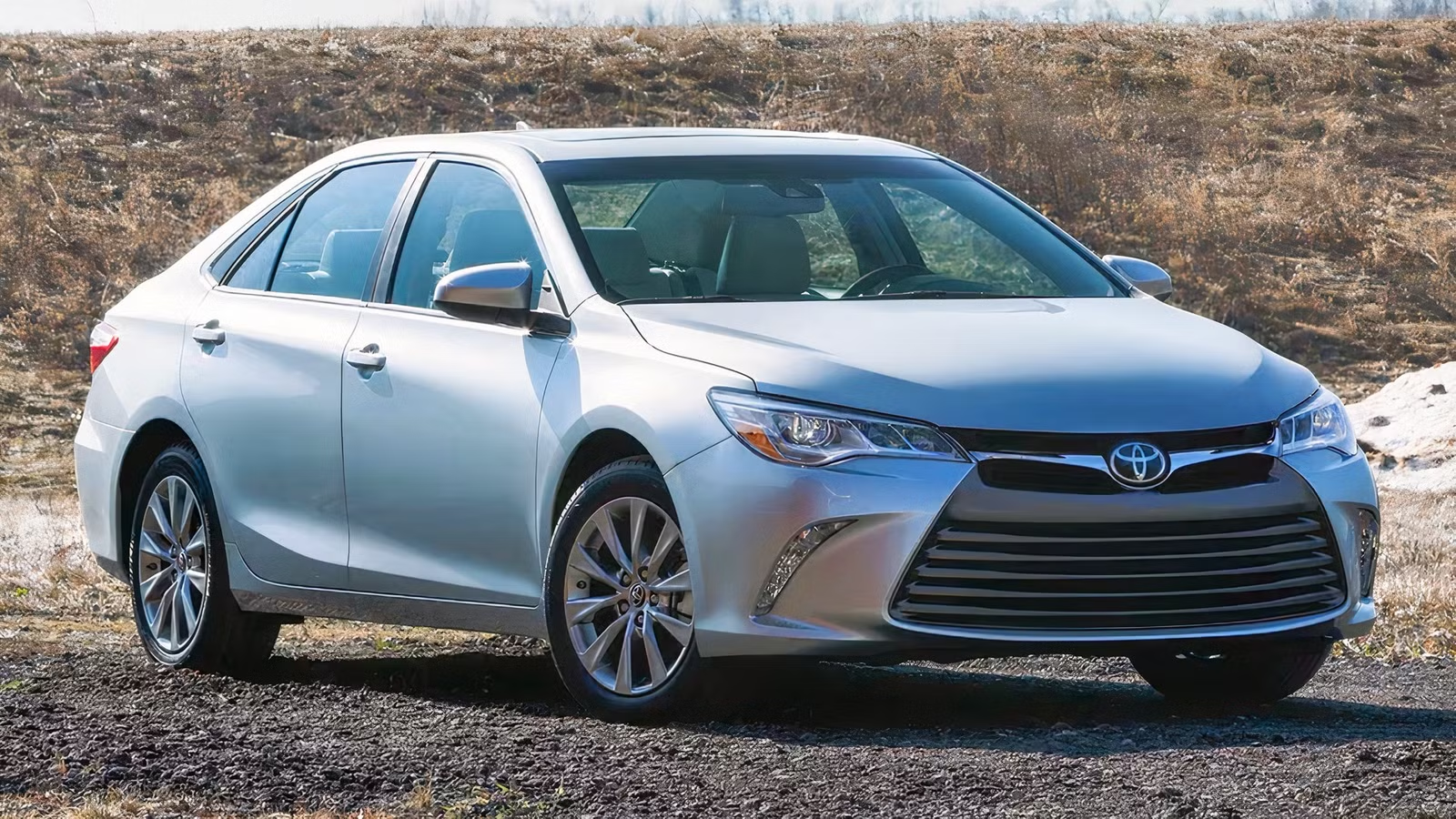
Few used cars generate as much word-of-mouth as the Toyota Camry — and for good reason. Whether you’re a first-time buyer stretching a tight budget or a seasoned enthusiast who simply wants something bulletproof to commute in, the mid-size sedan keeps coming up as the answer. The Toyota Camry has been a fixture on American roads since its U.S. debut in 1983, and in the decades since, it has built a reputation that very few nameplates can match.

If your budget points you toward something a decade old, the Camry is arguably the smartest place to start. A 10-year-old example, meaning a 2016 model year, sits at a price point that is genuinely hard to argue with, and the ownership experience that comes with it is just as compelling as ever.
The Average Price Of A 10-Year-Old Camry Is Absurdly Low
The Camry ranks among the most sought-after used vehicles on the market. A major part of its appeal is its accessible price tag. One of the best ways to assess the value of a used car is to look at its average list price. The 2016 Toyota Camry currently has a Fair Purchase Price of $12,450 to $15,750. There are also a large number of examples on the market, meaning buyers are genuinely spoiled for choice. That is a remarkable bargain when you consider that the Camry is one of the most reliable cars ever made.

The differences between the trims are somewhat nuanced. The SE is essentially the same as the LE but with sportier styling elements. The XSE combines those sporty aesthetics with the upgraded suspension and feature set of the XLE. That gives buyers a meaningful choice, with the two flavors of Camry feeling fairly distinct from one another.
If You’re Looking For A Reliable Sedan, The Camry Is It
The 2016 Camry came with a choice of two engines, neither of which was particularly performance-oriented. Both are, however, regarded as extremely durable. In fact, the 2016 Camry has an even stronger reliability reputation than the current generation, with a well-documented track record of high-mileage longevity.
Reliability
Few cars have the reliability reputation that older Camrys carry — and fewer still actually live up to it. Authoritative sources tend to agree: J.D. Power awarded the 2016 Camry 90 out of 100 for quality and reliability, placing it firmly in the ‘Great’ category. It also ranks as one of the highest-scoring Camry model years for reliability on record.
Maintenance Costs
Toyotas are notoriously affordable to maintain, and the 2016 Camry makes that point clear. RepairPal estimates annual maintenance costs for a 2016 Camry at around $378 — well below the segment average. CarEdge supports this, noting that the Camry is significantly cheaper to keep on the road than the typical mid-size sedan.
CarEdge also estimates that a 10-year-old Camry has only an 11 percent chance of requiring a repair costing $500 or more. The most common issues on used examples tend to involve a hesitant transmission, which is fairly typical for vehicles from this era.
Recalls
When buying any used car, it pays to check the recall history. In the case of the 2016 Camry, Toyota issued a single recall related to the electric power-assist steering system, which may have been damaged during the manufacturing process. Before purchasing, confirm that this recall was addressed by a previous owner.
Powered By Either A Four-Cylinder Or A V-6

The Camry has long been known as a practical rather than exciting car. That said, buyers who want a little more urgency under the hood can opt for the available V-6, which delivers a genuinely impressive output for a family sedan. The Camry’s core strengths remain affordability and comfort, but the V-6 adds a real performance dimension to the lineup.
LE and SE buyers are limited to the base inline-four, which delivers adequate power for everyday driving. Front-wheel drive is the only configuration available, and a 6-speed automatic transmission is standard across all trims. That gearbox was notably smooth for its time, outshining several rivals that felt sluggish by comparison.
Stepping up to the XLE or XSE unlocks the option of a larger, more powerful V-6. The base four-cylinder has been tested at around 8.3 seconds from zero to 60 mph, while the V-6-equipped sedan can cover the same sprint in as little as 6.2 seconds — a meaningful difference in real-world driving.
The 2016 Camry is reasonably fuel-efficient for its age, though even at launch several direct rivals edged it out by a couple of miles per gallon. Inline-four models return figures that hold up well against modern benchmarks. The V-6, however, is noticeably thirstier, and there is a 10-mpg gap between city and highway driving, so buyers who regularly make longer trips will get considerably more from a tank.
It is worth noting that fuel efficiency tends to decline as vehicles age. Treat the EPA figures as a useful baseline, but expect a used example to fall slightly short of those numbers in everyday use.
The 2016 Camry Holds Up Better Than You’d Expect Inside

Now a decade old, the 2016 Camry’s interior still holds its own in many respects. It lacks the digital instrument clusters and large touchscreens that define the current Camry and most newer cars on the market, but it remains comfortable, spacious, and sufficiently well-equipped to feel relevant as a daily driver.
Comfort, Cargo, And Connectivity
Compared to other mid-size sedans of its era, the 2016 Camry offers some of the most comfortable seating in the class. Passenger space is generous both up front and in the rear for adults. Trunk space comes in at 15.4 cubic feet, which is about average for the segment.
The interior dashboard is well-organized for a 10-year-old design — not luxurious, but clean and logically laid out. Toyota prioritized usability, and it shows: controls are intuitive and placed exactly where you’d expect them. A 6.1-inch display at the center of the dash handles audio and navigation duties. Some level of smartphone connectivity is on offer, though buyers should not expect Apple CarPlay.
Sources: Toyota, Edmunds, J.D. Power, CarEdge, RepairPal, KBB, and the EPA

Related posts


Latest Post


No Comments