
Our 2028 Toyota 2000GT Render Could Be A Gorgeous Financial Disaster
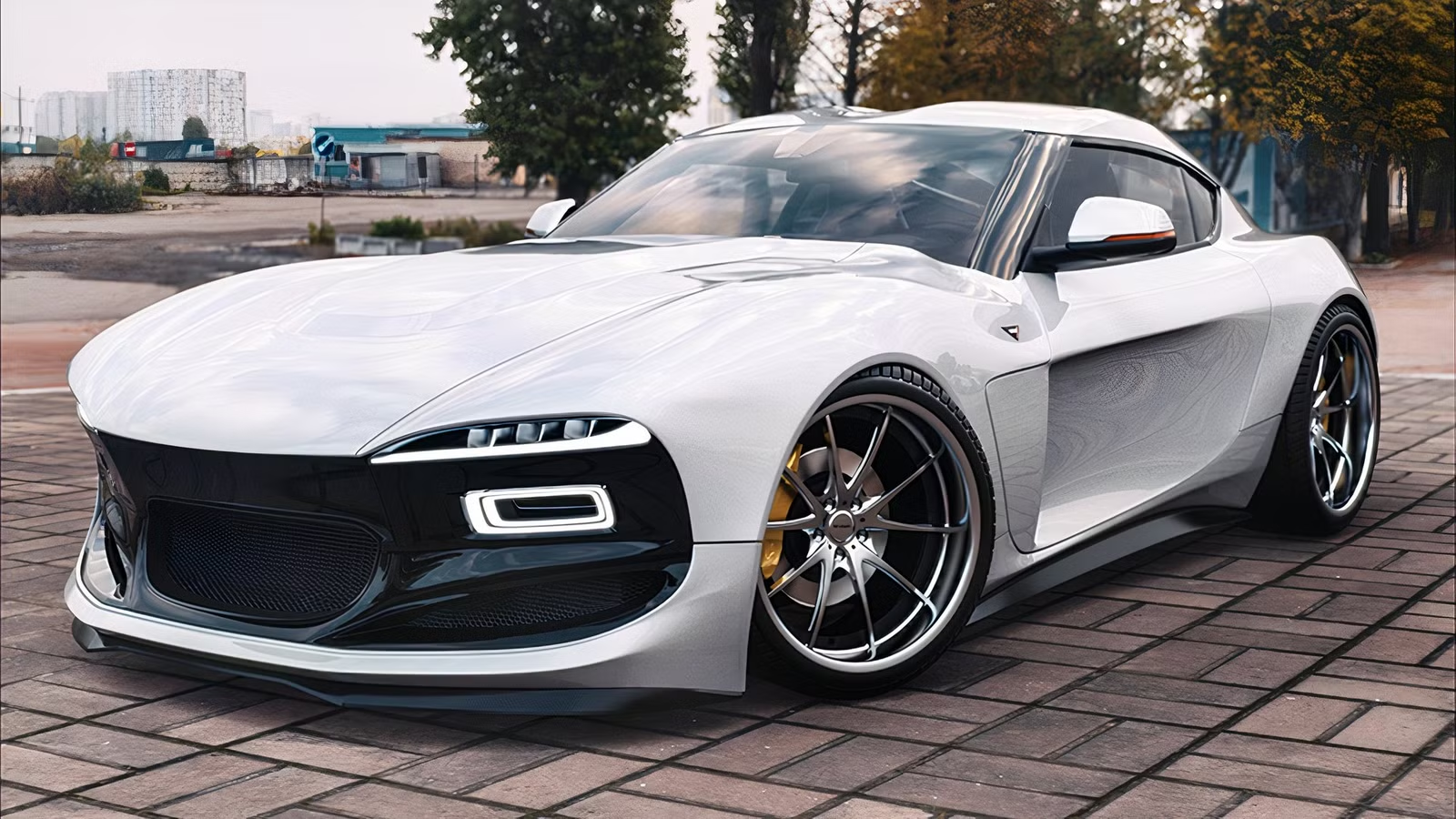
Toyota built only a few hundred 2000GTs, and somehow that was enough to make one of its rarest sports cars a million-dollar obsession. Now, our totally-not-real 2028 Toyota 2000GT brings the Japanese classic into the modern era with a low body, a fastback, and considerably more attitude. The aim has to be to challenge the GR Supra’s legacy, although a modern revival would come with some very expensive questions.
A Toyota 2000GT Reborn With Enough Attitude To Upset The Purists

The original Toyota 2000GT looked like the sort of expensive European grand tourer that might have escaped from a secret factory after dark. Our make believe 2028 Toyota 2000GT keeps the long hood, compact cabin, and beautifully tapered roofline, but exchanges much of the ’60s delicacy for broader shoulders and a thoroughly modern stance. The silver paint helps those contours stand out, while the low ride height and large multi-spoke wheels give it the proportions of a contemporary rear-wheel-drive sports car.
Viewed from the side, the new interpretation makes its strongest argument. There’s a deep channel along the doors, a tall opening behind the front wheel, and a muscular rear quarter that flows toward the short tail. It feels expensive without resorting to a giant rear wing or racecar bodywork. This is supposed to be a grand tourer, after all, not something designed to frighten pedestrians in a parking lot.
The front’s where our enthusiasm takes a small detour. The original 2000GT had pop-up headlights and a clean nose, while this concept uses stacked lighting elements set into a broad black fascia. It’s distinctive, certainly, although the arrangement looks a little like the car couldn’t decide which pair of headlights to wear. At least the huge lower intake gives it an appropriately purposeful expression.

Around back, rectangular taillights sit inside a dark panel above a substantial diffuser-like bumper. There’s a hint of the classic Toyota sports car in the sweeping rear glass, even if the black trim feels more aggressive than the original ever needed.
The Original Toyota 2000GT Was More Than A Pretty Face

When Toyota introduced the 2000GT in 1967, the Japanese automaker was trying to prove it could compete with established European sports car manufacturers. Developed with Yamaha, the two-seat coupe featured a 2.0-liter, double-overhead-cam inline-six producing around 150 horsepower. It also featured a five-speed manual, independent suspension, and four-wheel disc brakes.
Performance was respectable rather than terrifying. The classic 2000GT could reach roughly 135 mph, and Toyota quoted an 8.6-second run to 62 mph. More importantly, it showed that Toyota could build a proper grand touring car with balanced handling and meticulous engineering. The model even set endurance records during 1966 testing, while two specially modified open-top examples appeared in the James Bond movie You Only Live Twice.
The trouble was price. A new Toyota 2000GT cost about $7,230 in the United States, more than a Chevrolet Corvette, Jaguar E-Type, or Porsche 911 at the time. Depending on how prototypes and special versions are counted, total production is generally cited at 351 cars, with 337 regular production examples. Their scarcity has helped surviving cars achieve pretty inflated prices. Suddenly, spending Corvette money on a Toyota sounds like the sensible financial decision of the century.
A Modern 2000GT Needs Supra Power But A Personality Of Its Own

If Toyota ever turned something like this 2028 Toyota 2000GT daydream into reality, a turbocharged inline-six would be the obvious starting point, no? The final fifth-generation GR Supra offered 382 horsepower in the United States, already more than double the original 2000GT’s output. Imagine a thoroughly revised six-cylinder producing 425 to 450 horsepower, driving the rear wheels through a six-speed manual or a sharp-shifting auto. That would give the modern coupe the performance its dramatic proportions promise.
With a well-sorted chassis and a curb weight somewhere around 3,200 to 3,400 pounds, such a car might manage 0-60 mph in roughly four seconds. Those figures are purely hypothetical, of course, but they’re also more appealing than simply stuffing 700 horsepower under the hood and calling it progress. The original 2000GT earned its reputation through precision and refinement, so steering feel, brake response, and chassis balance would matter at least as much as its acceleration.
The Roadblock

Toyota could go further with adaptive dampers, an LSD, modern safety electronics, and a driver-focused cabin inspired by the original’s rosewood dashboard. Real buttons and a proper instrument display would be especially welcome. Nobody needs to scroll through three menus just to adjust the temperature while driving a car that supposedly celebrates the analog era. A usable seating position would also fix one of the original coupe’s more infamous compromises for taller American drivers.
Ready for the uncomfortable part? A bespoke low-volume Toyota 2000GT revival could easily become a six-figure sports car, especially if Toyota insisted on an exclusive chassis and extensive hand finishing. That puts it into serious Porsche 911 territory, where buyers expect more than beautiful styling and an excellent backstory. Our 2028 Toyota 2000GT is a glimpse into a fun future, but the toughest challenge might be convincing buyers to pay supercar money for a Toyota, just as it was in 1967.

Related posts




Latest Post


No Comments