
Ford Built A Woodgrained Sleeper Wagon With A Four-Speed And 3.50 Rear Axle
Few car manufacturers are so laser-focused that they don’t build vehicles across a variety of segments, from aggressive performance cars to practical family haulers. Ford is no exception, nor were they in 1963, when you could find a floaty wood-paneled station wagon on one side of the showroom and a Galaxie 500 with a 427 V8 on the other.

Sometimes, though, when the order sheet cooperated and the stars aligned, a customer could make choices that brought those two ends of the spectrum closer together than you might expect.
The Fairlane Squire Was Ford’s Fancy Family Hauler
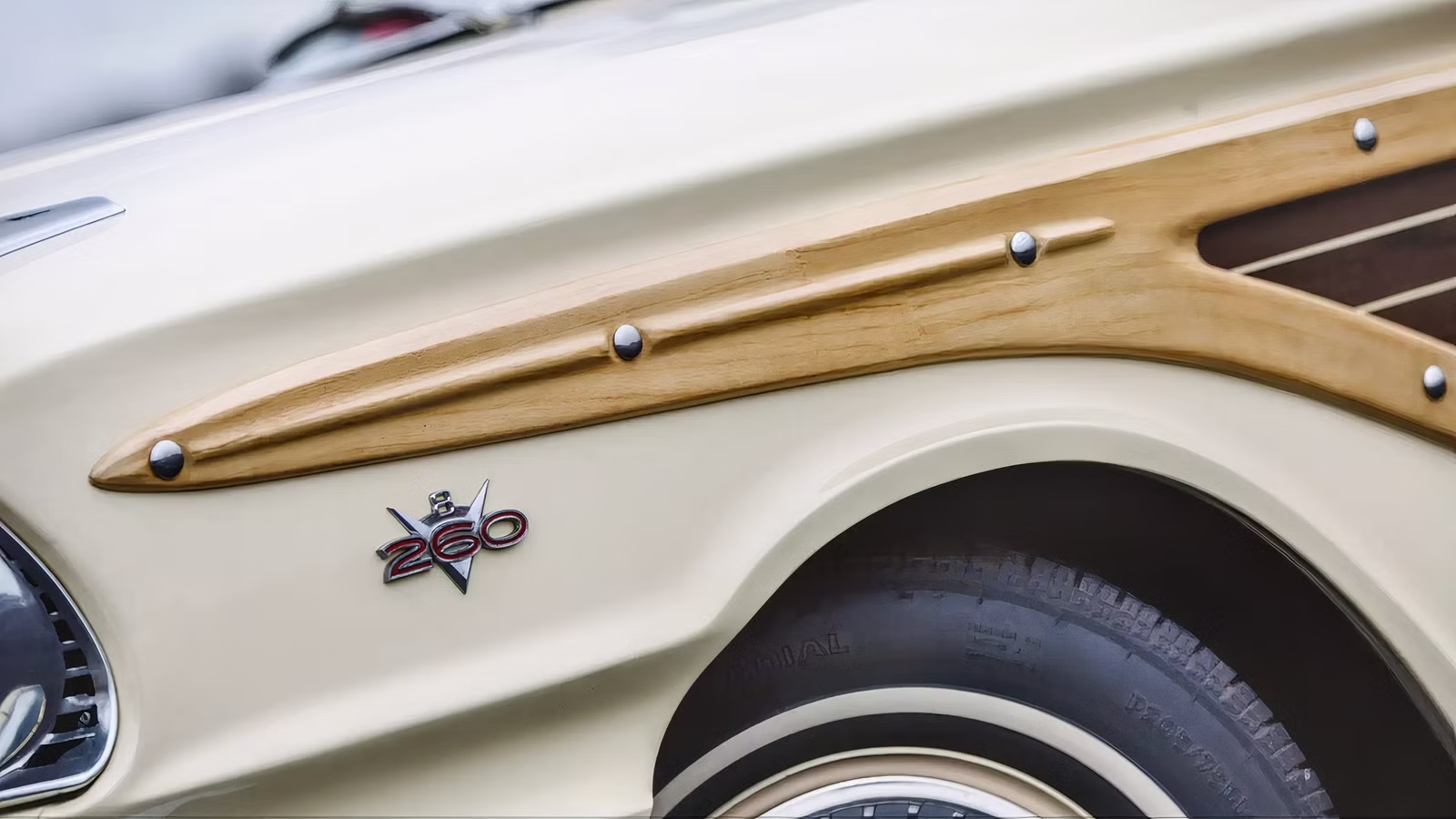
There wasn’t much exciting about Ford’s Fairlane series, which occupied a middle ground between the compact Falcon and the full-sized Galaxie. In 1963, wagons joined the lineup, with the Fairlane 500 Squire taking its place at the top of the Fairlane wagon hierarchy. An artificial woodgrain finish created an upscale appearance, and a six-passenger interior with a giant cargo area made it up to the task of everyday family duties.

Ford produced under 8,000 of these top-trim wagons in ‘63, making for a relatively uncommon vehicle to begin with. But there was one buyer who optioned out their Squire in a way that maybe nobody else did.
Somebody Checked All The Right Boxes

Whoever originally ordered this particular 1963 Fairlane 500 Squire pushed performance options far enough that Ford might have second-guessed whether they meant to have those lines on the order sheet in the first place. The chosen engine was Ford’s 260-cubic-inch Challenger V8, putting out 164 horsepower and 258 pound-feet of torque. The seating? Factory buckets. The transmission was a factory four-speed manual, and the whole thing rode on a 3.50:1 rear axle.
It was a performance-minded sleeper wagon, wrapping muscle-adjacent performance in a family-friendly package and covering it in fake wood.
It’s unclear whether another buyer ordered a Squire with the same equipment. We do know that 277 builds included the bucket seats, and the kind of person who opts for bucket seats in a station wagon might be the same kind of unhinged that wants to throw their own gears with a big V8 and a rear axle geared for acceleration rather than cruising, but there’s no way to know for sure.
Ford’s Total Performance Campaign Left The Door Open For A Wagon

Whether this configuration existed in one example or a dozen or a hundred, it was Ford’s early-1960s focus on motorsports that made it possible. The company’s Total Performance campaign loudly planted Ford’s flag in the performance space. From NASCAR and drag racing to the collaboration with Carroll Shelby, Ford was making performance a central part of its identity, with some of that enthusiasm trickling down onto dealership lots.
The Fairlane was no exception. It was available with the K-code 289 V8, a more formidable engine than the 260 we’re talking about here, and buyers could specify other enthusiast-friendly equipment even if they didn’t pick the hottest engine in the catalog.
There was something appealing about the possibilities when a family wagon was able to participate in this kind of a performance story, even if it wasn’t likely to find its way to the drag strip or track. When this Squire was offered for auction in 2022, Hagerty highlighted it as “equally at home on the way to a picnic or towing a Formula Junior to the track.”
Indeed, Hagerty. It’s a perfect description of the appeal: a practical family vehicle ordered by someone who wants to have a little fun along the way.
Today’s Car No Longer Matches Its Original Order Sheet

It’s been more than sixty years since this unusual Squire left the factory, either a de facto one-of-one or at the very least one-in-not-very-many. In either case, the surviving car no longer matches its unicorn build sheet. In place of the wonderfully chosen Challenger V8 is now a slightly larger 289-cubic-inch crate engine. On one hand, it isn’t the motor that was installed at the factory, though on the other, it was likely an improvement intended to benefit a later owner who wanted to actually drive the thing.
The Champagne-colored paint is also gone, refinished in Pale Yellow. Brakes were upgraded, an aluminum radiator added, and a rear-facing third seat put in the back. This isn’t the work of someone aiming to preserve every last bit of historical authenticity, but they are modifications that would have potentially made for a more practical, livable wagon, which honestly aligns just fine with the ethos that led someone in ‘63 to go nuts with this build in the first place.
In November of 2022, the Squire was included in the first ten vehicles offered through Hagerty’s then-new online auction platform. It sold for $23,500, or $25,145 including the 7% buyer’s premium.
This Sleeper Wagon Was Ahead Of Its Time

The idea of a performance-oriented wagon isn’t something that was left in the early days of American muscle. The approach has resurfaced throughout the decades, from Chevrolet’s big-block-powered station wagons to the Cadillac CTS-V Sport Wagon much later. The Cadillac even offered a six-speed manual, of which we’re sure our unnamed Squire buyer would have approved.
It’s a legacy of pragmatic enthusiast appeal that will never go out of style, and a comforting reminder that, once upon a time in 1963, somebody walked into a Ford dealership, looked at a perfectly sensible family wagon and wanted not just a V8, but bucket seats, a manual gearbox, and a rear axle geared for something that wasn’t leisurely cruising.
Sources: Ford, Hagerty, Conceptcarz, The Henry Ford, What’s My Car Worth?

Related posts


Latest Post


No Comments