
Toyota Wants To Make $1.7 Billion Selling Engines To Rivals
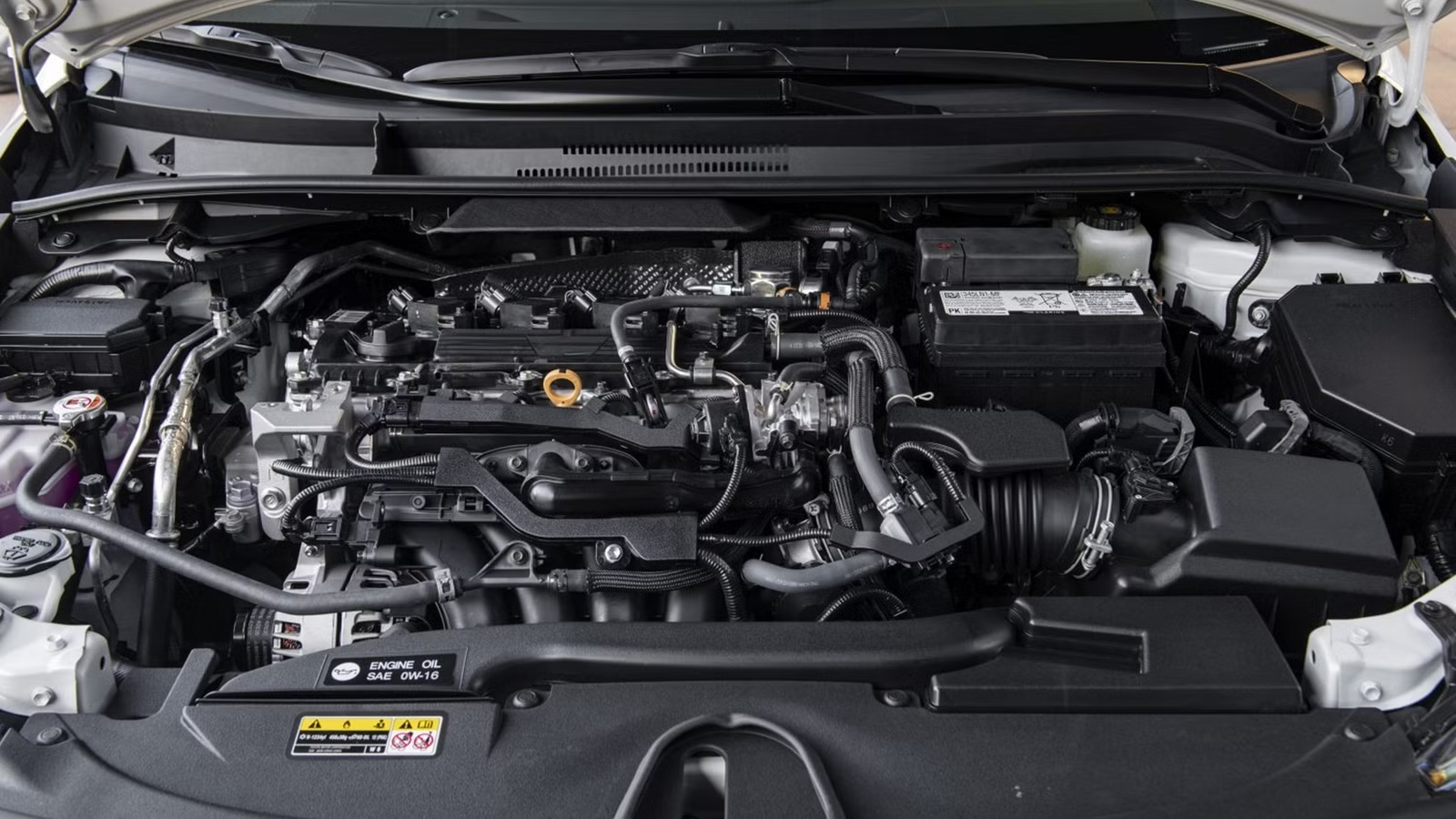
Toyota confirmed this week that it wants to turn internal combustion into a supply business, not just a product line. The automaker is targeting roughly $1.7 billion in annual revenue by 2032 from selling its next-generation gas and hybrid powertrains to other manufacturers, up sharply from the $562 million in orders it expects this year alone, with deliveries slated to start in 2027.

The timing is the real story here. While most of the industry pours its engineering budgets into EV-only platforms and treats combustion as a dying technology to be milked, not reinvented, Toyota is building an entirely new engine family from scratch. That’s a rare and expensive bet in 2026, and it only makes sense if Toyota genuinely believes gas and hybrid demand isn’t going anywhere.
Three New Engines Built To Fit Anything, Including EV Platforms
The new lineup centers on three four-cylinders: a naturally aspirated 1.5-liter, a turbocharged 1.5-liter, and a 2.0-liter turbo. The turbo 1.5 is designed to match the output of a conventional 2.5-liter naturally aspirated engine, effectively replacing it, while the non-turbo 1.5 is targeting a 15% fuel economy improvement over Toyota’s current 1.5 and 1.8-liter units. The 2.0-liter turbo aims to beat the output of today’s 2.4-liter turbo while matching or improving on the fuel economy of the current 2.0-liter turbo.

What makes these engines valuable to outside buyers isn’t just the numbers, it’s the packaging. Toyota designed them shorter and narrower than the engines they replace, specifically so they can slot into platforms originally engineered for EVs. That dovetails with Toyota’s broader push to merge its separate EV and hybrid platforms into one architecture, cutting production costs by letting the same vehicle structure accept a battery, a hybrid system, or a standalone combustion engine depending on the market.
Mazda, Subaru, And Suzuki Are The Obvious First Customers

Toyota hasn’t named any buyers yet, but it doesn’t need to look far. The automaker already supplies hybrid technology to Mazda for the CX-50, and has sent engines and hybrid systems to Nissan and Suzuki in the past. Add in Toyota’s ownership stakes, full control of Daihatsu, 21.5% of Subaru‘s voting rights, and a 5.1% stake in Mazda, and the potential customer pool covers a production ecosystem of roughly 16 million vehicles a year.
It won’t be a clean sweep, though. Mazda is developing its own Skyactiv-Z engine for the redesigned CX-5, and Subaru is chasing 50% thermal efficiency with its own boxer engines, the kind of brand identity neither company is likely to outsource easily. Toyota will have to make a real financial and technical case, not just lean on its existing relationships.
The Irony Of An Engine Supplier That Once Borrowed Engines

There’s a certain payback in watching Toyota chase this business. The GR Supra has run on BMW power for years, and Toyota still leans on Subaru’s engineering for the GR86 and BRZ twins. Now the roles are reversing, with Toyota positioning itself as the one other brands turn to when they don’t want to fund an entirely new engine family themselves.
Toyota’s calculation is straightforward: combustion and hybrid demand isn’t collapsing on the timeline EV-focused rivals assumed, and someone is going to keep building efficient gas engines that meet tightening rules like Euro 7. Toyota wants to be the one selling them, not just the one still making them.

Related posts



Latest Post


No Comments