
The Japanese SUV That Offers BMW-Level Luxury Without The BMW Price

Buying a new SUV in today’s market means navigating a crowded field of crossovers that all promise premium comfort — but few actually deliver it without a punishing sticker price. With household budgets stretched tighter than ever, the idea of spending BMW money on a daily driver is a hard sell for most buyers. That pressure has pushed mainstream brands to step up their game, loading their lineups with genuinely upscale features, refined powertrains, and cabin experiences that would have seemed out of reach at these price points just a few years ago.

The result is a new vehicle market filled with well-rounded crossovers that can do it all. The best of the lot is a typically overlooked model by mass-market standards, despite being one of the most balanced options out there. The Japanese brand offers it in an array of accommodating trims and two powerful, reliable engine options. But, for what it’s worth, this SUV will be discontinued soon, with its sibling taking its place.
The 2026 Mazda CX-70 Delivers BMW X5-Level Luxury For $42,750
The answer sits in Mazda showrooms right now: the 2026 CX-70 delivers the same premium features as BMW’s $67,600 X5 for just $42,750. The Mazda CX-70 is one of the best affordable premium SUV options you can consider in the segment. Mazda starts pricing at $42,750 for the base model — substantially less than the $67,600 MSRP BMW charges for its equally sized X5.

According to J.D. Power, the 2026 Mazda CX-70 holds a consumer-verified overall score of 77/100, which includes 83/100 for the driving experience, 82/100 for resale, and 82/100 for the dealership experience. Interestingly, it earns only 69/100 for quality and reliability. The model holds an outstanding 4.6/5 average rating on the Edmunds consumer review portal, with reliability and manufacturing quality, ride quality, and value being its strongest positives.
The BMW X5’s scoring is admittedly a bit more competitive. J.D. Power gives the 2026 model year an 80/100 consumer-verified overall score, which includes 81/100 for quality and reliability, 83/100 for the driving experience, 74/100 for resale, and 80/100 for the dealership experience.
Why BMW’s $67,600 X5 Is Losing Ground to A Sub-$45,000 Alternative

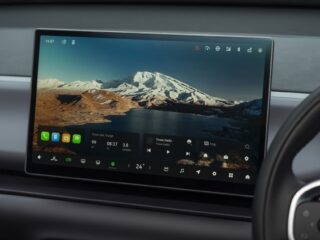
We’re comparing the Mazda CX-70 to the X5 that’s about to be phased out, and not the 2027 X5. BMW’s design philosophy for its SUV lineup is defined by a bold, monolithic exterior presence. The brand achieves this through sharper body lines, reimagined kidney grilles, and expansive surfaces — a deliberate contrast to previous-generation models that pursued a minimalist aesthetic. Inside, the approach prioritizes a decluttered cabin where traditional switchgear is largely replaced by digital surfaces centered on the curved infotainment display and subtle ambient lighting.
Premium Features Standard For Less Than $45,000


The 2026 Mazda CX-70 is offered in seven distinct configurations for the U.S. market, with base MSRPs starting at $42,250 for the 3.3 Turbo Preferred and scaling up to $56,670 for the 3.3 Turbo S Premium Plus. The electrified PHEV SC and SC Plus models occupy the middle bracket at $44,250 and $47,250, respectively, while all models require a $1,455 destination and delivery fee. Standard comfort and convenience features across the line include a 12.3-inch center display with Alexa Built-in, wireless Apple CarPlay and Android Auto, a power sunroof, and heated front seats.
The Premium and Premium Plus trims add upscale amenities such as a 12-speaker Bose Centerpoint surround system, a 360-degree view monitor, a hands-free power tailgate, and ventilated front seats with Nappa leather. The high-output S trims further elevate the experience with a 12.3-inch fully digital gauge cluster, driver seat memory, and signature LED lighting, while the flagship Turbo S Premium Plus features exclusive tan quilted Nappa leather, a suede-wrapped dashboard, and a 150-watt cargo area power outlet.
The CX-70 Is An SUV You And Your Wallet Can Depend On

CarEdge offers some reassurance here. According to CarEdge, the CX-70 should cost around $8,199 for maintenance and repairs during the first ten years of ownership, marginally beating the segment average by $33. There is also a 22.65 percent chance that it will require a major repair during that period — again marginally better than its rivals.
The stark difference emerges when you compare those ownership costs to the BMW X5, which will cost more than twice as much in repairs and maintenance. CarEdge puts the X5 at $19,460 for the first ten years — $7,007 more than the industry average. There is also a 56.41 percent chance the X5 will require a major repair during that time, which is 18 percent worse than the industry average. Over the long run, the CX-70 is the easier and cheaper vehicle to own.
340-HP Performance That Rivals The BMW X5

The 2026 Mazda CX-70 features a rear-biased i-Activ all-wheel-drive architecture paired exclusively with an eight-speed automatic transmission, though its performance profile varies significantly across three distinct powertrain calibrations. The entry-level 3.3 Turbo models feature a 48-volt mild-hybrid straight-six producing 280 horsepower and 332 pound-feet of torque. For buyers who prioritize performance, the high-output 3.3 Turbo S variants use a more aggressive tune of the same engine to produce 340 hp and 369 lb-ft of torque on premium fuel, enabling a 0–60 mph sprint in 6.5 seconds.
Alternatively, the PHEV model pairs a 2.5-liter four-cylinder engine with a 68-kW electric motor for a total system output of 323 hp and 369 lb-ft of torque. The PHEV is the quickest off the line with a 0–60 mph time of 5.9 seconds. Mazda electronically limits the top speed of these utility vehicles to 130 mph.
Impressive Fuel Consumption Returns

Opting for the entry-level turbocharged variant yields an EPA-estimated fuel economy of 24/28/25 MPG on the city/highway/combined cycle. Upgrading to the Turbo S changes only the city figure, to 23 MPG. With an 18.5-gallon fuel tank for the Turbo and a 19.6-gallon tank for the Turbo S, range estimates come in at approximately 462 miles for both engines.
The Turbo S model will cost you $3,750 more in fuel over five years, $2,250 in fuel for the year, and $3.76 to drive 25 miles, with an estimated $70 to fill the tank. The CX-70 PHEV is the model to go for if fuel savings are a priority. It earns an estimated 56 MPGe combined rating from the EPA, along with an all-electric range of 26 miles, transitioning to 25 MPG combined once the battery is depleted. This model features an 18.4-gallon tank and a total gas-electric range of 490 miles. You’ll still spend $1,250 more on fuel over five years and $1,750 on gas and electricity over a year. You can also expect to spend $2.23 to charge the battery, $3.76 to drive 25 miles on gasoline, and $69 to fill the tank.
CX-70 Reliability: Early Issues vs. Long-Term Value

While Mazda is generally known for high build quality, the initial rollout for the CX-70 and CX-90 has been marked by several significant software-related recalls. These have predominantly affected the electrical systems, powertrain control modules, and hybrid drivetrain components.
Owners have reported hybrid system malfunction warnings that trigger alarming dashboard alerts and leave vehicles in limp mode, necessitating dealership visits. Because Mazda does not utilize over-the-air updates for many of these critical systems, owners have been required to visit service centers for software patches — a primary driver of customer frustration and the model’s weaker reliability perception. The real surprise, however, comes when you calculate what these potential issues actually cost compared to guaranteed BMW maintenance expenses.
Sources: Mazda, EPA, Edmunds, J.D. Power, CarEdge, and iSeeCars.

Related posts




Latest Post


No Comments