
This Dodge Charger Will Hunt Mustangs For Breakfast And Demons For Dinner
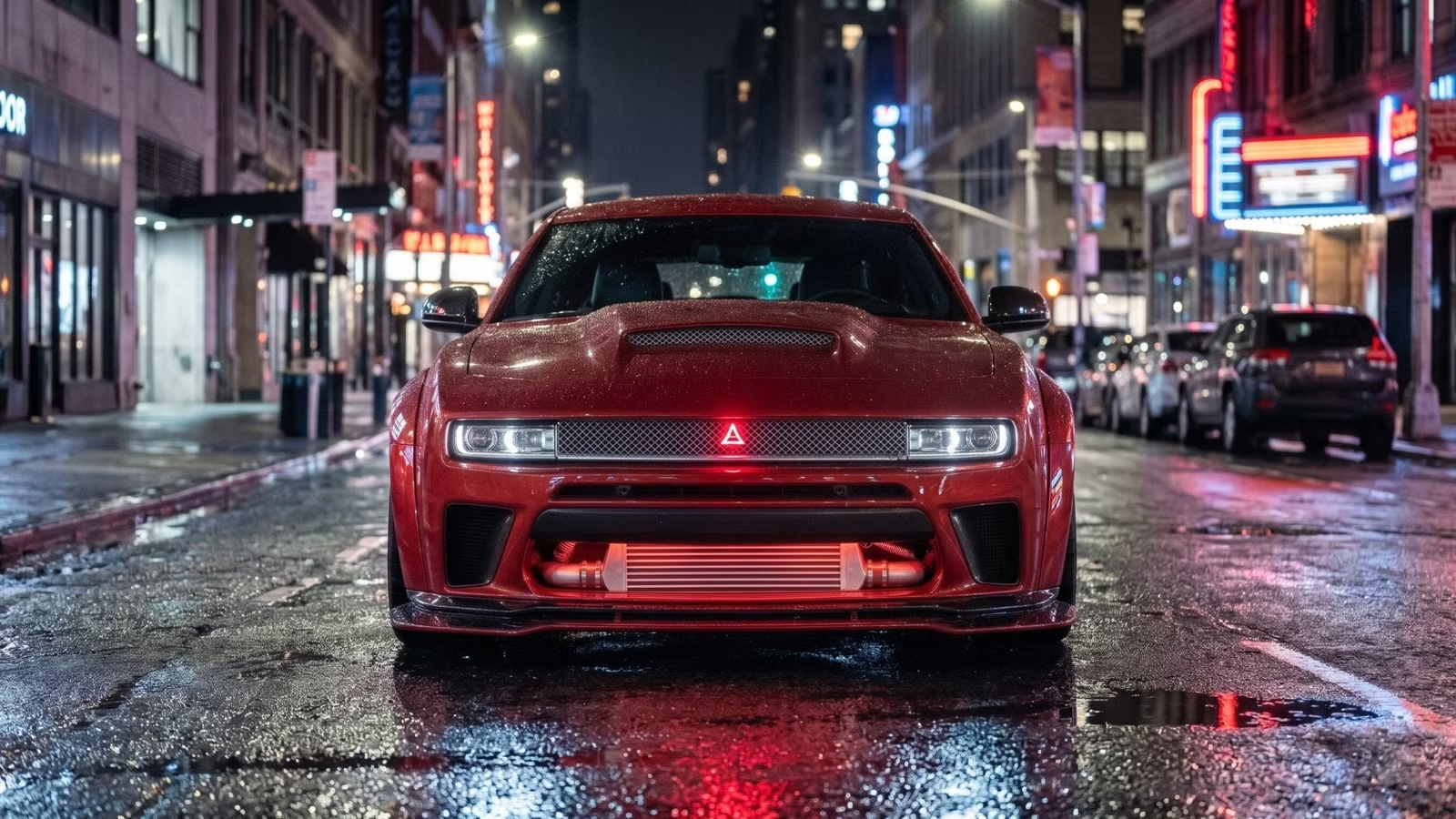
The eighth-gen Dodge Charger is an incredible machine. We here at TopSpeed have had the pleasure of test-driving both the EV and the inline-six version of it, after which we were impressed by its ability as a genuine sports car, despite not having a V8. Performance aside, the eighth gen brought with it a more classic styling that stands in contrast to where many thought design was going, following the sixth- and seventh-gen evolutions. While it does look good, we rendered a more aggressive SIXPACK variant, which we think a performance car carrying the iconic muscle car name should look like.
Blending Three Generations And 20 Years Of Design Into One Awesome Concept

Our render brings back a few elements from the sixth and seventh generation and blends them with the current design language. Though it sacrifices some of the eighth-gen’s retro Charger styling, it replaces it with brutish muscle more akin to the modern Charger, which began when the sixth gen returned in the mid-2000s and the modern muscle car wars ignited. The most obvious of these design reinterpretations are the contours on the side that lead up to fender scoops, the bar taillight, and the broader rear end.
The grille and headlights are among the best examples of seventh- and eighth-gen styling blending, with the slim headlights and sharp nose of the new Charger mixing in with the muscular jaw of the seventh. Additionally, the wheel arches have been restored to their former, beefier, glory.
The hood actually takes from the sixth-gen SRT8 model, as its hood scoop/bulge is not flanked by deep ducts, as it is on the seventh gen. This is a good example of our render blending the sixth gen with the eighth gen, as the hood’s overall shape and contouring more resemble the current Charger, while the hood scoop alone comes from the sixth generation’s SRT8 model.
Walking Around Reveals More Iconic Details From A Model Gone Too Soon

From the side, we even get hints of the Challenger, thanks to the downward angle of the hood’s nose, though the straight lines that span bow to stern are undoubtedly Charger, as the Challenger is more curvaceous. Head-on, we also get mild Challenger vibes, though that could also just be the eighth-gen Charger styling shining through, as it took on the now-discontinued Challenger’s face when it entered its current generation. The rear-end styling draws the most seventh-gen inspiration, with the broad shoulders, bar taillight, and ducting on the lower corners.
Another interesting detail regarding the rear end is the duckbill spoiler, which neither the sixth- nor seventh-gen had. Both the sixth and seventh had spoilers, though they were low-profile lip spoilers rather than duckbills. The Challenger had a small duckbill spoiler, but our render is more akin to an aftermarket unit rather than anything that has come from a factory Charger, at least in recent memory. That said, it integrates the seventh-gen spoiler’s shape into the prominent duckbill, again incorporating the Charger’s most recognizable features.
Carbon Fiber Aero Elements That No Factory Charger Has Ever Worn

Apart from its real-life counterparts’ design similarities, our render brings elements that aren’t found on any of the previous models, most notably the aggressive aero elements. The seventh-gen Charger SRT Hellcat Widebody featured a widebody kit that pumped up the attitude, but it wasn’t so much aimed at aero as it was at increasing its muscular appeal. Our render adds a deep carbon fiber splitter, a prominent rear diffuser, and aero side skirts that give it aftermarket vibes. Furthering the tuned-up aura is a wide-open fascia with an intercooler visible under the grille.
While the seventh-gen did have contours on the side, they didn’t end at front fender scoops, which our render does. These aggressive scoops set in carbon fiber also coordinate with the aero elements mentioned, while giving the profile more contrast. On a side note, owners of seventh-gen Chargers can buy aftermarket fender scoops to glue onto their car, but we wouldn’t recommend that, as it could damage the exterior and the result looks cheap.
TopSpeed’s Take
Is This The Charger We Should Have Gotten?

In all honesty, the eighth generation’s styling is amazing. No argument. It calls back numerous elements from Dodge’s past that many enthusiasts thought were long forgotten. That said, it did deviate from the design evolution set forth by the sixth and seventh generation, instead opting to tone down the aggressive muscle sedan into a slender, retro interpretation. This isn’t entirely a bad thing, as it’s a nostalgia trip comparable to a factory restomod, if you squint.
The main issue with the new Charger that enthusiasts aren’t happy with is the lack of a Hemi. While the high-output Hurricane inline-six is much more impressive than it is given credit for, the sudden demise of arguably the most dominant V8 lineup in modern muscle car history is a wound that was not made less painful when the eighth gen debuted as an EV with fake exhaust notes. With that in mind, if the Charger had arrived wearing our render’s design, the lack of a V8 would likely land it in the same spot it’s in now.

Related posts



Latest Post


No Comments