
Alfa Romeo’s Forgotten Supercar Is A Rare Ferrari And Maserati Love Child
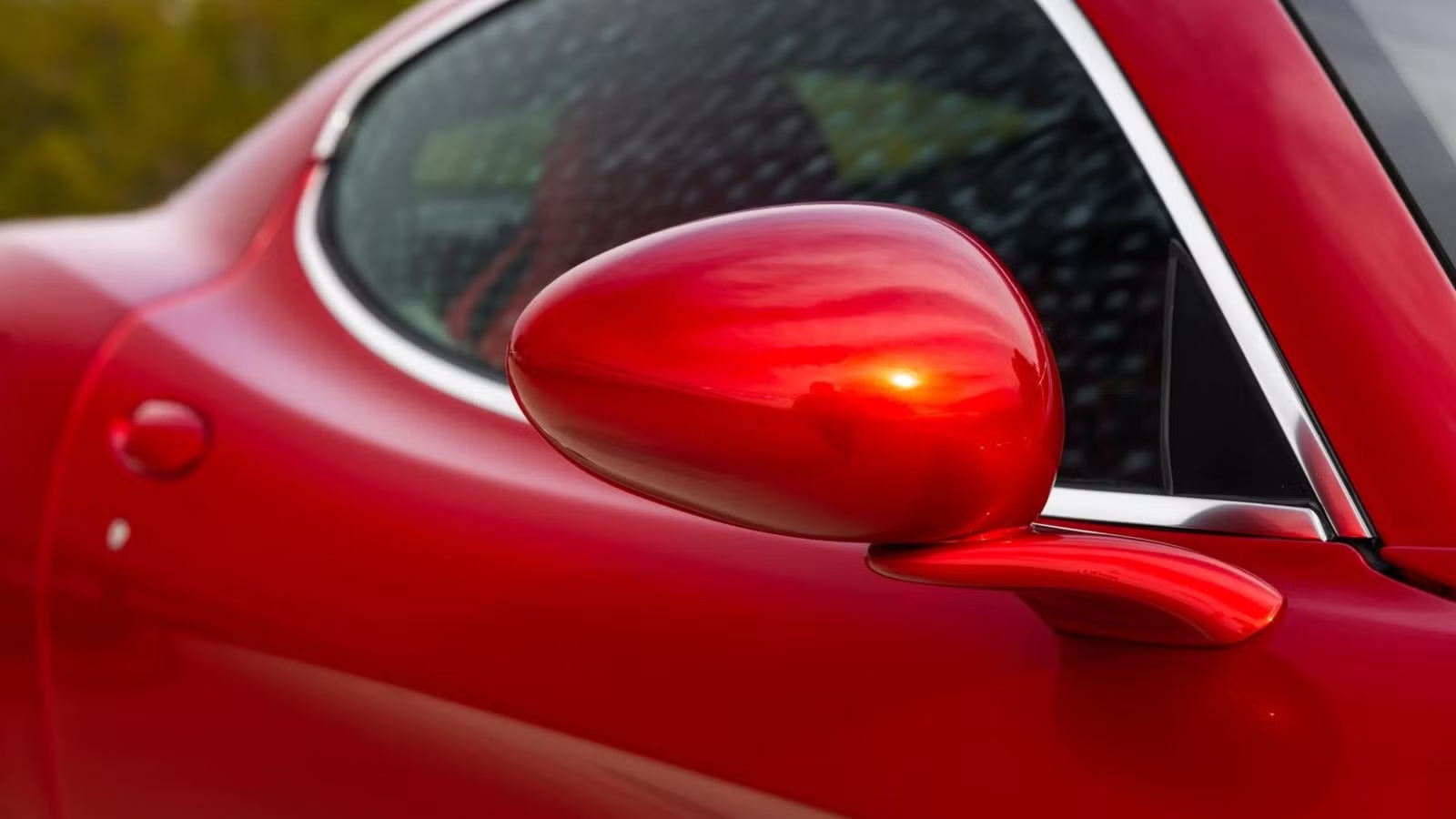
Alfa Romeo may be best known today for its sharp-looking sedans and SUVs, but the brand’s history runs far deeper than crossovers and four-doors. For enthusiasts who know where to look, there is one chapter in the Alfa story that stands above the rest — a genuine, no-compromises supercar that the brand built when it still had something to prove on the world stage.

Before market pressures pushed Alfa Romeo toward more practical offerings in the early 2010s, the Italian marque produced an all-out supercar unlike anything it has made since. Powered by a V8 co-developed by Ferrari in Maranello and Maserati, this flagship Alfa still looks like a design masterpiece — and remains one of the most underrated supercars of its era.
The Alfa Romeo 8C Is The Italian Brand’s Greatest Supercar
Specs
|
Engine |
 89 autotech 4.7-liter V8 |
|
Transmission |
6-speed automated manual |
|
Power |
444 hp |
|
Torque |
354 lb-ft |
|
Top Speed |
181 mph |
|
Drivetrain |
Rear-wheel drive |
|
Number produced |
1000 |
Source: Alfa Romeo
The Alfa Romeo 8C was first shown to the public in 2003 as a concept car. It caught everyone’s attention straight away, and it’s easy to understand why. The concept had absolutely gorgeous styling that harked back to the Alfa Romeos of the 1950s and 1960s. It was originally just a design exercise, but a few years later Alfa Romeo announced that it was actually going to put the 8C into production. The production version looked barely any different from the original concept — something that rarely ever happens with concept cars. Only 1,000 8Cs were ever produced. 500 of them were the coupe, while another 500 were an open-top Spider variant. This means each of these is rarer than the Porsche 918 Spyder.
All 8Cs were powered by the same 4.7-liter V8 engine — a perfect fit for the car in every sense. Not only did it look absolutely fantastic under the hood, but thanks to that classic V8 note it sounded the part as well. That engine propelled the 8C from 0–62 mph in 4.2 seconds and on to a top speed of 181 mph, making it fast enough to run with virtually any supercar of its day while looking considerably more dramatic than most of them.
The Alfa Romeo 8C Isn’t Perfect
While everyone loved the 8C’s incredible styling and V8 soundtrack, it wasn’t a perfect sports car. There are some people who feel like the Alfa Romeo 8C missed the mark a little bit. Its handling reportedly wasn’t the best, and it gained a reputation for reliability problems — not entirely surprising given the brand’s historical tendencies. That might not matter so much, though, to the kind of buyers the 8C was aimed at. It looks absolutely gorgeous, and if you don’t drive it very often, the handling and reliability shortcomings won’t be as much of a bugbear.
The 8C Had The Heart Of A Ferrari
Ferrari F136 V8 Specs
|
Capacity |
4.2-4.7 liters |
|
Power |
385-597 hp |
|
Torque |
333-398 lb-ft |
At the heart of the Alfa Romeo 8C was a pretty special engine: the F136 V8. A collaboration between Ferrari and Maserati, production of this engine began in 2001. That means it lasted for well over two decades — a remarkable feat for any production engine — and evolved significantly throughout its life.
It started off as a 4.2-liter unit producing 385 hp and 333 lb-ft of torque. This version of the engine appeared in the Maserati Coupe and Spider of the early 2000s, as well as the Quattroporte of the mid-2000s. By the time the Alfa Romeo 8C came along, it had grown to 4.7 liters and was producing 444 hp and 354 lb-ft of torque. The power increases wouldn’t stop there, either. The most powerful cars to ever use the F136 were the Ferrari 458 Speciale and Speciale A, which extracted 597 hp and 398 lb-ft of torque from the block.
This Engine Once Powered A Single-Seater Race Car
This Ferrari V8 didn’t just power road cars — it was also pressed into racing duty. It mainly powered Ferrari’s GT cars of the period, but on one notable occasion it found its way into a single-seater. That car was the Lola A1GP, built for the short-lived A1GP series and later used in the lower classes of the BOSS GP series. Lola proudly advertised the A1GP as being “powered by Ferrari,” and given the engine’s pedigree, it’s not hard to see why they led with that.
Who’s Still Using the F136 Today?
Ferrari stopped using the F136 engine in its road cars once production of the Ferrari 458 ended in 2015. Maserati continued using it right up until the end of the GranTurismo and GranCabrio’s production run in 2019. The little-known Belgian sports car manufacturer Gillet is the only entity still keeping this engine alive. A 4.2-liter version of the engine became the power plant of choice for the Vertigo.5 Spirit — the most expensive model Gillet makes — in 2009, and it remains the engine of choice for that car today. The Vertigo.5 Spirit also served as the basic platform for the Zagato Maserati Mostro concept car, a striking coachbuilt special built on its bones.
The 8C Shared A Lot With These Well-Loved Maseratis
The Alfa Romeo 8C didn’t just share DNA with the Ferraris of its day. It also had a great deal in common with a couple of well-loved Maserati models: the Maserati GranTurismo, the Maserati GranCabrio, and the Maserati Quattroporte. The most obvious shared element is that fantastic V8 engine, but the similarities run deeper than that. The 8C’s entire platform has quite a bit in common with the Maserati GranTurismo, including the automated manual transmission and the rear-wheel-drive layout. While it might seem like a shortcut for Alfa Romeo to source so many mechanical components from Maserati, it’s hard to argue with the logic. The Maserati GranTurismo is widely considered one of the finest cars the brand has ever produced — so borrowing liberally from a proven, well-regarded sports car makes a lot of sense.
Several Special Cars Were Based On The 8C

You might think that the regular Alfa Romeo 8C is special enough as it is. Well, there were clearly some people who thought the platform could go further, as several special cars were built on its foundation. These one-off and coachbuilt creations were the Alfa Romeo Pandion, the Alfa Romeo BAT 11, and the Alfa Romeo Disco Volante by Touring. The BAT 11 was the fourth car in a series of “BAT” concept cars, all of which feature incredible styling highlighted by very distinctive fins. The Pandion was a futuristic-looking supercar with striking design elements, including rear-hinged doors that opened in what appears to be a mirror image of scissor doors.
The most well-known of these special cars, though, has to be the Alfa Romeo Disco Volante by Touring. These cars were a design continuation of the original Disco Volante of the 1950s, which was a collaboration between Alfa Romeo and Carrozzeria Touring. Touring was again involved with the design of the modern Disco Volante. Unlike the BAT 11 and the Pandion, this car did actually see a limited production run. Only 7 Disco Volantes were produced, and they’re likely worth millions today.
How Much Is An Alfa Romeo 8C Worth Today?
So, after reading all of this, you might be curious about what an Alfa Romeo 8C will cost you on the current market. Considering that it’s a limited-run supercar from the late 2000s, it’s not going to be cheap. Values fluctuate, but both the coupe and Spider variants have consistently traded well into six figures, with strong examples regularly commanding upward of $280,000–$300,000 depending on condition and provenance.
Whichever way you look at it, that’s a lot of money. It’s the kind of purchase that only a serious Alfa Romeo enthusiast would want to take the plunge on — especially when you factor in that the 8C really isn’t a perfect supercar. But it is the greatest supercar Alfa Romeo has ever made, and it may even rank among the greatest cars the brand has produced, full stop. If you have that kind of money to spend on a collectible future classic and you love Italian sports cars, owning an 8C will certainly make you stand out from the crowd.
Source: Alfa Romeo, Hagerty.

Related posts



Latest Post


No Comments