
There Are Only Four Naturally Aspirated Sports Cars That Rev Higher Than A Corvette Z06 In 2024
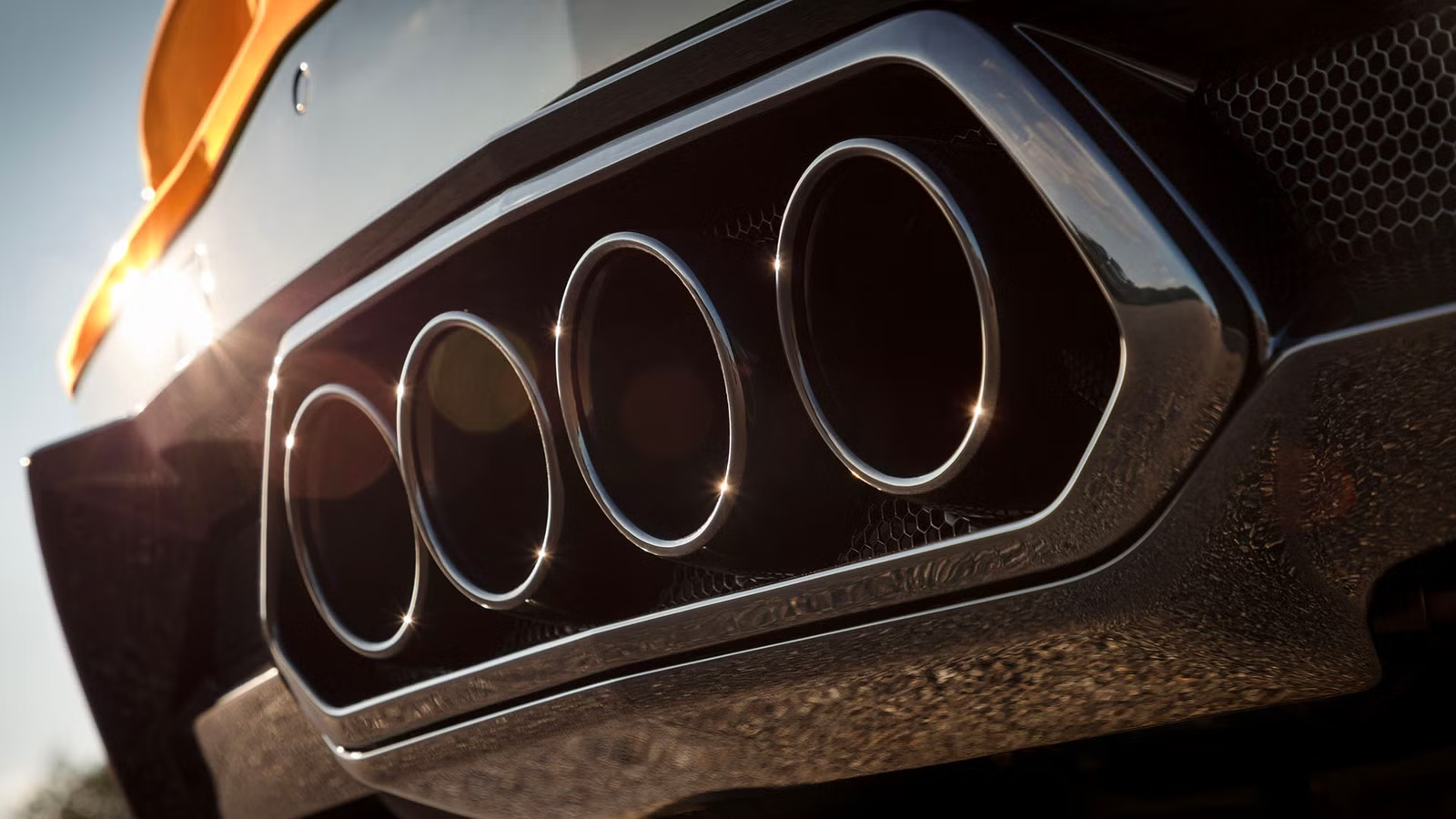
Chevrolet’s C8 Corvette ZR1 and its 1,064 horsepower tend to dominate the conversation, but that spotlight can unfairly overshadow one of the most thrilling naturally aspirated engines ever bolted into a production car. The Z06 is not simply a budget-friendly ZR1 for drivers who can live without 233 mph — it is a fundamentally different machine. The ZR1 relies on a twin-turbocharged LT7 5.5-liter V8 producing a useful 828 lb-ft of torque and an 8,500-rpm redline to make its power.The Corvette Z06, on the other hand, uses an LT6 5.5-liter V8 that, while sharing many key components with the LT7, has its own distinct character. The LT6 is a V8 engine that loves to rev even harder than the LT7, screaming to an 8,600-rpm redline — a figure perfectly suited to the Z06’s track-focused personality. It features a lightweight flat-plane crankshaft and a full racing-style dry-sump oiling system, delivering 670 horsepower and launching the Z06 to 60 mph in a blistering 2.6 seconds.

Few naturally aspirated production cars rev as high as the Z06 Corvette — and HotCars has tracked them down. Here are four NA cars that can spin their engines higher than the Z06, listed in order from lowest to highest redline.
Audi R8 V10 Performance: 8,700 RPM
Audi R8 V10 Specs
|
Engine |
 73 autotech 5.2-liter V10 |
|
Power |
612 hp |
|
Torque |
428 lb-ft |
|
0 – 60 mph |
3.1 seconds |
|
Redline |
8,700 rpm |
Source: Audi
There was a time when the Audi R8 was the new kid on the block, with everyday usability that made it as groundbreaking in the supercar world as the Acura NSX was when it arrived in the early ’90s. In an era increasingly defined by hybrid and electric supercars, the R8 and its thunderous V10 can feel delightfully old-school — which is precisely why enthusiasts love it. This R8 V10 represents the final chapter for Audi’s gas-powered supercar in this form; its next iteration will almost certainly be heavily electrified, so it’s worth savoring every rev while you still can.
The 2024 V10 R8 Was The Last Of The Line For Audi’s Gas-Powered Supercar
Mounted amidships is the free-revving 5.2-liter V10, which slams into its limiter at 8,700 rpm. Where the twin-turbocharged V10 RS6 of a decade and a half ago needed a moment to build boost before surging forward, the naturally aspirated R8 responds instantly, with power available at any point in the rev range. The V10 engine is electronically limited at 8,700 rpm. Check out the differences, and similarities, between the R8 and the Z06 Corvette.
Porsche 911 GT3 And GT3 RS: 9,000 RPM

Porsche 911 GT3 Specs
|
Engine |
4.0-liter six-cylinder naturally aspirated |
|
Power |
503 hp |
|
Torque |
332 lb-ft |
|
0 – 60 mph |
3.7 seconds (6-speed GT Sport Manual Transmission) |
|
Redline |
9,000 rpm |
Source: Porsche
Arriving in 1999 with a 3.6-liter naturally aspirated boxer engine derived from the 911 GT1 race car, the original 911 GT3 was an instant classic, and it was built to last. It was also the first road-legal car to lap the Nürburgring Nordschleife in under eight minutes, a feat accomplished by motorsport legend Walter Röhrl.
Over the past quarter century, Porsche hasn’t strayed far from that original recipe, but the ingredients are considerably spicier today. The current 911 GT3 features double-wishbone front suspension borrowed directly from the 911 RSR race car and an adjustable swan-neck rear wing with multiple track settings. Its engine is a 4.0-liter six-cylinder naturally aspirated unit producing 503 horsepower and 332 lb-ft of torque.
Today’s GT3 Is A Minute Faster Than The Original Around The Nürburgring
The result is a car dramatically quicker than its ancestor: Porsche test driver Lars Kern lapped the Nürburgring Nordschleife in 6 minutes 59.927 seconds. The stripped-out, tuned-up Porsche 911 GT3 RS pushes things even further, with 518 horsepower from the same 4.0-liter high-revving naturally aspirated six and, like the GT3, a 9,000-rpm redline.
Bugatti Tourbillon: 9,000 RPM

Bugatti Tourbillon Specs
|
Engine |
8.3-liter V16 naturally aspirated/ three electric motors |
|
Power |
1775 hp (combined) |
|
Torque |
664 lb-ft torque (V16 engine) |
|
0 – 60 mph |
1.9 seconds |
|
Redline |
9,000 rpm |
Source: Bugatti
Over at the Bugatti website, the Tourbillon carries the tagline ‘Made For Eternity.’ Powered by a naturally aspirated V16 and dripping with enough opulence to rival the Palace of Versailles, it is a bold statement in an age of rapid electrification. Despite the relentless march of all-electric hypercars, Bugatti chose to equip the Tourbillon with an all-new 8.3-liter naturally aspirated V16 developed in partnership with Cosworth. Electrical assistance is also on board, though the V16 alone is hardly short of motivation.
You Can Also Drive The V16 Bugatti On Electric Power Alone
Three electric motors and a 25 kWh battery allow this 4,399-pound leviathan to cruise in EV mode for up to 37 miles. The V16 engine alone generates 1,000 hp at 9,000 rpm and 664 lb-ft of torque, while total system output reaches 1,775 horsepower. Remember when the Veyron’s 1,000 horses felt like science fiction?
Then there is the acceleration. The Tourbillon sprints to 60 mph in 1.9 seconds and clears 124 mph in under five seconds. The V16 is also a genuine screamer, with a 9,000-rpm redline under full throttle.
You’ll Need Millions To Buy A Bugatti Tourbillon, But There Is A Cheaper Option
You may have already guessed, but all this opulence doesn’t come cheap. The Bugatti Tourbillon is expected to start around $4,600,000. However, you can get a Tourbillon for just $310,000 — the Bugatti Chiron Tourbillon watch, that is — complete with a tiny V16 movement that runs for 20 seconds.
Ferrari 812 Competizione: 9,500 RPM

Ferrari 812 Competizione Specs
|
Engine |
6.5-liter V12 naturally aspirated |
|
Power |
838 hp |
|
Torque |
510 lb-ft |
|
0 – 60 mph |
2.8 seconds |
|
Redline |
9,500 rpm |
Source: Ferrari
For all its glorious mid-engined supercars, Ferrari has always kept a front-engined V12 barnstormer at the heart of its lineup. The naturally aspirated 812 Competizione is arguably the most extreme front-engined Berlinetta ever to emerge from Maranello, honing the already ferocious 812 Superfast into something even sharper.
Its 6.5-liter V12 screams to 9,500 rpm, with 838 horsepower and 510 lb-ft of torque on tap. The 812 Competizione reaches 60 mph in 2.8 seconds and 124 mph in an incredible 7.5 seconds. The car is packed with high-performance details throughout, from the transverse groove and carbon fiber blade integrated into the hood to the vortex generators on the rear screen. Independent rear steering further sharpens grip and response.
Sources: Chevrolet, Lamborghini, Audi, Bugatti, Ferrari.

Related posts



Latest Post


No Comments