
The Middleweight Sport Bike That Teaches You More Than A Superbike Ever Could
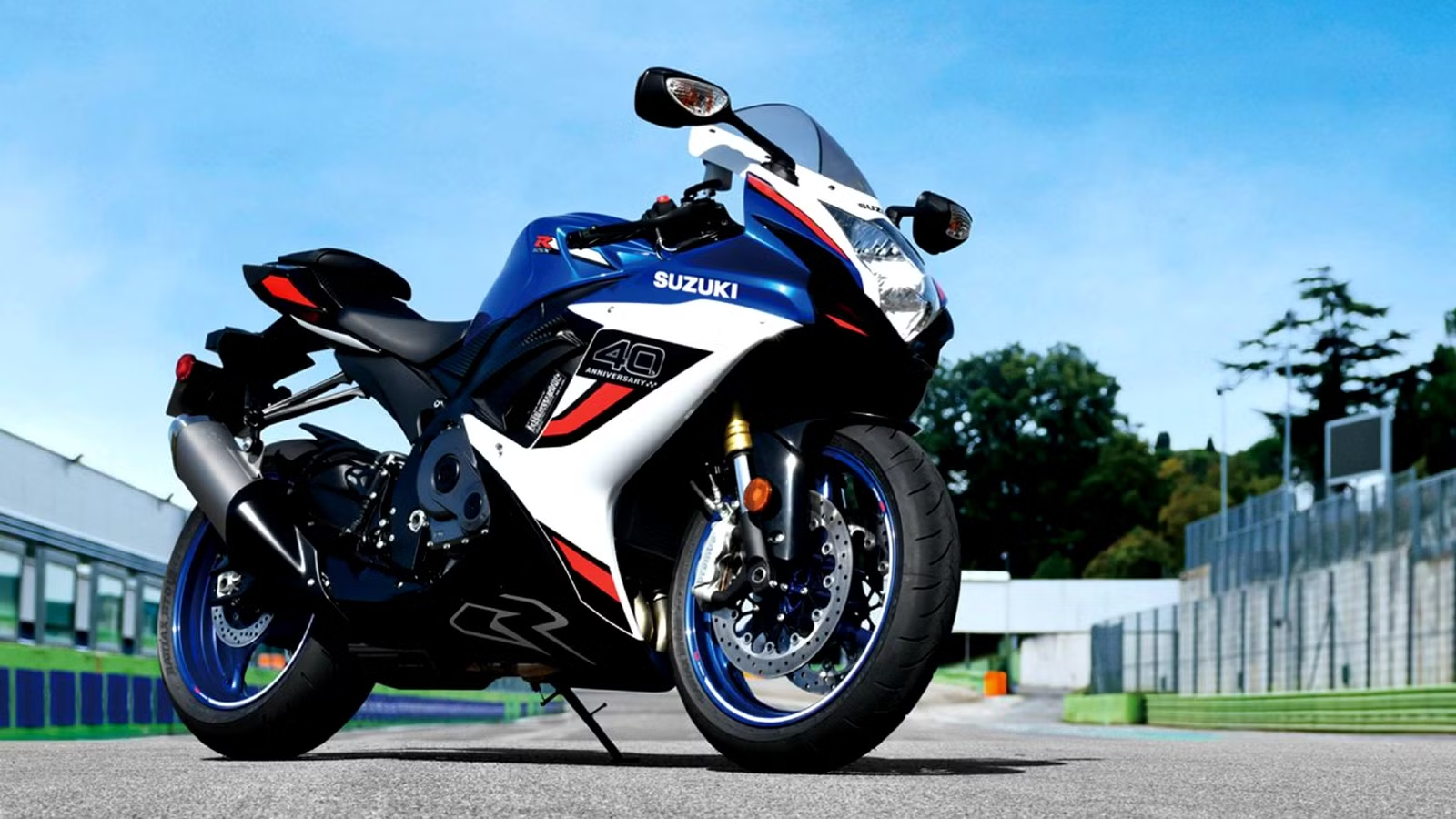
Modern sport bikes have become extraordinarily capable machines, offering enormous horsepower, sophisticated electronics, and performance that most riders will never fully exploit. However, there’s something especially rewarding about a motorcycle that encourages you to develop your skills rather than simply relying on technology to make you faster. The best examples offer an experience that becomes increasingly satisfying as your technique, confidence, and understanding improve. If you want that in a middleweight, Suzuki’s iconic GSX-R is what we recommend.
The Best Sport Bikes Don’t Need Horsepower For Enjoyment

There’s a difference between riding a fast motorcycle and riding a motorcycle well. Modern liter-class superbikes can produce staggering acceleration with relatively little effort, while their electronic systems help manage traction, braking, and power delivery. These technologies are undoubtedly impressive, but they also mean riders can access tremendous performance without necessarily understanding everything happening beneath them. A more involving motorcycle puts greater emphasis on the decisions made by the person behind the handlebars.
That involvement becomes particularly apparent when riding through corners. Braking at the right moment, selecting the appropriate gear, carrying speed through the apex, and applying the throttle smoothly all contribute to a successful exit. Getting these elements right requires practice, and the rewards become more apparent as your technique develops. A motorcycle with balanced performance and predictable handling gives you the opportunity to refine these skills without constantly managing an overwhelming amount of power.
Why A Balanced Midweight Hits The Nail On The Head

A motorcycle’s performance depends on much more than its engine output. Chassis geometry, suspension behavior, weight distribution, and braking performance all influence how confidently you can ride it. A well-balanced supersport allows you to focus on maintaining momentum and finding smoother lines rather than constantly correcting your mistakes. It encourages consistency, which is particularly valuable during track days when shaving time off a lap often comes down to making small improvements in several different corners.

There’s also the question of usable performance. A 600cc supersport typically demands plenty of revs to deliver its strongest acceleration, while a 1,000cc superbike can produce more power than most situations require. Somewhere between these extremes lies a compelling combination of manageable dimensions and a broader spread of usable torque. It’s an approach that has become increasingly uncommon in the supersport world, but one manufacturer continues to offer precisely this formula.
The Suzuki GSX-R750 Is A Masterclass In Rider Engagement

The Suzuki GSX-R750 continues to occupy a distinctive position in the sport bike market. Its defining characteristic is a 750cc inline-four engine packaged within a compact chassis comparable to that of a 600cc supersport. This gives riders stronger acceleration than a traditional middleweight four-cylinder without taking on the size and power of a liter-class machine. It’s a combination that has defined the GSX-R750 for decades, and the latest version maintains that approach with an MSRP of $13,549.
The engine is a liquid-cooled, DOHC four-cylinder with a 70.0mm bore, 48.7mm stroke, and 12.5:1 compression ratio. Fuel injection uses eight injectors, while a four-into-one stainless steel exhaust incorporates a titanium muffler and an exhaust valve designed to improve low- and midrange response. Power reaches the rear wheel through a close-ratio six-speed transmission, chain final drive, and a wet multi-plate clutch with a back-torque-limiting function.
A Chassis That Rewards Precision And Commitment

The GSX-R750’s twin-spar aluminum frame provides the foundation for its precise handling, complemented by a fully adjustable 41mm inverted Showa big-piston fork and adjustable rear shock with a remote reservoir. Its 54.7-inch wheelbase helps deliver agile steering while maintaining stability at higher speeds. At 419 pounds fully fueled, the Suzuki remains light enough to respond readily to rider inputs, making it particularly satisfying when transitioning between corners or adjusting your line through a bend.
Braking performance comes courtesy of dual 310mm front discs with four-piston Brembo monobloc calipers and a single-piston Nissin rear caliper. The motorcycle rolls on 17-inch wheels wearing 120/70 front and 180/55 rear tires. Its 31.9-inch seat height, 5.1 inches of ground clearance, and three-way adjustable foot pegs complete a decidedly sporty package. There’s also a 4.5-gallon fuel tank, while the compact ergonomics allow riders to shift their body position when cornering.
Old-School Engineering Makes Every Improvement More Rewarding

One of the GSX-R750’s defining qualities is its straightforward approach to electronics. Riders get two selectable engine maps, a programmable shift light, and an analog tachometer paired with an LCD that includes a lap timer. However, Suzuki hasn’t equipped it with the comprehensive electronic rider aids found on newer superbikes. There’s no traction control, cornering ABS, wheelie control, or factory quick shifter, meaning throttle application, braking technique, and gear changes remain primarily the rider’s responsibility.
Of course, this also demands respect. The absence of modern electronic safeguards doesn’t make the motorcycle inherently better, and its performance still requires experience and restraint. What it does offer is direct mechanical feedback that makes your own improvements easier to recognize. As your braking becomes smoother, your cornering lines become more consistent, and your throttle control improves, the motorcycle becomes increasingly rewarding. Its capabilities haven’t changed, but your ability to use them has.
A Supersport That Has Stood The Test Of Time

The GSX-R750 traces its origins to 1985, and the current generation’s underlying architecture dates back to 2011. That longevity explains both its strengths and its shortcomings. There’s no full-color TFT dashboard, smartphone connectivity, or advanced electronic suspension. Even its lighting setup combines a halogen headlight with an LED taillight. The 2027 model is offered in Candy Daring Red or Metallic Matte Black No.2, while a separate 40th Anniversary Edition costs $13,749
.
Nevertheless, the GSX-R750 remains compelling because its appeal extends beyond outright performance figures. It’s powerful enough to challenge experienced riders, compact enough to encourage precise handling, and mechanically engaging enough to make developing good habits worthwhile. Newer motorcycles certainly offer more technology, but the Suzuki continues to make a convincing argument for mastering the fundamentals. The better you become at riding it, the more of its potential you’re able to enjoy.
Source: Suzuki Cycles

Related posts



Latest Post


No Comments