
BMW Chose A Hypercar Maker Over Battery Giants For Its New i7
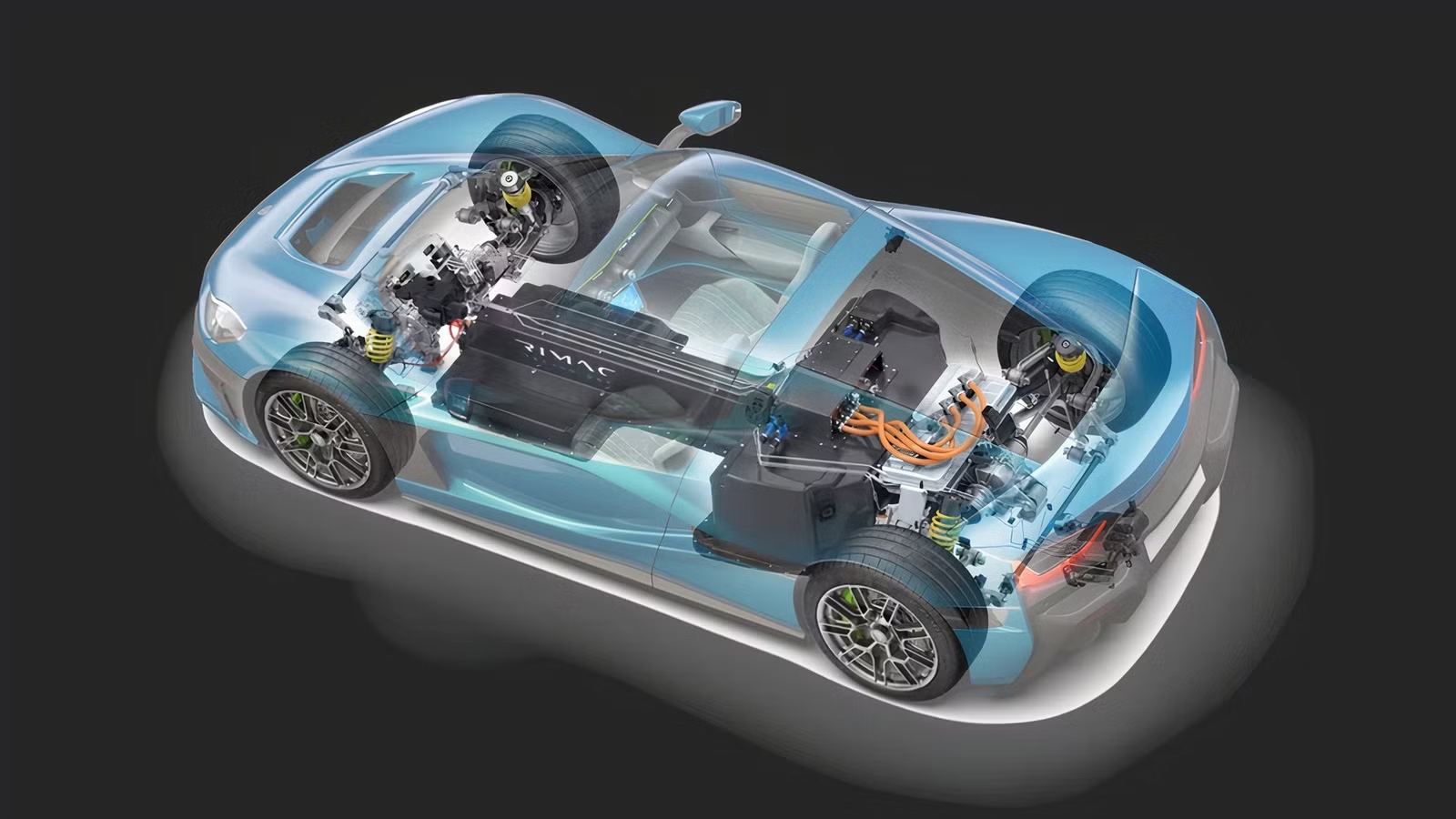
Rimac Group built its name on the Nevera, a 1,914-horsepower electric hypercar that can hit 60 mph in under 1.8 seconds. Now the Croatian company is building batteries for something far less exotic: BMW’s electric 7 Series. Mate Rimac confirmed to Automotive News this week that his company beat out larger, more established battery manufacturers, including Chinese suppliers, to win the contract for the facelifted i7’s battery pack.

That’s a genuinely unusual outcome. Chinese cell makers like CATL and BYD dominate EV battery production on cost and scale, and BMW isn’t a brand that can shrug off a higher price tag just because the name on the battery sounds cool. Rimac won anyway, and the way it did so says a lot about where BMW thinks the real battery fight is headed next.
How A Hypercar Company Out-Engineered The Battery Giants
According to Mate Rimac, BMW ran a genuine bake-off early in the i7 development cycle, contracting several battery manufacturers to build sample packs for evaluation before picking a winner. Rimac’s advantage wasn’t just technical. When BMW executives visited the company’s Croatian campus, they found the foundation and support pillars for a new production line already under construction. Rimac told them the i7’s battery would be built right there, which gave BMW confidence that scaled assembly would be ready the moment it was needed.

“To win that business, we had to be better than everyone on the market, both technically and commercially,” Rimac said. “This is especially true with batteries, where competing against China is not easy.” That’s not a small admission. Rimac is explicitly saying his company had to out-engineer and out-execute suppliers with far more manufacturing muscle behind them, and it worked.
Two More BMWs Are Reportedly Coming With Rimac Technology

The i7 isn’t a one-off. Rimac confirmed the partnership is expanding to two additional, unnamed BMW projects, though he declined to give specifics. Given that the current 7 Series and i7 share BMW’s Cluster Architecture (CLAR) platform with the 5 Series and i5, a facelifted i5 using the same Gen6 battery hardware seems like a logical next step. There’s also speculation, unconfirmed, that a revived electric BMW roadster could be in the mix, which would be a fitting home for some of the Nevera’s engineering DNA.
Rimac Group already supplies battery and e-motor technology to Hyundai and built the hybrid battery pack for the Porsche 911 Carrera GTS T-Hybrid, so BMW isn’t the first mainstream manufacturer to bet on the Croatian company. But landing a flagship sedan contract, with more work reportedly on the way, marks a real step up in scale for a company that still builds fewer than 150 hypercars a year.
What This Means For BMW’s Battery Strategy

BMW isn’t abandoning Chinese suppliers wholesale. The company just started building its own sixth-generation batteries in Shenyang, China, for Neue Klasse models sold there, using cylindrical cells with over 20% higher energy density and a cell-to-pack design that ditches the traditional module layer. But the i7 decision shows BMW is willing to pay for integration and reliability on its flagship models rather than defaulting to whoever offers the lowest cost per kilowatt-hour.

Related posts

Latest Post


No Comments