
Hyundai Just Slashed Nearly $10,000 Off Its Popular Electric SUV
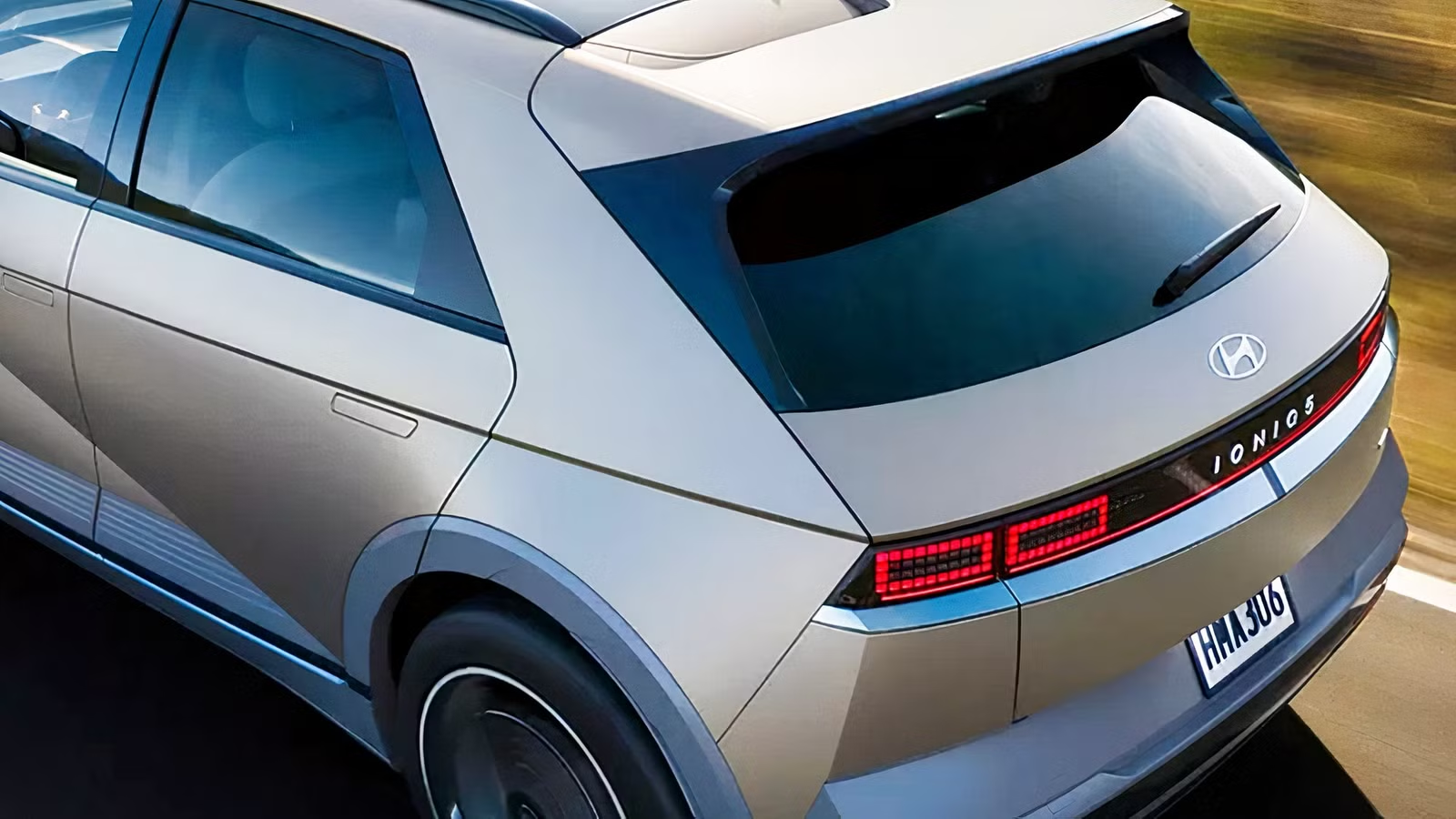
Hyundai’s current U.S. EV strategy centers on domestic assembly and aggressive portfolio expansion to regain market momentum. The automaker has shifted production of core models to its Georgia manufacturing hub to qualify for localized incentives and stabilize vehicle inventory.

Hyundai is also broadening its lineup beyond established hatchbacks by launching three-row flagships like the Ioniq 9. To offset shifting consumer demands, the brand combines substantial price realignments across the Ioniq range with extended hybrid availability. This dual-track approach protects overall market share while lowering purchase barriers for zero-emission vehicles.
Hyundai’s Aggressive EV Strategy Isn’t Paying Off
Through the first nine months of 2026, Hyundai’s U.S. electric vehicle sales experienced a severe downturn compared to the record-setting pace of 2025. The Ioniq 5 saw year-to-date sales fall 24 percent, capped by a sharp 53 percent drop in the third quarter alone. Sister models faced similar headwind pressure, with broader brand EV volumes reflecting a market-wide contraction.

This dramatic decline stems primarily from key structural market shifts. The expiration of the $7,500 U.S. federal EV tax credit in late 2025 created a massive buying pull-forward last year, creating artificially inflated baseline comparisons for 2026. Without tax subsidies, the price gap between EVs and hybrids widened significantly, leading price-sensitive consumer segments toward hybrid options.
Crucial Price Cuts For The 2026 Ioniq 5 Range

Hyundai has introduced significant price cuts for the 2026 Ioniq 5. The move reinforces its effort to increase EV adoption and market competitiveness. The price adjustments range from $7,600 to $9,800 across the lineup.
Hyundai’s pricing strategy for the 2026 Ioniq 5 highlights substantial MSRP reductions across the complete model range compared to 2025. Entry-level rear-wheel-drive variants saw pricing drop considerably, with the SE Standard Range decreasing $7,600 from $42,600 to $35,000, while the standard SE RWD fell $9,150 from $46,650 to $37,500.
The SEL RWD model received the largest overall price cut of $9,800, dropping from $49,600 to $39,800, and the top-spec Limited RWD decreased $9,225 from $54,300 to $45,075. Dual-motor all-wheel-drive variants received matching reductions. The SE AWD price dropped $9,150 to $41,000, down from $50,150, while the SEL AWD mirrored the SEL RWD with a $9,800 cut, pricing it at $43,300 compared to $53,100 previously. Off-road-focused XRT AWD models dropped $9,225 to $46,275, or $46,725 when factory-equipped with a tow hitch. Finally, the range-topping Limited AWD dropped $9,225 from $58,200 to $48,975.
How This Differs From The 2027 Model Year

The 2027 Hyundai Ioniq 5 maintains a simplified, accessible structure featuring five primary trim levels: SE Standard Range, SE, SEL, XRT, and Limited. Starting MSRPs begin at $35,250 for the entry-level SE Standard Range RWD, followed by the long-range SE at $37,750 and the SEL at $40,200. The rugged, off-road-oriented XRT trim carries a starting MSRP of $46,525, while the top-tier Limited trim starts at $49,125 for rear-wheel-drive variants. Key updates distinguishing the 2027 model year from 2026 involve minor feature reallocations and content shuffling across the lineup.
Roof side rails expand standard availability to the SEL trim rather than remaining exclusive to the XRT and Limited. Conversely, Hyundai restricted the HomeLink garage door opener strictly to the top-spec Limited trim, removing it from lower tiers. Additionally, the rear cargo area cover transitions from standard equipment on the Limited to an optional accessory across all trim levels. Hyundai also streamlined the exterior paint portfolio by discontinuing Gravity Gold Matte and Sage Silver Matte, while preserving standard NACS charge port integration and refined cabin ergonomics introduced during the prior year’s update.
The 2026 Hyundai Ioniq 5 Earns High Favor

According to J.D. Power, the Hyundai Ioniq 5 sits with a 75/100 consumer-verified overall score, which includes 75/100 for quality and reliability, 83/100 for the driving experience, 70/100 for resale, and 71/100 for the dealership experience. iSeeCars has not issued the model with a full evaluation, but it does signify a 7.0/10 retained value and 10/10 safety score. Over five years and 60,000 miles, you can expect the model to lose $20,042 or 57.3 percent of its value, which is on par with the rest of the midsize EV segment.
Hyundai’s Extensive Range Caters To All

The 2026 Hyundai Ioniq 5 range is structurally split by two battery sizes, including the 63.0-kWh Standard Range pack and the larger 84.0-kWh Extended Range pack. The single-motor, rear-wheel-drive base setup paired with the smaller battery produces 168 horsepower and 258 pound-feet of torque. This configuration does achieve a 0 to 60 MPH sprint in 8.5 seconds and has its top speed electronically limited to 115 MPH. This entry-level variant is not rated for towing.

Upgrading to the larger 84.0-kWh Extended Range battery while retaining rear-wheel drive bumps power output to 225 hp, while peak torque remains steady at 258 lb-ft. This mechanical upgrade reduces the 0 to 60 MPH acceleration time to 7.4 seconds. However, the top speed remains electronically governed at 115 MPH across the standard lineup to manage battery thermal efficiency. This variant is rated to tow up to 2,300 pounds when properly equipped.
Opting for the dual-motor, the all-wheel-drive configuration adds an electric motor to the front axle. This brings its combined system output to 320 hp and a robust 446 lb-ft. This layout drops the 0 to 60 MPH sprint time down to 4.4 seconds. Like the single-motor Extended Range model, the top speed remains limited to 115 MPH, and the maximum towing capacity holds steady at 2,300 pounds.
The Ioniq 5 Remains A Low-Cost EV

The base standard range model achieves a 29 kWh per-100-miles combined energy consumption estimate, but the smaller battery pack means that it is only likely to cover around 245 miles on a single charge. The EPA also estimates that this model will save you up to $8,250 in fuel costs over the course of five years. You’ll also find yourself spending $650 on electricity to keep it recharged every year and $1.09 to drive 25 miles.
Upgrading to the extended battery pack increases consumption to 30 kWh per-100-miles, but the trade-off is a more attractive 318-mile range estimate. You can expect to save $8,000 in fuel costs over five years, spend $700 on electricity every year, and $1.12 to drive 25 miles.

The dual-motor configuration with 19-inch wheels returns 32 kWh per 100 miles and 290 miles on a single charge. It features the same fuel savings and annual energy costs, but you will be spending $1.19 to drive 25 miles. Adding the 20-inch wheels has a big impact on these returns, with a 34 kWh-per-100-miles energy consumption average and 269-mile range estimate. You can expect to save $8,000 on fuel every five years and $800 on electricity every year. This model costs $1.29 to drive 25 miles.
The XRT is the least efficient model, which shouldn’t really come as a surprise. This model returns 34 kWh per 100 miles on the combined cycle and covers 259 miles on a single charge. Expect to spend $1.34 to drive 25 miles. All battery packs also take 18 minutes to recharge from 10 to 80 percent via DC Level Three fast charging.
Sources: Hyundai, Cox Automotive, J.D. Power, iSeeCars, and the EPA.

Related posts




Latest Post


No Comments