
The Touring Bike That Gives Riders Luxury Without A Luxury-Bike Price
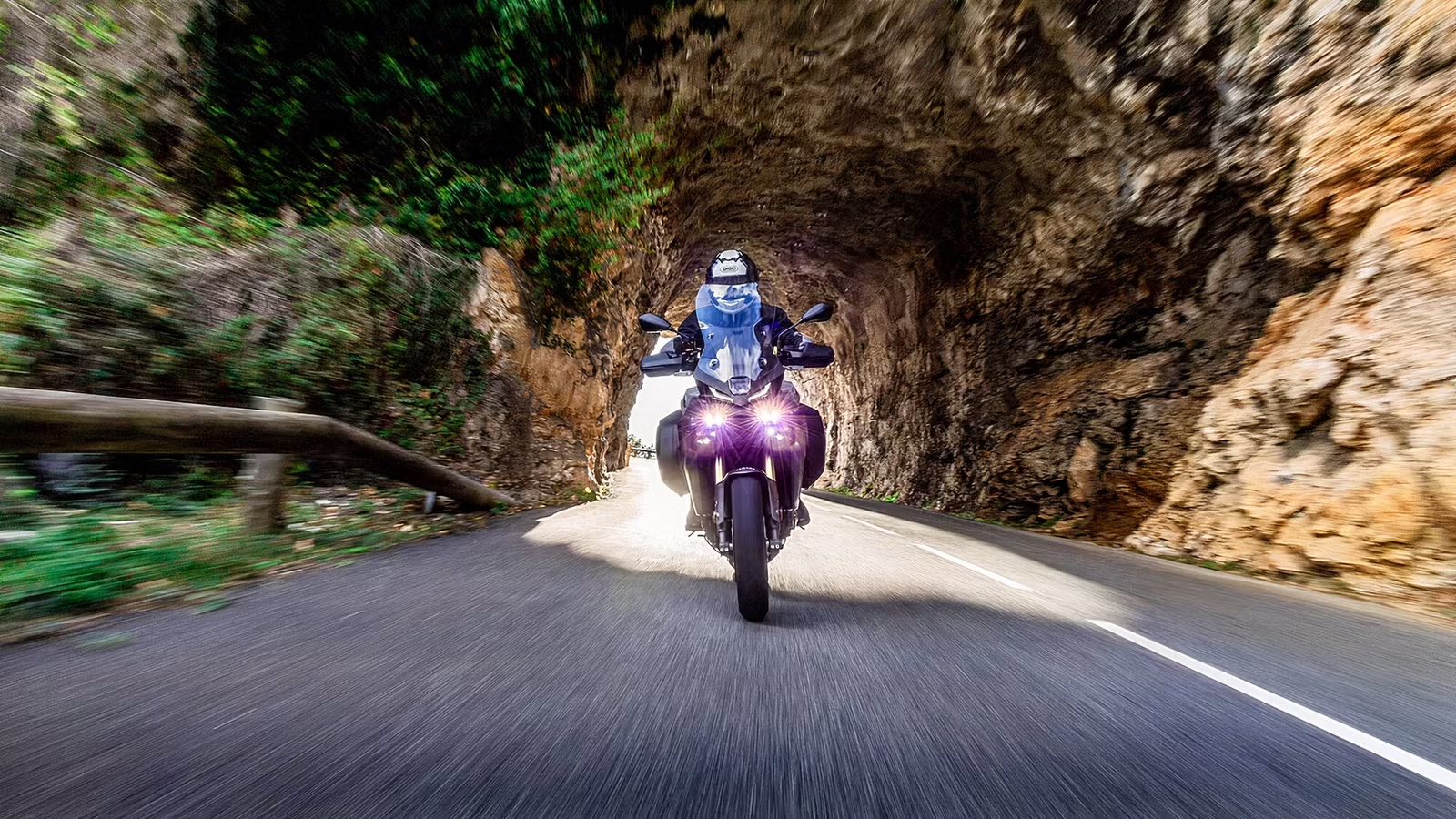
Of late, sport-touring motorcycles have developed a price problem. Motorcycles built to make long journeys easier increasingly carry the technology, complexity, and asking prices of flagship luxury machines comparable to cars. The class still promises a way to cover serious distances without sacrificing an entertaining ride, but buyers are having to spend an extraordinary amount of money to get there.
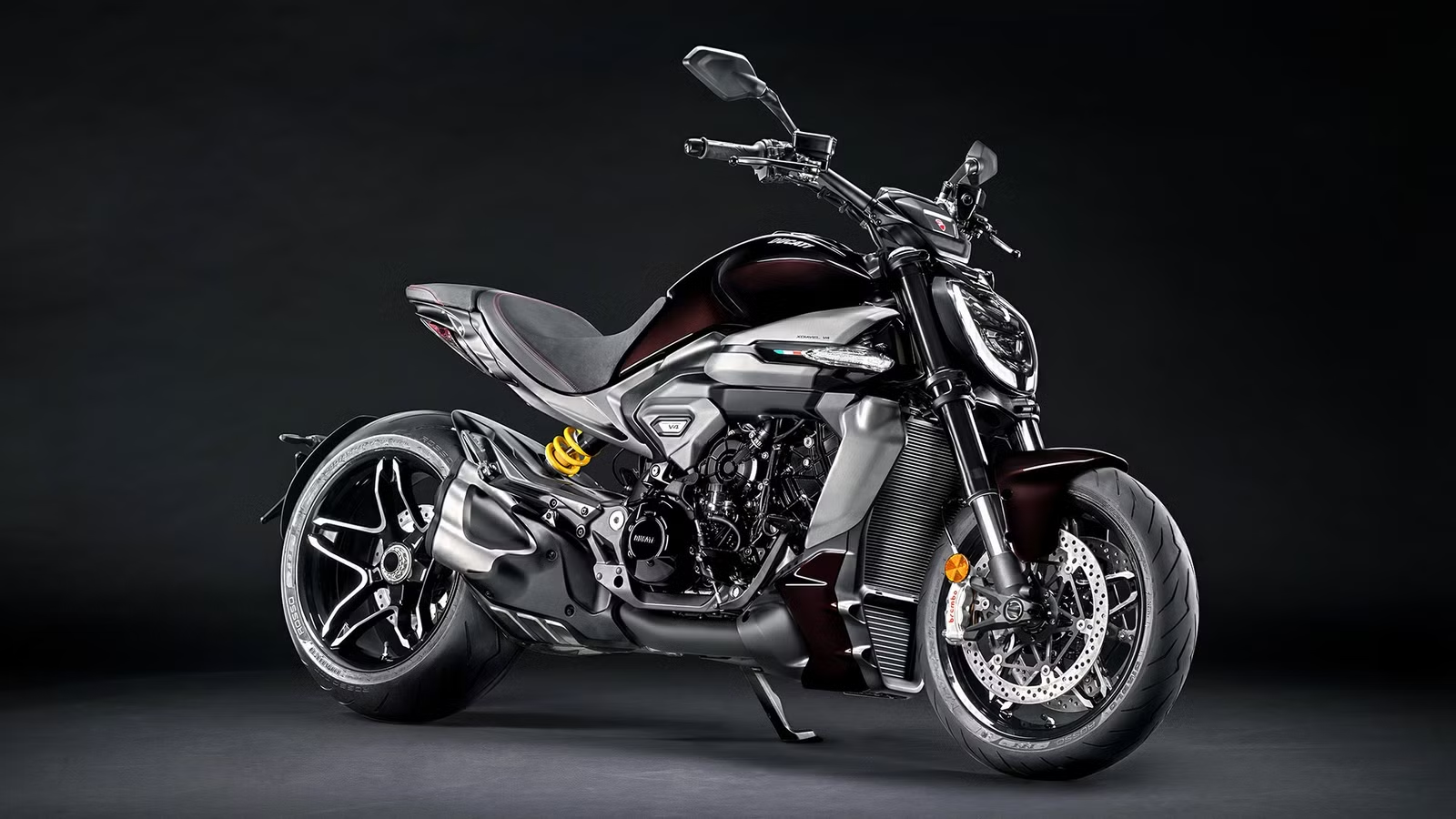
And the temptation is understandable. Anyone who regularly crosses several states, rides through cold weather, or travels with a passenger can appreciate thoughtful convenience features. But the question is how much of the equipment on a premium tourer actually improves the journeys an owner takes. An expensive dashboard cannot compensate for poor ergonomics, and a lengthy options list is little comfort when essential luggage costs extra. Yamaha makes room for a motorcycle that concentrates on the everyday duties of touring while leaving the biggest invoices to other brands.
Touring Luxury Does Not Have To Mean Touring Excess
The premium end of the touring class now encourages buyers to think about the bike as an integrated technology package. Better lighting and electronic suspension can be genuinely useful, particularly over long distances with a passenger aboard. Yet bundling those systems into higher trims means the rider who primarily wants a comfortable seat and secure luggage may end up paying for considerably more.

The practical concerns are less glamorous. Cases need to fit more than a rain jacket. A passenger needs usable space, not just a narrow perch; the windscreen should be adjustable at the very least, and the motorcycle should remain approachable despite the tech. Yamaha factored in these requirements when it revised its American sport-touring lineup and ditched the cruiser format for a sport-touring all-rounder.
The 2026 Yamaha Tracer 9 Costs $12,599 For Modern Luxury

The 2026 Yamaha Tracer 9 starts at an affordable price point, carrying forward the simpler version introduced to American buyers for 2025. It marks a significant departure from the 2024 Tracer 9 GT+, which cost $16,499 and pushed the middleweight tourer closer toward flagship sophistication.
The current machine retains the famed 890cc CP3 inline-three and the road-focused aluminum chassis, but replaces expensive suspension automation with conventional adjustment. It also includes hard side cases in the purchase price. Yamaha has effectively removed $3,900 from the old GT+’s MSRP without asking owners to build a touring motorcycle out of optional equipment. And its old-school mechanical core is where the value begins.
The CP3 Makes A Strong Case For Touring Duties

The Tracer’s 890cc CP3 triple shares its basic architecture with the MT-09’s street-focused engine, so its strong midrange is backed by the willingness to rev that makes Yamaha’s naked bike entertaining. Touring rarely calls for the last few thousand rpm, and responsive roll-on acceleration is more useful when passing traffic with the added weight of luggage and a passenger on board.
Yamaha also gives the CP3 three differently dimensioned intake ducts to shape its induction note, a small reminder that a 300-mile day should have an entertaining stretch somewhere in it. The five-gallon tank and Yamaha’s 48-mpg estimate suggest a theoretical 240-mile range, although traffic, speed, load, and weather will change that distance between fuel stops. A middleweight that does not demand constant shifting or frequent refueling has already tackled two of the less glamorous parts of distance riding.
Touring Equipment Without A Hefty Accessories Bill

Factory-fitted side cases are central to the value equation because they make the Tracer 9 ready for a weekend away right from the start. Yamaha says each color-matched case holds a full-face helmet, and the floating mounting system is designed to limit the effect of luggage on handling. A longer subframe provides additional room for the passenger, while the revised seating position and manually adjustable screen address the fatigue that comes from holding one posture against the wind for hours. The seat can be set at 33.3 or 33.9 inches, a useful choice as neither position is especially low.
The cockpit includes a seven-inch color TFT that sits behind updated switchgear, and a sheltered smartphone compartment that incorporates USB-C charging. Conventional cruise control is standard, and the six-axis IMU governs cornering ABS, traction, slide, and front-wheel lift controls. LED cornering lights also broaden illumination as the bike leans.
Its Greatest Luxury Is A 483-Pound Wet Weight

The Tracer’s 483-pound claimed wet weight can be easy to overlook, but it’s actually its strongest trait. A traditional luxury tourer can get incredibly hefty going well past 900 pounds. The Tracer 9 cuts that by a massive margin, and it has a host of benefits that affect slow speed handling as well as high-speed agility. While riders still have to deal with a relatively tall seat and the added bulk of packed cases, it’s far easier than managing a motorcycle at a gas pump or backing it across a sloping driveway compared to wrestling a full-dress machine.
The Tracer 9’s sport-bike ancestry has not been buried under the touring visage either. The aluminum Deltabox frame, 17-inch wheels, and Yamaha’s lightweight SpinForged wheel construction retain the ingredients for responsive steering, while the extended swingarm and 59.1-inch wheelbase give the touring layout more stability and passenger space. The conventional KYB suspension does need manual preload and damping adjustment, and that seems to be the only convenience miss for riders who frequently switch between solo trips and two-up touring.

The 2026 Kawasaki Ninja 1100SX starts at $13,999, just $1,400 above the Yamaha. Its 1,099cc inline-four is a better match for riders who want stronger high-speed performance, and the standard quickshifter is an added convenience. Suzuki comes closer to matching Yamaha’s touring package with the 2026 GSX-S1000GT+. At $14,399, it has factory side cases, cruise control, and a bidirectional quickshifter, with a 999cc four-cylinder engine.
Those extras, especially the inline-four symphony, can justify the $1,800 premium, particularly for high-mileage riders. Yamaha still packs an IMU-based electronics suite at a more accessible purchase price. The Tracer 9 is not loaded to the gills as a luxury tourer, but the practical value of all that it includes makes it luxurious for the pragmatic rider at a bargain price point.
Source: Yamaha

Related posts

Latest Post


No Comments