
1973 Oldsmobile 4-4-2: The W29 Package Explained
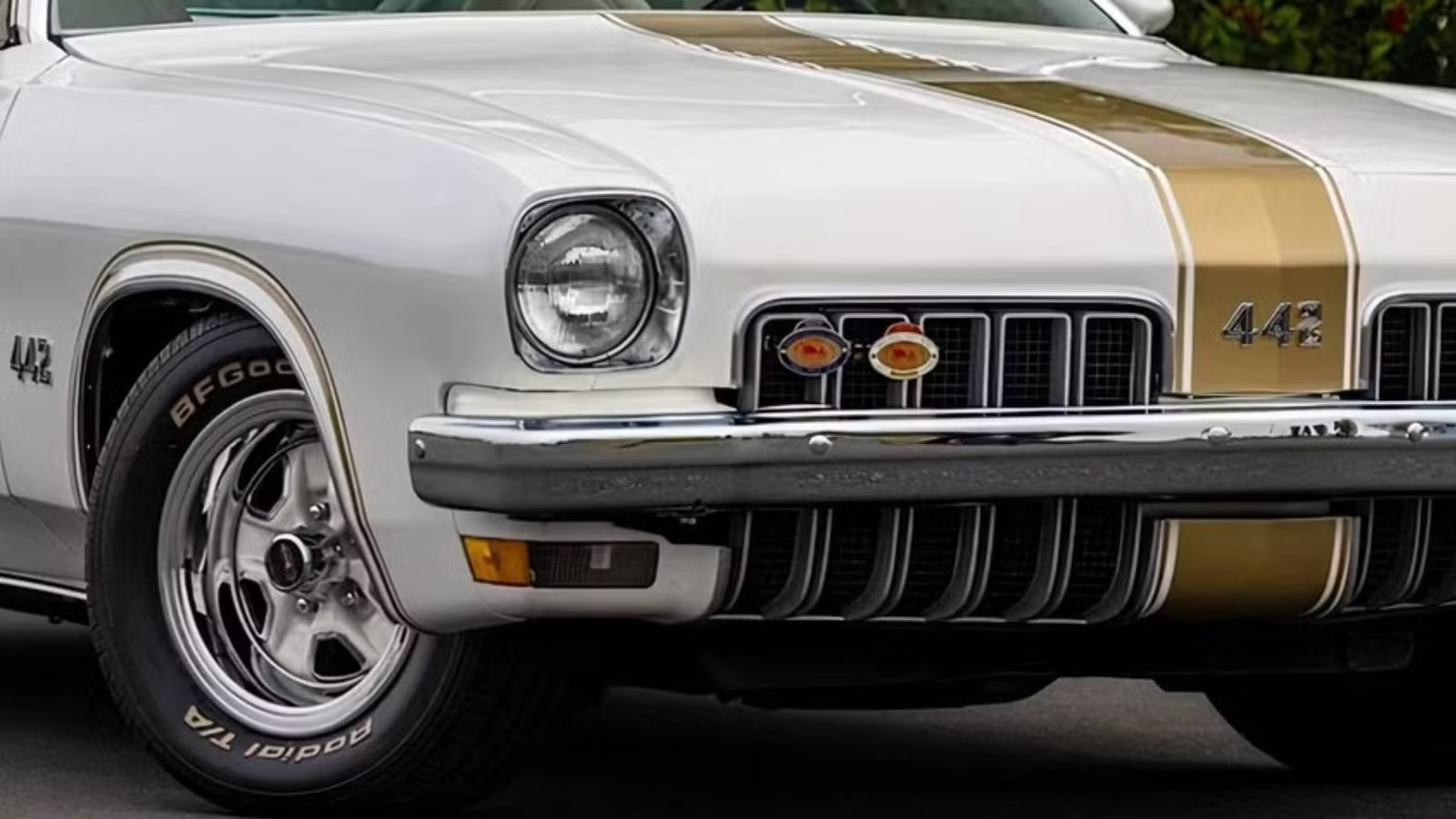
By 1973, American muscle cars were facing a different set of challenges. Emissions regulations, rising safety requirements, and the arrival of larger bumpers were changing the cars that had made the late 1960s such an exciting time for performance enthusiasts. Horsepower figures were falling too, making it harder for automakers to sell buyers on straight-line speed alone.

General Motors (GM) had a different answer. Instead of relying entirely on engine output, it gave one of its performance coupes a more serious suspension package while retaining the familiar V8 formula. The result was a car that deserves a closer look, especially for enthusiasts who think the best muscle cars are always the ones with the biggest numbers.
The Muscle Car Era Was Changing Fast
The early 1970s were an awkward time for American performance cars. Automakers were adjusting to stricter emissions requirements, while the federal government was introducing new safety standards. For the 1973 model year, passenger cars had to withstand a 5-mph front impact and a 2.5-mph rear impact without damaging certain safety-related components. This law is also known as the Federal Motor Vehicle Safety Standard No. 215, or FMVSS 215. Those rules helped push manufacturers toward more substantial bumper designs.

The industry was also dealing with growing concern about fuel consumption, an issue that would become even more pressing during the oil crisis later that year.
GM’s Swift Reaction

Oldsmobile’s answer was not to abandon performance altogether. Its redesigned intermediate cars adopted GM’s Colonnade body style, bringing a new look and a revised structure for 1973. The Cutlass still had the proportions of a traditional American coupe, but the performance market around it was changing.
The 1973 Oldsmobile 4-4-2 Took A Different Approach

The 1973 Oldsmobile 4-4-2 was no longer a standalone model in the way some enthusiasts might remember from earlier years. Instead, it became the W29 4-4-2 Appearance and Handling Package, available on the Cutlass and Cutlass S Colonnade hardtop coupes. The package added distinctive styling, including body-side and decklid stripes, a special grille, a hood with black louvers, and 4-4-2 badging.
The more important change was underneath. The W29 package included the FE2 Rallye Suspension Package, which brought heavy-duty front and rear springs, upgraded shock absorbers, front and rear stabilizer bars, and heavy-duty rear suspension upper control arms. Those parts were intended to help the car stay composed through corners rather than simply provide a firmer ride.
The Significant Change

The FE2 package gave the 4-4-2 a more substantial chassis setup than a basic Cutlass. It did not magically remove the car’s weight or turn it into a modern sports coupe, but it showed that Oldsmobile was still paying attention to how its performance cars handled.
That is the strongest argument for the 1973 model. Its appeal wasn’t limited to a set of stripes or a badge. The package combined visual changes with hardware that had a practical purpose, giving buyers a more focused version of the redesigned Cutlass.
1973 Oldsmobile 442 Specs
|
Engine |
Horsepower |
Torque |
|
350 cu.in. V8 |
~200 hp |
300 lb-ft |
|
455 cu.in. V8 |
~270 hp |
380 lb-ft |
The 1973 Oldsmobile 4-4-2 Was More Than Just Horsepower

The Oldsmobile 4-4-2 package could be paired with several engines, so not every 1973 example delivered the same performance. The standard four-barrel 350-cubic-inch V8 was rated at 180 horsepower with a single exhaust, or 200 horsepower with dual exhausts. A two-barrel 350 was also available, rated at 160 horsepower. Buyers who wanted more displacement could choose a 455-cubic-inch Rocket V8 rated at 250 horsepower with an automatic transmission or 270 horsepower with a four-speed manual.
The horsepower ratings of this period were measured using SAE net standards, which accounted for more of the engine’s installed equipment than the older gross ratings did. That makes direct comparisons with late-1960s horsepower claims misleading unless the rating methods are taken into account.
Even so, the 455 gave the 4-4-2 the sort of low-speed pulling power that had long made Oldsmobile’s big V8s appealing. The smaller 350 offered a different balance, depending on how the car was ordered. Neither engine, however, tells the whole story of the package.
The Suspension Upgrades That Set It Apart

The FE2 suspension is what makes this model worth discussing as a handling-focused muscle car. Its upgraded springs and dampers helped control the body’s movements, while stabilizer bars at both ends were designed to reduce roll through corners. The heavy-duty rear suspension components added to the package’s more purposeful setup.
ClassicCars describes the 1973 Cutlass as a more driveable car than its vaunted 1968–1972 predecessors, while identifying the FE2 equipment as one of the important changes beneath the new body. That supports the idea that the latter car could be a more composed road car, though it does not establish that it handled better than every earlier 4-4-2 in every situation.
That distinction is important. Without a period comparison test using the same conditions, claiming the 1973 car was definitively superior to every earlier version would go too far. What the available evidence does show is that Oldsmobile gave the W29 package meaningful suspension upgrades at a time when muscle cars were having to adapt to new regulations and changing expectations.
The Hurst/Olds Showed What The Colonnade Could Do

The 4-4-2 was not the only Oldsmobile performance coupe to benefit from the new Colonnade body. The 1973 Hurst/Olds took the formula further, using the Cutlass S as its base and adding distinctive styling and equipment. Hurstolds.com records just 1,097 examples built for the model year, making it a considerably rarer sight than a regular Cutlass.
For 1973, buyers could choose Cameo White or Ebony Black paint, both paired with gold accents. A padded vinyl roof and smaller rear quarter windows gave the car a distinctive profile, while special trim helped separate it from the regular Cutlass S. The Hurst/Olds also used BFGoodrich Radial T/A tires, adding another performance-oriented detail to the package.
Swivel Seats Fit For A King

Inside, swiveling Strato bucket seats and the Hurst Dual-Gate shifter gave the cabin a character of its own. The shifter was designed to let the driver use the automatic transmission in a conventional manner or select gears more deliberately. It was a feature that suited the car’s blend of comfort and performance.
The Hurst/Olds used a 455-cubic-inch big-block V8, with output depending on the engine configuration and equipment ordered. It was a different proposition from the W29 4-4-2, which could be specified with smaller engines. The two cars shared the broader Cutlass foundation, but the Hurst/Olds had its own identity and a more exclusive set of features. Based on Classic.com’s sales tracking, an Oldsmobile Hurst/Olds will run you about $44,195 today.
Neither model escaped the realities of 1973. Emissions concerns, safety requirements, and changing fuel priorities were reshaping the American performance market. Yet the 4-4-2 and Hurst/Olds show that Oldsmobile was still finding ways to make its intermediate coupes interesting.
The 1973 4-4-2 may not have the raw numbers or reputation of some earlier models, and the claim that it handled better than every predecessor needs stronger comparative evidence. But its FE2 Rallye suspension gave it more than cosmetic appeal. It was a performance package built around a broader idea of what made a car enjoyable to drive, and that makes it worth remembering beyond its badge.
Sources: Classic.com, Hurtsold.com, Popular Science

Related posts


Latest Post


No Comments